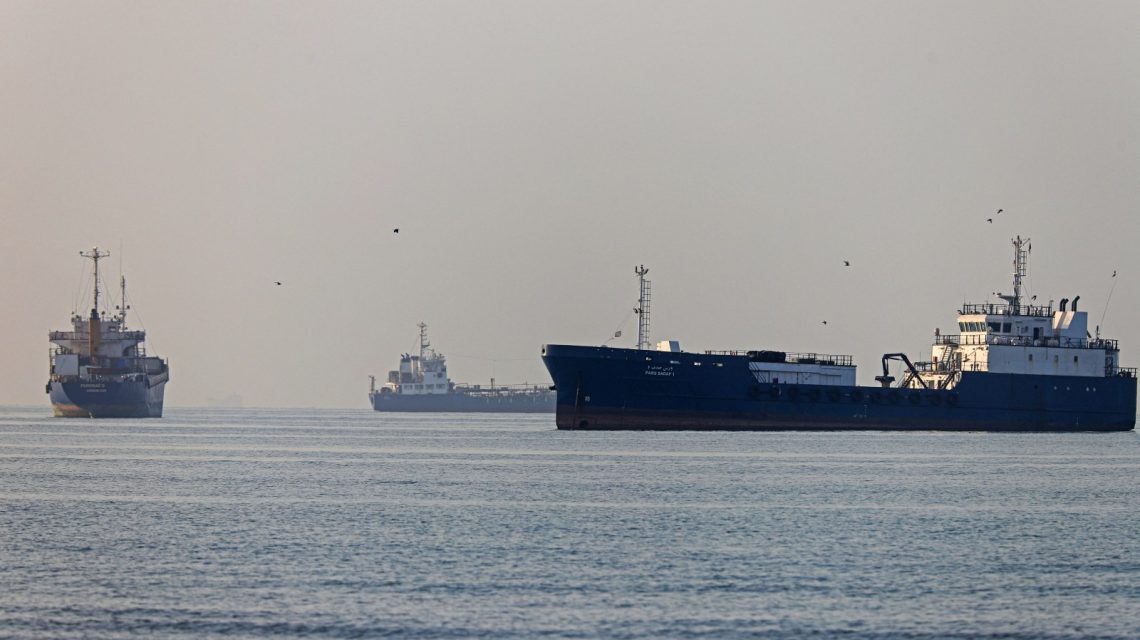
The United States and Iran engaged in a series of military strikes on Wednesday, highlighting the instability of a declared ceasefire. The U.S. continues to call for negotiations, although tensions remain high. The confrontations followed the U.S. hitting an empty oil tanker, accusing it of attempting to defy a blockade on Iranian ports imposed since April 13. This blockade has led to the disabling of six vessels and redirected 122 others.
Kuwaiti officials reported that Iranian drones targeted its international airport, which resulted in considerable damage, injuries, and an interruption to air traffic. Kuwait condemned these actions as unlawful aggression. Meanwhile, Iranian news outlet Tasnim News shared footage seemingly depicting explosions at American bases in Kuwait. U.S. Central Command (CENTCOM), however, asserted that its air defenses neutralized all drone threats, ensuring the safety of personnel and assets.
CENTCOM and U.S. officials communicated that the ceasefire was supposed to still be in effect, yet these recent strikes indicate ongoing difficulties in resolving broader Middle East tensions. Secretary of State Marco Rubio emphasized to the Senate Foreign Relations Committee that an agreement with Iran is still possible.
The U.S. confirmed launching a Hellfire missile at the Botswana-flagged tanker Lexie headed for an Iranian port. This was characterized as a ‘self-defense’ action, targeting an island in the Strait of Hormuz which Iran has attempted to blockade, thereby impacting global energy stability. CENTCOM released video evidence of the missile impact, explaining that the crew of the tanker ignored multiple warnings over a 24-hour span.
These U.S. actions were a direct response to Iranian attempts to strike American interests in the region. Reports indicated Iran launched missiles targeting American bases and helicopters, along with attempts to hit Bahrain. All such attacks were intercepted or failed to reach their targets.
President Donald Trump took to Truth Social to urge Iran to come to an agreement, remarking on the protracted nature of the conflict. The U.S. also responded with strikes aimed at Iranian drones and missile sites.
Rajan Menon from the City College of New York discusses the potential for renewed conflict due to a narrowing window for negotiation. Menon suggests that both nations are engaged in a high-stakes standoff, potentially leading to further war unless diplomacy prevails.
Iranian official Ali Nikzad declared negotiations ongoing under the Supreme Leader’s directives. Meanwhile, Trita Parsi of the Quincy Institute suggests that Iran is now retaliating more forcefully against U.S. attacks.
Former U.S. official Len Khodorkovsky proposed that the empowerment of the Iranian populace might pave the way for peace. The potential exists for President Trump to shift dynamics in the Middle East, transforming relations with Iran.
 Latin American Deportees in Congo: Return to Home Countries Amid Challenges
  Controversy Surrounds Stabbing Incident of British Student
  Royal Cottages and Controversies: Financial and Legal Revelations
  Oak Lawn Librarian Supports Library Projects in Zimbabwe
  World Cup Anticipation: US Men’s National Team and Norway’s Viking-Themed Campaign
  Family Searches for Missing Auburn Student in Japan After Disagreement Over AI