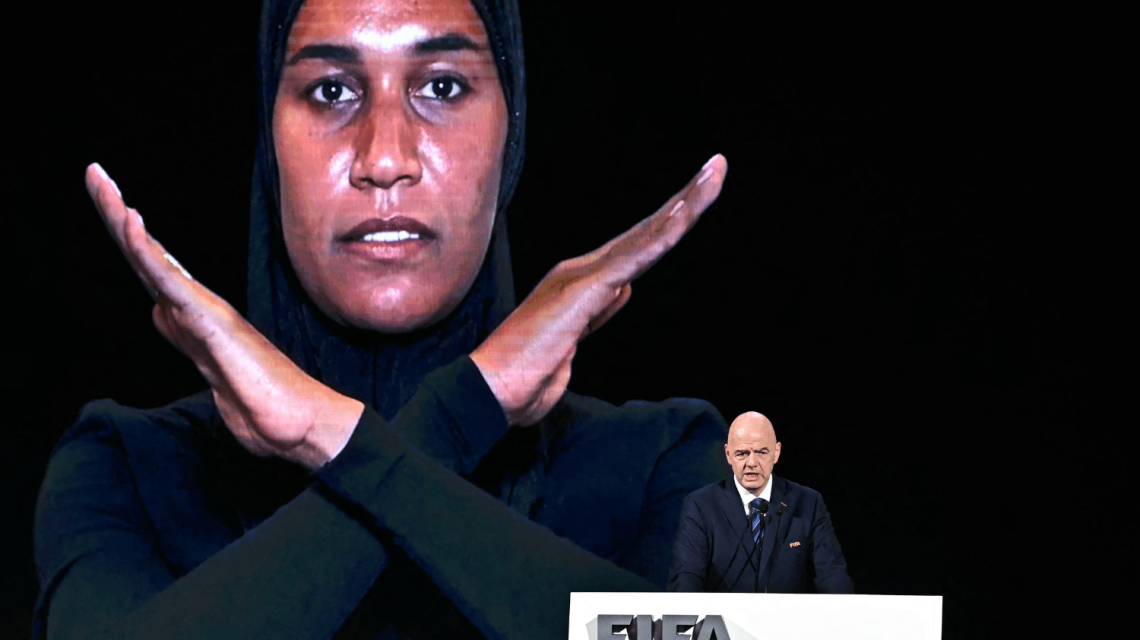
Players at the 2026 World Cup have a new way to report racist abuse during matches. Crossing their arms to form an ‘X’ can trigger FIFA’s anti-discrimination protocol and potentially halt the game. This gesture was first used at the 2024 Under-20 Women’s World Cup in Colombia and is now adopted for wider FIFA competitions.
Soccer’s governing body has faced pressure to respond faster and more visibly to racism, which has marred many international tournaments. The crossed-arms gesture provides players, referees, and team officials with a standardized method to report abuse and activate FIFA’s anti-racism procedures during a match.
What Happens When a Player Makes the ‘X’ Gesture?
Under FIFA rules, players, referees, or team officials who witness racist behavior can use the gesture. Once it’s made, it signals officials to initiate soccer’s three-step anti-discrimination protocol.
The first step requires the referee to stop play and issue a stadium warning for the behavior to cease. If abuse continues, players can be removed from the field and play suspended. If it still does not improve, the match can be abandoned.
FIFA emphasizes that this gesture complements, not replaces, the existing process by offering a visible trigger.
How Is This Different From Previous Approaches?
FIFA’s procedure for combating discrimination has been in place for years. However, it often relied on referees to identify the abuse themselves or players to report it verbally. The new gesture aims to eliminate uncertainty. By providing a universally understood sign, FIFA anticipates quicker identification and consistent handling of incidents.
This update responds to criticism that governing bodies have not acted decisively enough. The gesture aligns with broader efforts to standardize enforcement of anti-racism measures for the 2026 World Cup, hosted by the United States, Canada, and Mexico.
The Racism Incidents Behind the Move
Racist abuse has often disrupted major tournaments and high-profile matches. In one instance, during a Euro 2020 qualifier, England’s match against Bulgaria was halted twice due to racist chants targeting England players. UEFA’s protocol was followed, with stadium warnings issued and the game nearing abandonment.
At the 2022 World Cup in Qatar, FIFA took disciplinary action against federations due to discriminatory chants from supporters. Online abuse also rose, with players like Bukayo Saka, Marcus Rashford, and Jadon Sancho receiving racial insults after the Euro 2020 final against Italy.
These incidents have led to police investigations and widespread condemnation, emphasizing the need for effective measures.
 Knicks Fans Rally Across the Nation for NBA Finals Glory
  FIFA World Cup 2026: Enhanced Security Measures for Drone Activity
  Samantha Busch Expresses Gratitude Following Kyle Busch’s Passing
  Trump’s Attendance at NBA Finals Sparks Mixed Reactions
  Weekend Sports Highlights and NIL Debate
  High Demand for NBA Finals Tickets at Madison Square Garden