Pete Hegseth, the Secretary of War, has embarked on his Arsenal of Freedom Tour, with visits to key military and industrial locations including the nuclear submarine production facility in Newport News, Virginia, and Blue Origin’s space launch site in Cape Canaveral, Florida. His mission is to rejuvenate American industrial might and ensure the persistence of freedom for future generations.
Among the various military programs, the swift advancement of the Army’s new M1E3 Abrams tank stands out. Remarkably, this advanced tank model is progressing five years ahead of its original schedule, benefiting from insights gained through observing the ongoing conflict in Ukraine.
The Development of the M1E3 Abrams
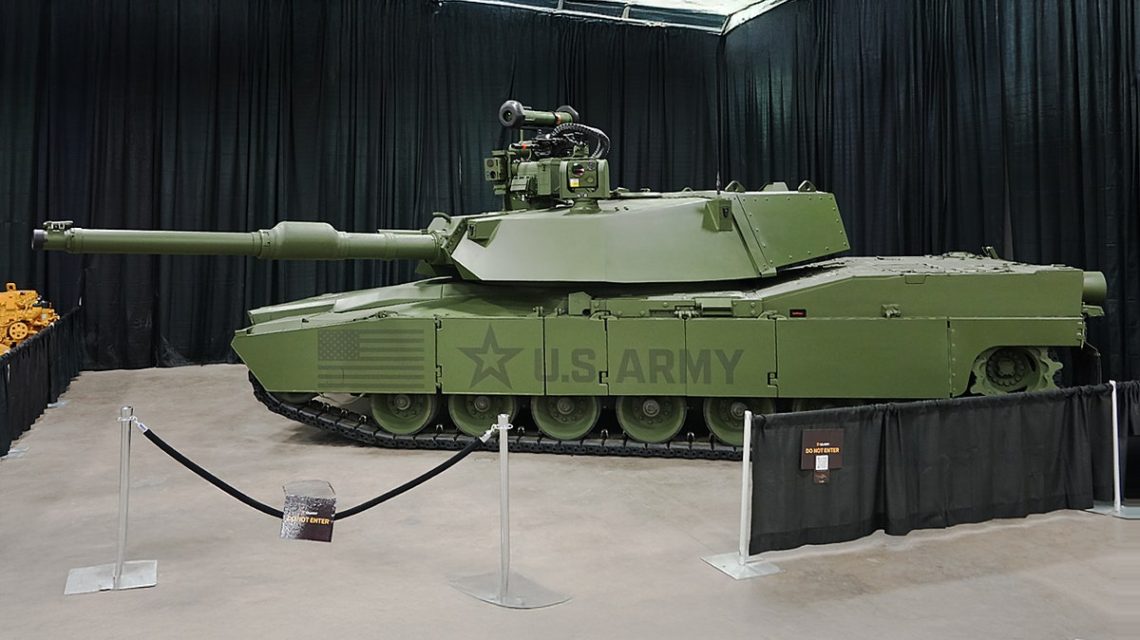
The M1E3 Abrams, anticipated initially by 2032, has been reassessed as a priority by Army Chief of Staff Gen. Randy George and Secretary of the Army Dan Driscoll. Their goal was to expedite the tank’s development as per the pressing strategic needs highlighted by their science advisor Dr. Alex Miller. As a result, the prototype made its public debut at the Detroit Auto Show in January, and the first platoon of these advanced tanks is expected to be trialed by soldiers in 2028.
Innovative Features and Tactical Advantages
The new M1E3 Abrams presents a significant evolution from its predecessors. Notably, the traditional turret has been eliminated, positioning the three-man crew side by side within the hull for enhanced protection. The tank integrates cutting-edge technology such as external cameras, sensors, thermal sights, and laser-range finders—all feeding data into advanced cockpit displays that resemble gaming devices. This enables the crew to remotely operate various weapons, including Javelin anti-tank missiles.
“We wanted a tank that reflected the demands of modern warfare,” George noted, referring to the state-of-the-art ‘Formula One Cockpit’ driven by an intuitive interface and a robust, modular software system.
Furthermore, the M1E3 is designed as a hybrid vehicle, equipped with a Caterpillar diesel engine paired with a SAPA transmission enabling it to switch to electric mode for quieter operations, aimed at stealth during maneuvers. This feature, along with heat signature reduction and electronic jammers, represents a leap in low-noise combat functionality.
Enhanced Protection Mechanisms
The tank is armed with ‘Active Protection’ technology to detect and neutralize a variety of threats, from anti-tank missiles to drones. This system not only intercepts incoming threats but also identifies their sources, allowing the crew to retaliate effectively. Additionally, the ‘Reactive Armor’ of the tank is designed to further bolster its defense against enemy fire.
Advanced Armaments and Strategic Mobility
Incorporating lessons from the Ukraine battlefield, the M1E3 is outfitted with a .30-mm chain gun, capable of engaging light-armored vehicles and drones. This strategic choice replaces the traditional larger-caliber guns, offering enhanced versatility.
The M1E3 has also undergone a significant weight reduction, down to approximately 60 tons from previous models nearing 80 tons. This decreased weight enhances fuel efficiency and broadens the tank’s deployment potential by enabling it to navigate more bridge crossings, particularly in Eastern Europe, a critical strategic area.
The Strategic Importance of the M1E3
Despite Russia’s ongoing tank production capabilities, NATO forces are bolstering their deterrent measures with the M1E3 Abrams as a frontline defense to prevent territorial expansion. For instance, exercises like Operation Winter Falcon in Poland demonstrate the tank’s strategic significance, as both Polish and U.S. forces engage in joint training to maintain readiness for any potential future scenarios.