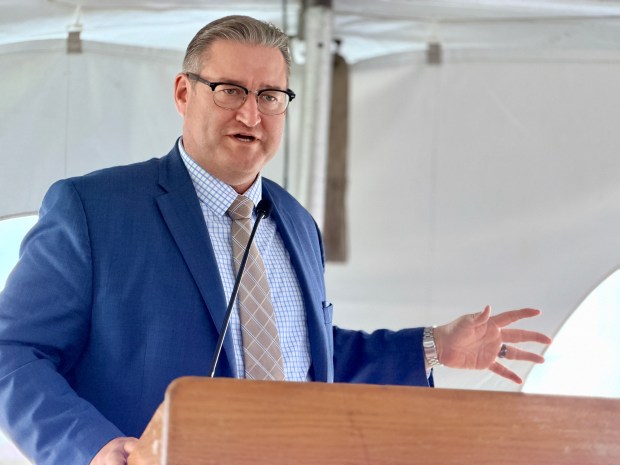
Mike Noland started his second day on the job at a public meeting in Munster, focusing on extending the South Shore Line from Hammond to Dyer. As the former president and general manager of the Northern Indiana Commuter Transportation District (NICTD), Noland recalled that October 28, 2014, marked the beginning of the West Lake Corridor’s environmental process. Posterboards across the room showcased potential routes. NICTD’s recent 20-year strategic plan aims to expand the line further, potentially reaching Crown Point, Merrillville, and Valparaiso.
Even in retirement, Noland continues working on the Monon Corridor project, which launched full service earlier this year. His successor, David Dech, acknowledged Noland’s deep understanding of commuter rail service, honed during his tenure at Metra Electric. Noland’s career began in 1983, at a time when freight railroads were eager to exit the passenger business, and Metra was gearing up to meet the challenge of obsolete commuter systems.
David Dech expressed excitement about new developments, such as the downtown Hammond South Shore Line station and the Monon Corridor start. The establishment of Metra and NICTD reflects government intervention when private railroads withdrew from passenger service amidst economic challenges.
This year, the Illinois Legislature faced funding pressures for public transit, echoing past financial challenges. A recent agreement with the Indiana General Assembly provides additional funding for the South Shore Line, with plans for biennial fare increases.
Noland’s career evolved from human resources to general counsel at Metra. He witnessed Metra CEO Phil Pagano’s tragic end, which led to a management overhaul, eventually steering Noland to Iowa Pacific. The short line experience enriched him for his NICTD leadership role, where a nimble approach allowed employees to multitask and manage resources efficiently.
Upon becoming NICTD president, Hanas, NICTD’s former leader, provided vital expertise, as Noland examined NICTD’s 20-year plan. Hanas initially guided Noland, setting up lasting practices for the organization. A Metra retiree, George Hardwich, assessed South Shore Line operations, identifying numerous opportunities for improvement. Noland valued Hardwich’s honest evaluation in addressing operational challenges.
Noland aimed for optimal on-time performance, which sometimes meant adjusting schedules instead of resolving underlying issues. Hardwich recommended increasing slow train speeds to enhance travel efficiency. After making improvements, passenger trains increased speed without sacrificing safety, which significantly boosted schedules, safety, and passenger satisfaction.
The Double Track NWI project reduced travel time by facilitating two-directional train movement, and infrastructure investments at East Chicago and other stations boosted transit efficiency. The Monon Corridor project relocated the Hammond Gateway Station to eliminate a cumbersome S curve. Moving the station received support from local government, even though it required the removal of homes.
Coordination with Metra was essential since the first part of South Shore trains used Metra tracks. Improvements benefitted both Metra and South Shore passengers, reflected in a study conducted at Noland’s behest. Changes like updating speed restrictions along bridges led to immediate improvements, showcasing the benefit of analyzing existing operations.
Noland highlighted a project to add a fourth track near the terminal, allowing more trains and managing operational constraints. The bidirectional signal plans mimic reversible traffic lanes, optimizing track usage for efficiency. The project in South Bend aims to save 11 to 14 minutes per train trip by realigning the station, with secured local funding.
Noland’s leadership influenced numerous enhancements and paved the way for continued advancement. As challenges persist, ongoing innovation remains a focus for future developments.