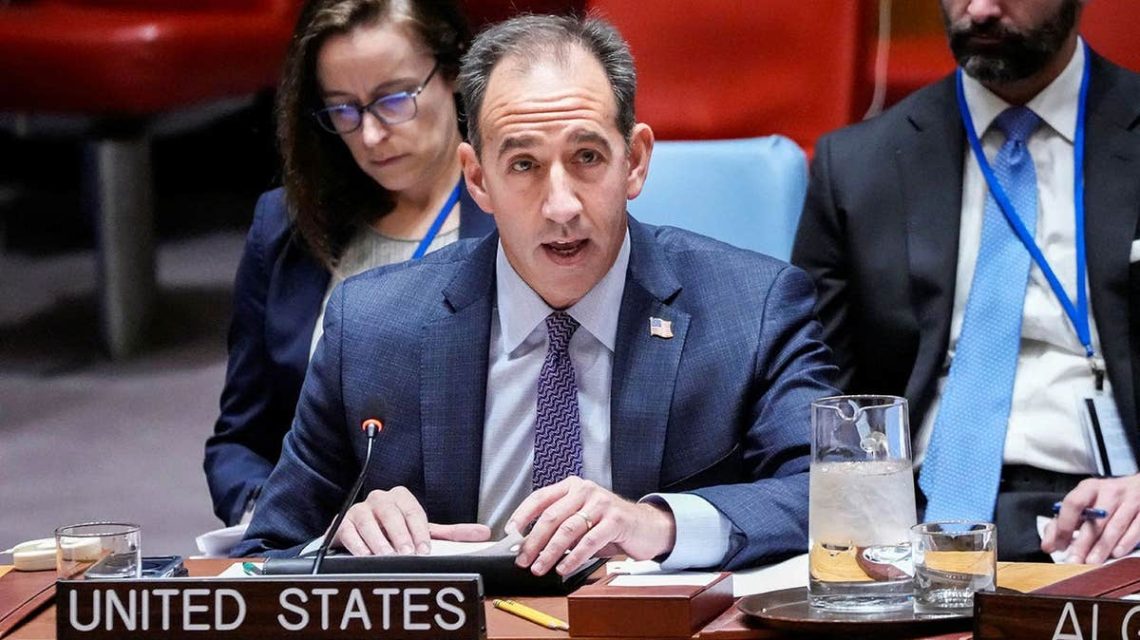
The United Nations faces significant reform pressures as Jeff Bartos, appointed by President Donald Trump as U.S. ambassador for United Nations Management and Reform, advances an ambitious reform agenda. During his 2025 Senate confirmation hearing, Bartos encountered skepticism about the feasibility of U.N. reforms.
Ambitious Reform Campaign
Bartos emphasized the necessity of reshaping the U.N., perceived as inefficient and detached from its primary mission. The urgency arises as the U.N. confronts financial challenges, with delayed member-state payments, and considers its next secretary-general.
U.S. Ambassador Mike Waltz highlighted the organization’s liquidity crisis due to unsettled payments, notably by the U.S. This financial strain has brought reform discussions to the forefront. Bartos cited a $570 million budget cut and the elimination of 2,900 positions as significant achievements, attributing these to U.S. pressure.
“$570 million cut to the regular budget, approximately 3,000 posts cut. Unanimity.”
Financial Reforms and Structural Changes
The United States aims to reform peacekeeping expenditure, proposing equipment reimbursement based on usage rather than presence, potentially saving $30 million annually. Bartos stresses a cultural shift toward fiscal efficiency.
The focus extends to employee compensation and pensions, which Bartos claims consume resources needed for humanitarian operations. However, U.N. officials assert that many reforms were already in motion under Secretary-General António Guterres.
Guterres champions the UN80 initiative to reduce redundancies and enhance efficiency. He urges member states to embrace structural reform and address delayed contributions, warning of possible financial collapse without prompt action.
Future of UN Leadership
Reform is central to dialogues with potential successors to Guterres, whose term concludes in 2026. U.S. efforts aim to streamline U.N. operations, aligning with a “back-to-basics” approach. Though daunting, Bartos believes his experience, including personal achievements like Ironman triathlons, equips him for this challenge.
Combatting Anti-Israel Bias
Bartos is now tasked with addressing perceived anti-Israel bias in multiple U.N. entities. This initiative gained momentum after U.N. reports listing Israeli forces alongside Hamas in a controversial context.
“The U.N. was built in the wake of World War II and the Holocaust, yet it continues to be weaponized against the Jewish people and Israel.”
The U.S. administration seeks to dismantle alleged biases through diplomacy and funding strategies. The U.N., emphasizing its anti-antisemitism efforts, notes that member states bear responsibility for addressing contentious mechanisms.
Dujarric highlighted the U.N.’s formal Action Plan to Combat Antisemitism, emphasizing member states’ roles in ensuring content reflects balanced perspectives.
As reform progresses, the question lingers on whether the U.N. will satisfy its most significant financial supporter, with ongoing pressures to enact pivotal changes.
 Controversy Over Henry Nowak’s Stabbing Sparks Debate in UK
  Putin Faces Changing World at Economic Forum in St. Petersburg
  Israeli Strike Escalates Tensions in Lebanon
  Pope Leo XIV’s Call for Unity Amidst Spain’s Political Turmoil
  Ukrainian Drone Attack Highlights St. Petersburg’s Vulnerability
  Gen Z Movement Pushes for Government Accountability in India