In June, the European Union made significant changes to its border entry rules in response to concerns from President Donald Trump and European citizens about illegal immigration. The updated policies apply to the 27-nation bloc, focusing on stricter migration and asylum laws aimed at processing and, if necessary, expelling undocumented migrants.
Individuals seeking asylum will be screened for identity, security, and health concerns before entering the asylum process. EU border officials will monitor and document the entry and exit of non-EU citizens, utilizing biometric data like fingerprints and facial recognition. All EU member states are now required to collaborate and share data.
The Associated Press noted that the EU’s three main institutions reached a preliminary agreement. This is expected to gain approval from EU lawmakers and governments.
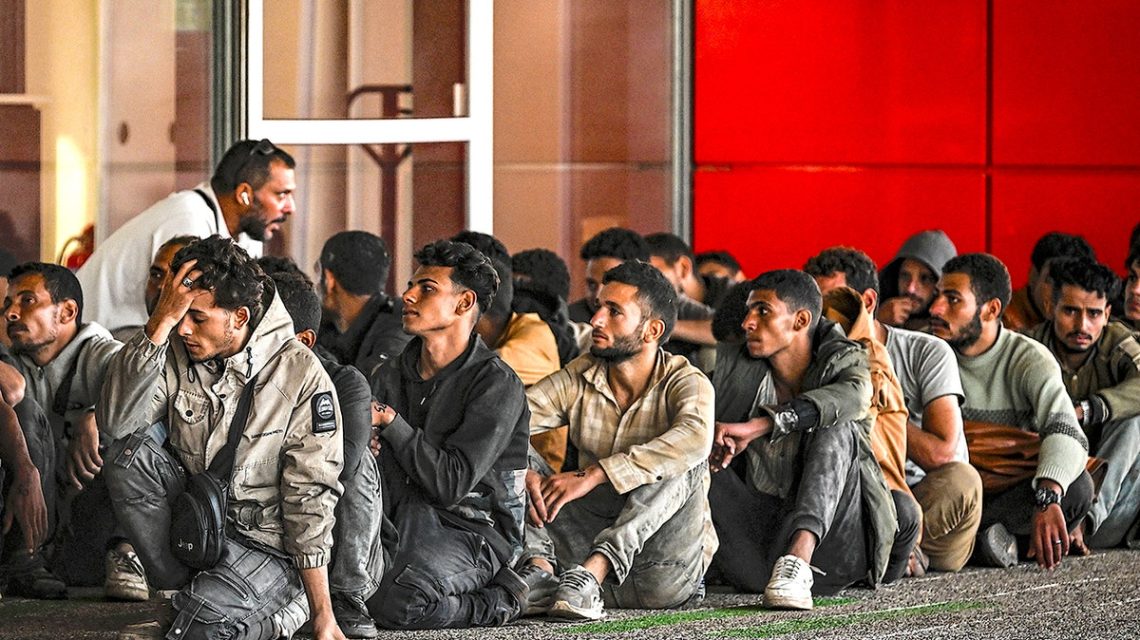
Recently, a large number of illegal migrants, mostly men, were gathered by Greek coast guard officers in Lavrio, Greece. This incident follows the arrival of over 2,000 people from Libya on Crete, causing frustration among local authorities and tourism operators.
Alan Mendoza, founder and executive director of the Henry Jackson Society, expressed concerns about the changing demographics affecting European culture. Despite the UK not being an EU member, he mentioned that the new EU rules reflect efforts seen in Britain to avoid being perceived as lenient.
Other experts warn that resolving these immigration issues will become increasingly difficult if not addressed promptly. While citizens have noticed the problem, political leaders have been slower to respond.
President Donald Trump addressed this issue during a United Nations General Assembly speech, emphasizing the negative impact of illegal immigration on Europe.
“Europe is facing serious challenges due to an unprecedented influx of illegal migrants,” President Trump stated.
Vice President JD Vance addressed the recent tragic death of an 18-year-old British man in a social media post. He criticized European authorities for their handling of undocumented migrants and the impact on public safety.
During a D-Day commemoration in France, Secretary of War Pete Hegseth highlighted the ideological challenges on European shores, urging action from European governments.
Spain has diverged from other EU nations by legalizing half a million undocumented migrants. Javier Negre from the La Derecha Diario newspaper explained that NGOs have played a significant role in supporting this movement, raising concerns about rising crime rates as some migrants struggle to integrate.
Critics, including Mélissa Camara of the French Green party, described the new EU policies as a setback for human rights, pointing to the legalization of return hubs outside the EU and practices resembling those of ICE in the United States.
 Venezuela Signs Energy Agreement with General Electric
  Police Raid at Jiangyou Church in Sichuan Province Sparks Outcry
  Russia’s Cautious Support for U.S.-Iran Agreement Signals Hope and Skepticism
  Israeli Political Spectrum Reacts to US-Iran Agreement
  New Details Emerge in Arson Attacks Linked to UK Prime Minister
  Group G Showdown: Iran vs New Zealand at the 2026 World Cup