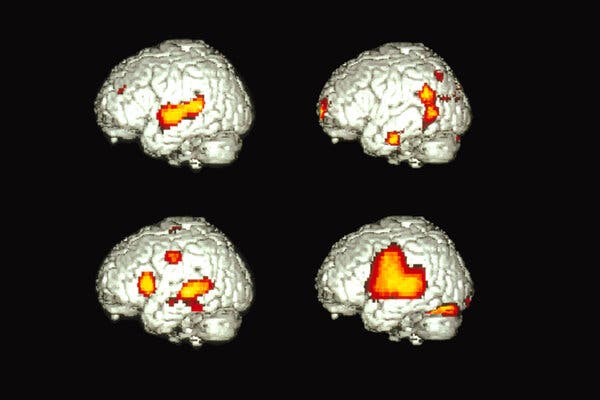
A new study of bilingual speakers suggests that a single ‘grammatical engine’ in the brain can manage multiple languages simultaneously.
Speaking a language throughout one’s life ingrains its grammatical rules deeply in the brain. For instance, even if you are unfamiliar with the word ‘absquatulate,’ you might still correctly guess its present participle is ‘absquatulating.’ However, grammmatical rules can vary significantly among different languages. Neuroscientists have long proposed that bilingual speakers process different languages using distinct brain activity patterns.
Recently, researchers have discovered that these patterns are much more alike than previously thought. When bilingual people decide whether a word should be singular or plural, they exhibit remarkably similar brain activity regardless of whether they are using their first or second language.
“It wasn’t obvious that it was going to be so shared,” stated Esti Blanco-Elorrieta, a psychologist and neuroscientist at New York University, and an author of the study published in Monday’s issue of the journal JNeurosci. “This is arguably one of the first very fine-grained findings of how truly integrated two languages are in the brain.”
Earlier research perceived bilingualism as an ‘add-on’ or a ‘disruption’ to processing one’s native language, said Judith Kroll, a psycholinguist at the University of California, Irvine, who did not participate in the study. Subsequent studies have indicated that bilingual brains often display physical differences, such as more efficient white matter and modifications to gray matter, and tend to outperform on memory and concentration tasks.
 Gad Saad Shares His Surreal Meeting with Elon Musk
  Federal Investigation at GKN Aerospace Following Chemical Tank Incident
  Whale Graveyard Hosts Thriving Marine Ecosystems
  Understanding Ghost Particles: JUNO’s Initial Findings
  What Science Learns from Emma Mazzenga’s Extraordinary Athleticism
  Quantum Physics and the Quest for Truly Random Numbers