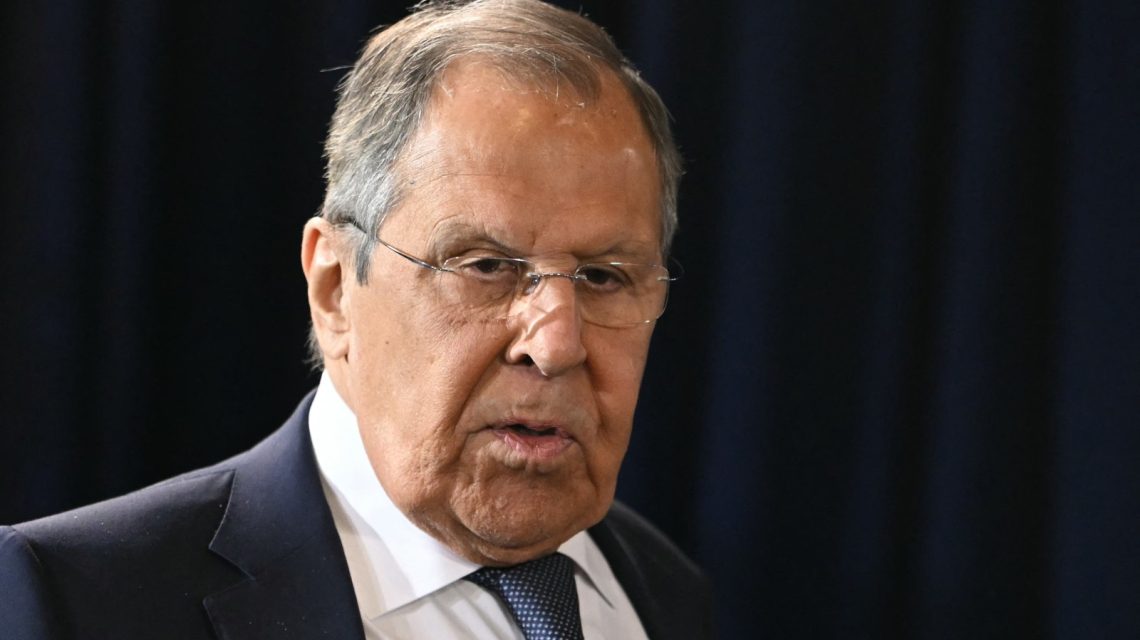
Russia is taking a cautious stance following President Donald Trump’s announcement of a U.S.-Iran deal aimed at ending months of conflict. Foreign Minister Sergey Lavrov expressed optimism that the agreement will soon be formalized, though he acknowledged its success is not certain. The deal, which Trump described as ‘complete,’ seeks to halt hostilities and reopen the strategic Strait of Hormuz, currently disrupted due to ongoing tensions. Preparations are in progress for a signing ceremony in Switzerland, though several critical details remain unresolved.
Russian Response Signals Cautious Support
Lavrov emphasized Moscow’s hope that the framework developed by Washington and Tehran will soon be converted into a signed agreement, stressing the importance of turning political announcements into tangible results. ‘We hope that everything announced today will be signed this week,’ Lavrov stated, pointing to statements from the United States, Iran, and mediators such as Pakistan. Russia’s foreign minister maintained a reserved tone, welcoming progress while avoiding endorsement of specific terms. He noted that achieving lasting peace requires ongoing political commitment, cautioning that conflicts are rarely resolved quickly despite initial breakthroughs. This approach aligns with Moscow’s broader messaging, which combines support for diplomacy with skepticism about the durability of such agreements.
Trump and Putin Discuss the Deal
High-level diplomacy between Washington and Moscow includes discussion of the agreement. In a recent phone call described by the Kremlin as ‘friendly’ and ‘frank,’ Trump and Russian President Vladimir Putin discussed the U.S.-Iran memorandum, among other international issues. The conversation demonstrated Russia’s continuing engagement in the Middle East and its interest in either shaping or observing the outcome of any negotiations involving Iran. The call highlighted the geopolitical significance of the deal, influencing U.S.-Russia relations beyond the immediate region.
Israeli Stance Adds Uncertainty
Despite the agreement between Washington and Tehran, uncertainty persists, an outlook mirrored in Moscow’s cautious response. A major factor contributing to this uncertainty is Israel’s position and the role of Hezbollah, the Iran-backed militant group in Lebanon, involved in cross-border fighting with Israeli forces. Israel is not a signatory to the deal and has already indicated it will not be bound by its terms. Israeli officials confirmed they will not retreat from territories seized in southern Lebanon, where their military has targeted Hezbollah positions. This stance introduces significant doubt about whether the agreement can entirely end the fighting.
Israeli military actions on Hezbollah targets near Beirut nearly jeopardized the agreement recently. Israeli political figures, like far-right finance minister Bezalel Smotrich, criticized the deal, labeling it ‘bad for Israel’ and ‘the entire free world.’ Even with U.S. and Iran adhering to the framework, Israeli operations against Hezbollah risk prolonging instability in the region, limiting the agreement’s impact.
Deal Leaves Major Questions Unresolved
Besides Israel’s position, the agreement leaves important issues unresolved. Although the memorandum of understanding is set to be signed, it primarily establishes a framework to end hostilities, deferring key disputes—such as Iran’s nuclear program and sanctions relief—to subsequent negotiation phases, expected to unfold over about 60 days. This structure provides a roadmap to a more comprehensive agreement but also leaves room for renewed tensions if negotiations falter or expectations are unmet. At present, the accord functions more as a ceasefire mechanism than a permanent peace settlement.
‘What has been agreed upon is an important step toward stopping the war and beginning negotiations, yet a final agreement has yet to take shape,’ wrote Iranian President Masoud Pezeshkian on X.
Russia’s Stance Shaped by Ties to Iran
Russia’s measured response reflects its long-standing ties to Iran and its consistent position throughout the conflict. Moscow has maintained strong political and strategic relations with Tehran while acting as an advocate for diplomatic solutions. Russian officials consistently warned against further escalation in the Middle East, promoting negotiations over military interventions. Simultaneously, Russia seeks to maintain its influence in regional diplomacy and has occasionally positioned itself as a mediator in discussions involving Iran and Western nations. Lavrov’s comments align with this approach, encouraging progress while stressing the need for effective implementation.
Peace Remains Fragile
As the agreement nears a planned signing, Russia’s reaction underscores a central reality: while the deal marks a significant step toward ending hostilities, it is not a guarantee of lasting peace. Washington and Tehran have made substantial progress towards a resolution, noted Russia’s Foreign Intelligence Chief Sergei Naryshkin. Yet, he advised caution, emphasizing that peace remains fragile. ‘In short, peace is still fragile,’ he told the Russian state news agency Tass. ‘However, the extensive work carried out by both sides, together with the mediators, to draft such a preliminary memorandum provides grounds, if it is ultimately signed, for efforts to restore peace in the Middle East to continue.’
 Oil Flow and Global Economy: The Path to Recovery After Conflict
 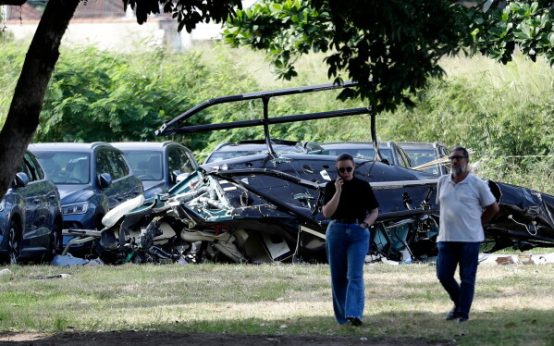 Venezuela Signs Energy Agreement with General Electric
  Police Raid at Jiangyou Church in Sichuan Province Sparks Outcry
 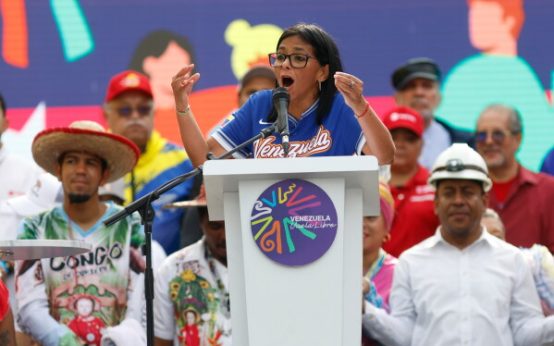 Israeli Political Spectrum Reacts to US-Iran Agreement
 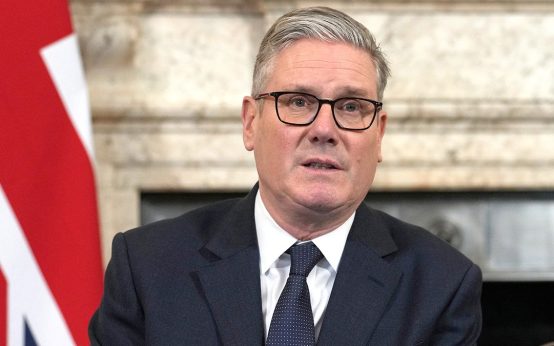 New Details Emerge in Arson Attacks Linked to UK Prime Minister
  Group G Showdown: Iran vs New Zealand at the 2026 World Cup