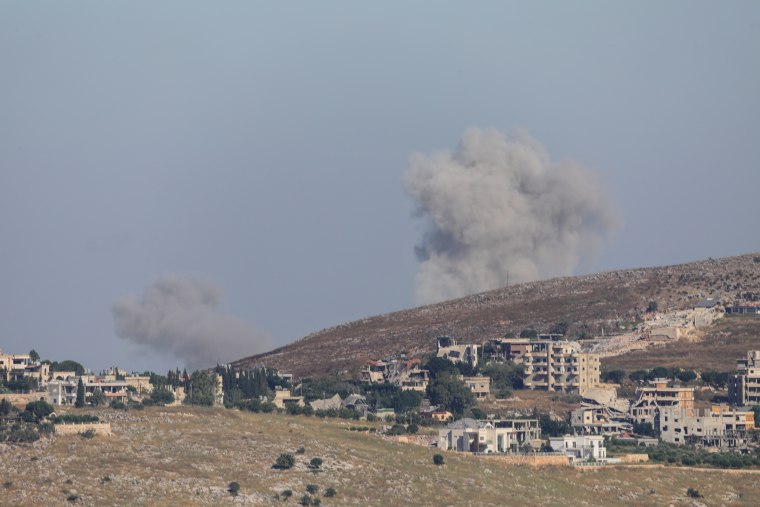
On Saturday morning, Israeli airstrikes in southern Lebanon resulted in the deaths of at least 16 people, including two children. This information comes from Lebanese civil defense and media sources. The attacks occurred just one day after the U.S. announced that Israel and Hezbollah had agreed to a new ceasefire, as requested by President Donald Trump.
Affected areas in southern Lebanon were numerous, including a significant strike on the town of Arabsalim, where three individuals lost their lives according to the Lebanese news agency NNA. Additionally, a drone attack in Deir al-Zahrani reportedly killed one person. The NNA reported that at least seven individuals are still trapped beneath rubble. Lebanon’s army confirmed the death of a soldier between Kfar Rumman and Nabatieh.
The Israel Defense Forces (IDF) stated that Hezbollah breached the ceasefire by launching over 50 projectiles targeting IDF personnel in southern Lebanon overnight. In response, Israel attacked what it identified as Hezbollah targets. The IDF emphasized its commitment to the ceasefire agreement despite these actions.
Hezbollah, a militant group backed by Iran, claimed adherence to the ceasefire since Friday evening. It accused Israel of making false claims to justify its own violation of the ceasefire.
The renewed hostilities risk undermining U.S.-led peace discussions with Iran, particularly as they follow Trump’s statement requesting Israel cease military strikes on Lebanon. Despite Israel’s ambassador to the U.S. indicating a suspension of offensive operations, Israeli airstrikes continued, as seen with smoke rising from Shweikin and the Ali al-Tahir hill areas in the Nabatieh Governorate.
In Tehran, Pakistan’s interior minister Mohsin Naqvi held discussions with Iran’s Foreign Minister Abbas Araghchi on Saturday. This development, reported by the Iranian Students’ News Agency, was part of ongoing talks involving Pakistan as a mediator.
Planned negotiations in Switzerland between Tehran and Washington were postponed. These discussions aimed to finalize a deal addressing key unresolved issues like Iran’s nuclear ambitions. Though Israel was not directly involved in the memorandum of understanding signed this week, Iran has warned that Israeli strikes could breach the agreement’s terms.
Despite regional tensions, shipping through the Strait of Hormuz has maintained a steady flow since the agreement’s signing. Industry experts caution that normal conditions might take weeks to resume due to the lingering mine threat.
The situation is compounded by tensions between the Trump administration and Israeli Prime Minister Benjamin Netanyahu, who faces an election in October. Netanyahu’s political position is pressured by criticism from far-right allies opposing the U.S.-Iran agreement. Comments from former intelligence officer Jonathan Panikoff, now at the Atlantic Council, highlight Netanyahu’s precarious political situation as Iran is perceived to have gained strategic strength.
As the U.S. attempts to maintain peace talks, Israeli operations in Lebanon persist. IDF spokesperson Brig. Gen. Effie Defrin affirmed that Israeli forces will continue to protect Israeli civilians as necessary.
 Iranian Delegation Heads to Switzerland for US Talks Amid Regional Tensions
  Poland Revokes Honor from Zelensky Over UPA Controversy
  China’s Strategy to Retain Wealth and Talent
  Iran’s Military Claims Closure of Strait of Hormuz Amid Contradictory Reports
  Diplomatic Tension Between Trump and Italian PM Meloni
  Protestors Demand Education Minister’s Resignation Over Exam Leaks