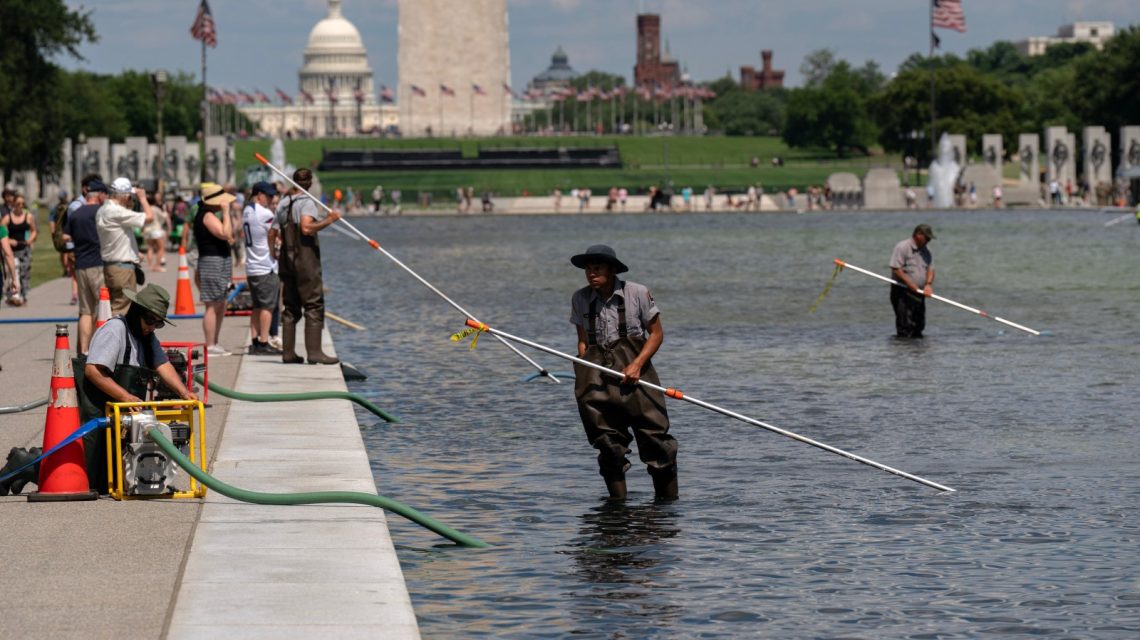
A viral photo of a dead duck in the Lincoln Memorial Reflecting Pool has raised concerns about the recent $14 million renovation. This image, which has garnered over 620,000 views as of Sunday on X, has intensified scrutiny regarding water quality, chemical treatments, and alleged vandalism at the historic site.
Despite the photo’s popularity, the cause of the duck’s death is unknown. Environmentalists warn that current water conditions pose risks to wildlife inhabiting the national monument. Newsweek reached out to the White House and the National Park Service (NPS) for comments.
Reflecting Pool Controversy
The wildlife incident is part of a wider debate over the condition of the Reflecting Pool after its refurbishment. The multi-million-dollar project included repainting the pool’s basin with a hue called “American Flag Blue,” celebrating the nation’s 250th anniversary. However, shortly after completion, the water turned a murky green due to algae blooms and sections of the new coating started peeling off.
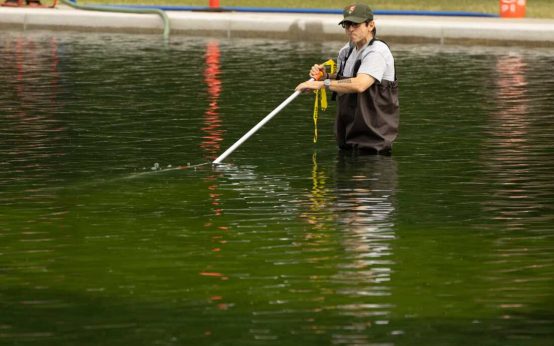
To address the algae growth, maintenance crews used chemical treatments like hydrogen peroxide. Visitors, environmentalists, and political figures criticized the rapid deterioration. Associated Press photos displayed several crews attempting to clean the pool.
Officials offered varying explanations for the problems. Some suggested environmental factors such as heat and stagnant water, while President Donald Trump claimed vandalism without providing proof. On Truth Social, he commented about arrests related to the alleged vandalism.
Emma Nicholson, a White House associate producer for CBS News, reported 14 police reports concerning the vandalism, with 5 arrests and 5 federal citations issued.
What We Know About the Dead Duck
Social media photos depict a dead duck in the reflecting pool, appearing after crews started chemical treatments for algae. The AP captured images of a mother duck with ducklings swimming in the basin.
Speculation connected the duck’s death to hydrogen peroxide treatments, but no evidence substantiates this claim. Experts explained that while hydrogen peroxide is a standard water treatment, high concentrations can harm wildlife.
Algae’s Impact on the Reflecting Pool
The uncertainty surrounding the duck’s death has fueled online discussions, using images of murky water and debris. Some hypothesize cyanobacteria, or blue-green algae, as the cause. These organisms flourish in sunlight and stagnant water, potentially releasing harmful toxins.
Experts emphasize the difficulty of managing water quality in large, open-air monuments. John Wilson Jr., a water systems specialist, noted that stagnant fresh water typically turns green.
Engineer Tyler Dailey informed Newsweek that reflecting pools lack filtration systems found in swimming pools, complicating algae control.
 The Mystery of Cape Town’s Disappearing Great White Sharks
  Inclusive Birdwatching Events Foster Community in Chicago
  Window Heat Pumps: A Solution for Renters and Older Homeowners
  Boyle Heights Warehouse Fire: Safety Tips and Updates
  Europe Braces for Intense Heatwave with Emergency Measures
  Controversy Surrounds Renovation of Lincoln Memorial Reflecting Pool