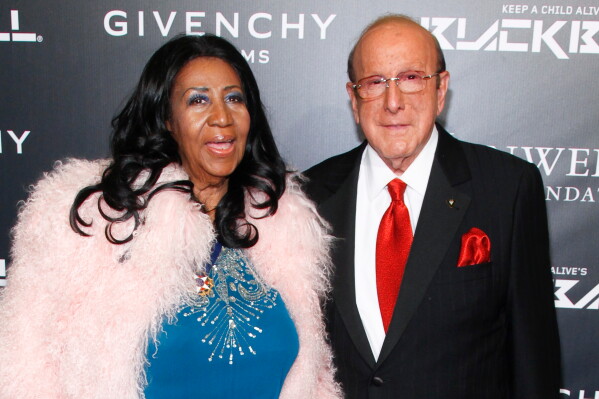
Clive Davis, the renowned music executive who recently passed away at 94, was celebrated for his unique talent in building deep, trusting relationships with many artists throughout his career. His approach fostered mutual respect, enabling him to shape the artists’ careers effectively while they also influenced his.
Janis Joplin
Clive Davis played an instrumental role in Janis Joplin’s career development. Appointed president of Columbia Records at the age of 35, Davis attended the Monterey Pop Festival in California, seeking emerging talent. Captivated by Joplin’s performance with Big Brother & The Holding Company, Davis faced a pivotal decision. He contemplated signing Joplin based purely on instinct. This decision marked a significant moment, altering his career path permanently.
Through Davis’s persuasion, Joplin released a shortened version of “Piece of My Heart,” which gained substantial radio play. He also encouraged her to pursue a solo career. After Joplin’s untimely death in 1970, Davis found her recording of “Me and Bobby McGee” within the sessions for her album “Pearl,” which was released posthumously and achieved high acclaim.
Carlos Santana
In 1968, Davis signed Carlos Santana to Columbia Records, leading to hits like “Black Magic Woman” and “Oye Como Va,” alongside Santana’s renowned Woodstock performance in 1969. Years later, seeking renewed musical significance, Santana rejoined Davis. Davis proposed an album merging Santana’s original works with collaborations from contemporary artists. The result was the 1999 album “Supernatural,” featuring tracks like “Do You Like the Way” with Lauryn Hill, and hits such as “Maria Maria” with Wyclef Jean and “Smooth” with Rob Thomas. The album swept eight Grammy Awards, equalling a record set by Michael Jackson’s “Thriller.” Santana expressed gratitude to Davis for his unwavering belief in Santana’s career.
Bruce Springsteen
Clive Davis signed Bruce Springsteen to Columbia Records in 1972 when Springsteen was just 22. Recognizing Springsteen’s potential beyond being merely a Bob Dylan imitator, Davis envisioned him as a remarkable poet and performer. When Springsteen submitted his debut album, Davis advised him to revise it, seeking memorable singles. Springsteen responded with “Blinded by the Light” and “Spirit in the Night.” In a “Late Show” appearance, Davis shared his early guidance to Springsteen, encouraging him to utilize the stage energetically during performances. Springsteen acknowledged Davis’s pivotal role, stating Davis transformed his career when he signed him to Columbia Records.
Whitney Houston
Whitney Houston’s association with Clive Davis is perhaps the closest he had with an artist. Davis discovered her at Sweetwater’s club in New York, where she performed alongside her mother, Cissy Houston. Captivated by her rendition of “The Greatest Love of All,” Davis signed her to Arista in 1983. The label meticulously curated songs and producers for her debut album, which went on to become one of the best-selling albums ever. Houston became Arista’s top-selling artist and one of the greatest singers of all time. Their relationship was exceptionally strong, with Houston’s contract including a clause allowing her to exit if Davis left Arista. Davis was instrumental in shaping the soundtrack for Houston’s film “The Bodyguard,” notably maintaining the simple arrangement and iconic a cappella beginning for her rendition of “I Will Always Love You.”
The Grateful Dead
Clive Davis held a longstanding ambition to sign the Grateful Dead, particularly Jerry Garcia. Despite difficulties due to the Dead’s contract with Warner Bros., Davis signed the New Riders of the Purple Sage, a band featuring Garcia. Once the Dead sought a new major label in the late 1970s, Davis welcomed them to Arista Records. Bob Weir, the late Dead guitarist, noted Davis’s unique approach, referring to him as the one executive they trusted. Davis’s patience in aligning the band’s recording schedule with their readiness eventually led to their major hit, “Touch of Grey” in 1987.
Alicia Keys
Alicia Keys was only 15 when she signed with Columbia Records in 1996 but creative conflicts arose as the label insisted on external professional input. Feeling undermined, Keys found support from Davis, then parting with Arista to establish J Records. She performed her songs for him, and he recognized her artistic potential, ensuring her creative autonomy. Her debut album, “Songs in A Minor,” not only secured five Grammys but showcased her diverse musical style. Davis took decisive action, reaching out to Oprah Winfrey to feature Keys, leading to the single “Fallin’” gaining significant traction. Keys credited Davis for his profound impact, creating transformative opportunities worldwide.
Kenny G
Despite limited demand for instrumental music in the early 1980s, Davis identified Kenny G’s potential upon hearing him perform live. He signed the soft jazz saxophonist to Arista in 1982, which led to Kenny G becoming the top-selling instrumentalist in history. Kenny G attributed his success to Davis’s insightful foresight and balanced guidance, letting the artist direct his music while Davis contributed by pairing him with vocalists, such as Michael Bolton. Kenny G praised Davis for taking risks and helping him rise to prominence.
 Charlie Brown’s New Adventure: Snoopy Unleashed
  Nate Bargatze and ‘The Breadwinner’: Clean Comedy on the Big Screen
  Supergirl Review: A Fresh Take in the DC Universe
  Wendell Pierce on Acting, Life Lessons, and Black History
 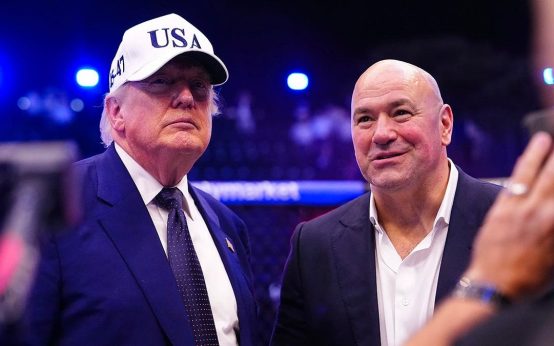 Dana White’s Support for Trump and Celebrities’ Private Endorsements
  New Cast Members Join ‘Fallout’ Season 3