The Supreme Court recently issued a unanimous decision supporting a marijuana user’s right to possess a firearm. This ruling emphasizes that the government cannot target individuals for firearm possession solely based on their cannabis use. Joey Jones, a Fox News contributor, highlighted the significance of this decision for protecting Second Amendment rights. He compared the ruling to alcohol-related regulations, stressing the importance of responsible gun ownership among marijuana cardholders in Florida.
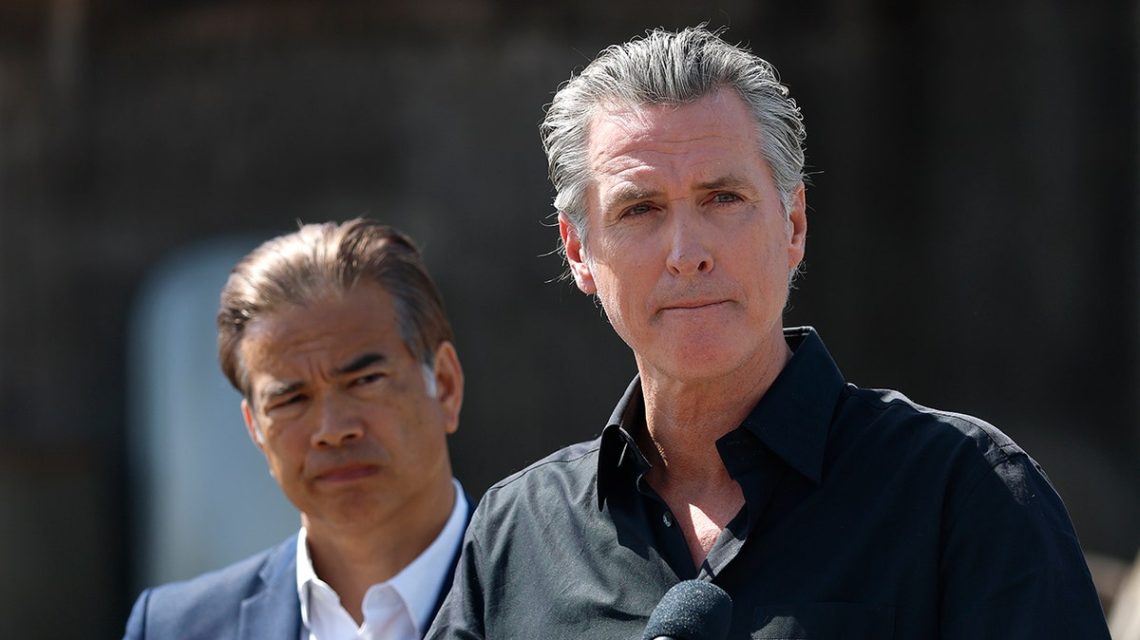
In a separate development, the Department of Justice warned California about potential legal action if the state enforces its ‘Glock ban.’ The federal government contends that this ban contradicts the Second Amendment’s right to bear arms. Assistant Attorney General for Civil Rights, Harmeet Dhillon, communicated this warning through a letter to California Governor Gavin Newsom and State Attorney General Rob Bonta. Dhillon argues that Californians have a constitutional right to access modern handguns for self-defense. She insists they should not be restricted to older models for safety, both in and outside of their homes.
The controversy surrounds California’s Assembly Bill 1127, also known as the ‘Glock ban,’ scheduled to take effect on July 1. Governor Newsom signed this legislation into law the previous fall. The law prohibits licensed firearms dealers from selling or transferring ‘machinegun-convertible pistols.’ It classifies Glocks, known as semi-automatic pistols, as ‘machinegun-convertible’ due to their trigger mechanisms, which some state officials believe can be modified with illegal aftermarket devices.
Under this law, current owners can keep their firearms, and law enforcement or military sales are exempt. Assistant Attorney General Dhillon claims the California law infringes upon citizens’ Second Amendment rights. She mentioned filing a complaint in federal district court against the state officials. However, she noted a willingness to delay this filing if California agrees to pre-suit negotiations.
Dhillon outlined that any resolution must ensure the state: (1) immediately suspends enforcement of the identified laws; (2) acknowledges the laws’ unconstitutionality; and (3) enters a court-enforceable consent decree to prevent similar laws from infringing on constitutional rights in the future. The letter gave California officials a deadline of 5 p.m. Tuesday to agree to negotiate.