The New START Treaty, which served as the final remaining nuclear arms control agreement between the United States and Russia, reaches its expiration on Thursday, concluding a significant chapter in arms control history between the two nations that possess the largest nuclear arsenals globally. Originally signed in 2010, this treaty restricted both countries to 1,550 deployed strategic nuclear weapons and included measures such as on-site inspections and notifications to ensure compliance.
During the conflict in Ukraine, Russia halted the exchange of notifications and suspended inspections, yet it is believed to have not substantially exceeded the treaty’s limits, according to a recent State Department report. Nonetheless, when former President Joe Biden extended the treaty in 2021 for an additional five years, he noted that it was the maximum allowable extension.
In January, President Donald Trump expressed his willingness to allow the treaty to lapse, as indicated in an interview with The New York Times, declaring, “if it expires, it expires.” A White House official informed CBS News that President Trump will announce his stance on nuclear arms control independently, revealing a preference for maintaining constraints on nuclear weapons and incorporating China in future discussions.
Secretary of State Marco Rubio stressed the importance of including China in negotiations, given its burgeoning nuclear arsenal, which the Pentagon predicts could surpass 1,000 weapons by 2035, compared to approximately 200 in 2019. Currently, the agreement stands as a bilateral pact between the U.S. and Russia, holding around 4,300 and 3,700 nuclear warheads, respectively, based on data from the Federation of American Scientists.
In September discussions, Russian President Vladimir Putin hinted that adherence to the treaty’s provisions could continue for a year without formalizing a new deal. Rose Gottemoeller, former Under Secretary of State for Arms Control, testified before the Senate Armed Services Committee, presenting this suggestion as a viable interim strategy. She emphasized that maintaining these limits would help restore strategic stability with Russia and provide control over nuclear armaments through negotiation.
However, some former officials such as Retired Adm. Charles Richard and Tim Morrison, who advised during the first Trump administration, presented opposing views. They argued that the treaty fails to address the inclusion of China and does not cover non-strategic nuclear arsenals, like tactical weapons. Despite acknowledging the treaty’s imperfections, Gottemoeller advocated its continuation, arguing it is better than having no treaty at all.
The expiration of the New START Treaty raises concerns about potential nuclear proliferation, as countries not currently pursuing nuclear programs might reconsider their positions. Additionally, Morrison highlighted the aging U.S. nuclear stockpile, noting that by 2035, the design life of these weapons would be surpassed by roughly 30 years. He asserted the necessity of robust deterrence measures, requiring ongoing investment in nuclear capabilities.
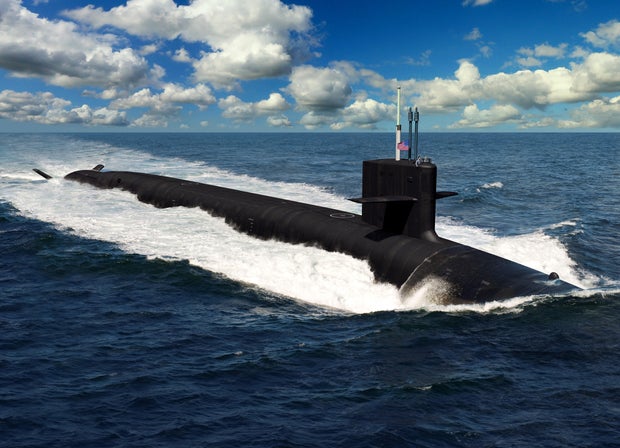
To deploy these capabilities efficiently, the development of the Columbia-class ballistic missile submarines remains a priority. These vessels will replace the aging Ohio-class submarines, forming the sea-based component of the U.S. nuclear triad aimed to bolster national defense.
In conclusion, the expiration of the New START Treaty signifies a pivotal moment for international arms control and prompts careful consideration of future nuclear strategies, including strategic partnerships and defense enhancements, to address emerging global security challenges.
 California’s Primary Election: Highlights and Insights
  President Trump’s Attendance at NBA Finals Game Sparks Reactions
  Investigations Launched Amid California Election Fraud Claims
  Khanna Urges Apology from Maine Senate Candidate Over Misconduct Allegations
  Judge Overturns Trump-Era Immigration Policies
  SpaceX Secures $920 Million Monthly Deal with Google