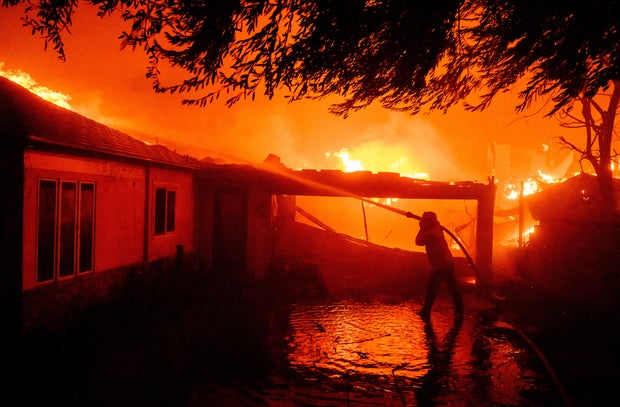
A recent study has revealed that prolonged exposure to pollution from wildfires is associated with tens of thousands of deaths annually in the United States. The study, published in the journal Science Advances, highlights the period from 2006 to 2020, during which exposure to fine particulate matter from wildfire smoke contributed to an average of 24,100 deaths each year in the contiguous U.S.
Our message is: Wildfire smoke is very dangerous. It is an increasing threat to human health,
stated Yaguang Wei, a study author and an assistant professor at the Icahn School of Medicine at Mount Sinai’s department of environmental medicine. Echoing this sentiment, Michael Jerrett, a professor at the University of California, Los Angeles, who was not involved in the research, remarked, The estimates they’re coming up with are reasonable,
adding the necessity of more studies to enhance scientific confidence in these findings.
The study focused specifically on deaths linked to chronic exposure to fine particulate matter, known as PM2.5, which is a major concern arising from wildfire smoke. These minuscule particles can penetrate deep into the lungs and enter the bloodstream, leading to both immediate and long-term health issues. Short-term exposure may result in symptoms like coughing and itchy eyes, but prolonged exposure can exacerbate existing health conditions and lead to serious illnesses such as respiratory and cardiovascular diseases, neurological disorders, and premature death.
According to Min Zhang, a postdoctoral researcher involved in the study, Wildfire smoke PM2.5 has emerged as a significant environmental hazard in the U.S.,
driven by more frequent and intense wildfires due in part to climate change. Besides climate concerns, issues like mismanaged forests and increased development in fire-prone areas have escalated the risks at the “urban wildland interface,” leading to significant health ramifications.
Nobody’s going to have ‘wildfire death’ on their death certificate unless the fire actually burned them or a tree fell on them or something like that,Jerrett explained.But many of the people that are dying from this exposure are ones that are already more vulnerable. These are real lives that are being lost.
Previous studies have similarly linked wildfire smoke to premature deaths, with a 2024 study specifically estimating tens of thousands of premature deaths in California alone from 2008 to 2018. This included substantial numbers in counties such as Sonoma, Santa Clara, Contra Costa, and Alameda.
Research Methodology and Findings
The researchers examined the relationship between annual average exposure to wildfire PM2.5 and mortality rates across 3,068 counties in the lower 48 states. They analyzed federal mortality data for a broad spectrum of causes, ranging from circulatory and neurological diseases to tumors and metabolic diseases. To ensure objectivity, they also included causes of death unlikely linked to wildfire smoke, such as falls and transportation accidents. This methodological rigor was noted by Kai Chen, an environmental sciences associate professor at Yale School of Public Health.
Wei noted, We found no association for car accidents and falls, while for other diseases we found statistically significant effects.
Among all disease categories, deaths resulting from neurological conditions showed the greatest increase when exposed to these particulates.
The analysis revealed that each 0.1 microgram per cubic meter increase of PM2.5 was associated with approximately 5,594 additional deaths annually. Findings highlighted notably higher vulnerability during cooler seasons and among rural and younger populations. Nevertheless, Jerrett highlighted potential discrepancies due to the inherent dynamic nature of wildfire smoke distribution, which can vary widely within large counties.
Implications for Climate Policy
The study underscores the imperative for urgent and effective strategies to mitigate the impact of PM2.5 pollution from wildfires. The repercussions of climate policy rollbacks, such as those experienced during the Trump administration, were also noted for exacerbating risks by leaving wildfire-induced PM2.5 unregulated due to its categorization as a natural disaster.
In reflecting on these findings, Chen emphasized, This highlights the importance of controlling wildfire-sourced PM2.5, which is currently not regulated by the EPA.
Increased awareness and policy intervention are crucial to address this pressing public health issue.
 Limited Interest in Arctic National Wildlife Refuge Oil Auction
  Confronting the Truth Behind Sustainability Buzzwords in the Food Industry
  The Aftermath of Santa Rosa Island’s Fire
  Largest Seizure of Illegal Cockroaches in Australia
  Flesh-Eating Fly Returns to the United States Causing Concern
  Australia’s Largest Seizure of Exotic Invertebrates: Over 100,000 Cockroaches Confiscated