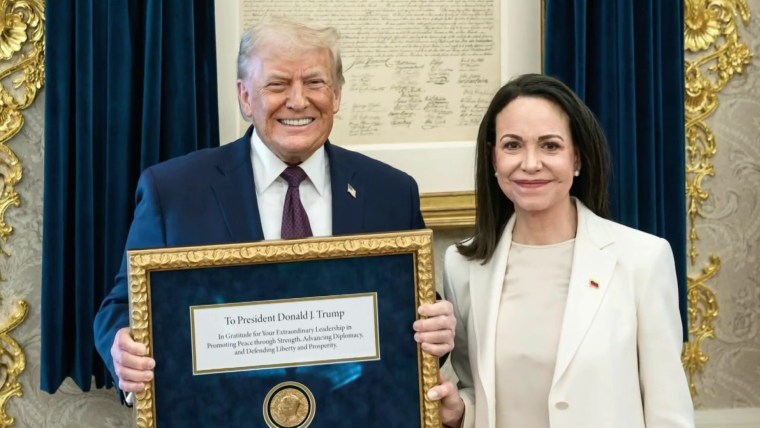
Venezuelan authorities announced on Sunday their intention to secure court approval to place well-known opposition figure Juan Pablo Guanipa under house arrest. This move comes shortly after Guanipa was forcibly taken by armed individuals in Caracas, an act which his son has described as a kidnapping.
Earlier in the day, Guanipa was released from jail after being detained for over eight months due to allegations of orchestrating a terrorist plot. The Venezuelan Public Ministry claimed Guanipa violated his release conditions but did not provide specifics or confirm whether he had been detained again.
The uncertainty surrounding Guanipa’s situation puts the Venezuelan government’s promises to pass an amnesty law and release political prisoners into question. This development occurs amidst increasing U.S. pressure following the capture and removal of long-time leader Nicolas Maduro by the Trump administration a month ago.
Ramon Guanipa, Juan Pablo’s son, and Maria Corina Machado, who received the Nobel Peace Prize for her efforts against Maduro, both insist he was taken by unidentified men.
Machado noted in a social media post, “Heavily armed men dressed in civilian clothes arrived in four vehicles and took him away by force.” Similarly, the younger Guanipa lamented in a video, “My father has again been kidnapped.”
Just prior to this incident, Juan Pablo Guanipa had shared videos online addressing journalists and supporters, advocating for the release of other political prisoners and challenging the legitimacy of the current Venezuelan government.
Maduro’s 2024 re-election faced widespread accusations of being fraudulent, leading many nations, including the U.S., to refuse recognition of his government’s authority.
Release Amidst Controversy
In a conversation with a local media outlet shortly after his release, Guanipa mentioned having a brief exchange with Machado and hoped for a more in-depth discussion the following day.
For years, Venezuela’s opposition and human rights advocates have accused the socialist government of using arrests to suppress dissent. The government, however, denies holding political detainees, asserting that imprisoned individuals have committed crimes. Officials claim that approximately 900 people have been released without clarifying the timeline or identifying those released.
Human rights organization Foro Penal reported that since January 8, when the government announced the start of a new release initiative, 383 political detainees have regained freedom. They recorded an additional 35 releases on Sunday, which included opposition figure Freddy Superlano and lawyer Perkins Rocha, both Machado allies.
Alfredo Romero, Foro Penal’s director, revealed on social media that they still lack clear information regarding Guanipa’s abductors.
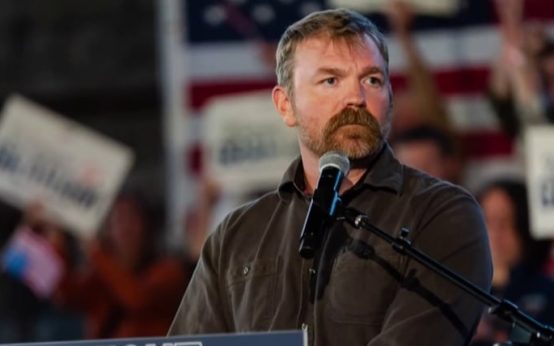 Khanna Urges Apology from Maine Senate Candidate Over Misconduct Allegations
 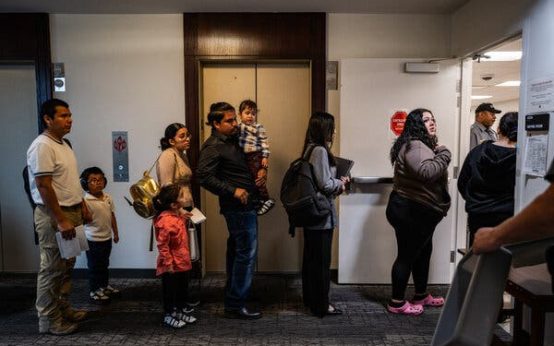 Judge Overturns Trump-Era Immigration Policies
 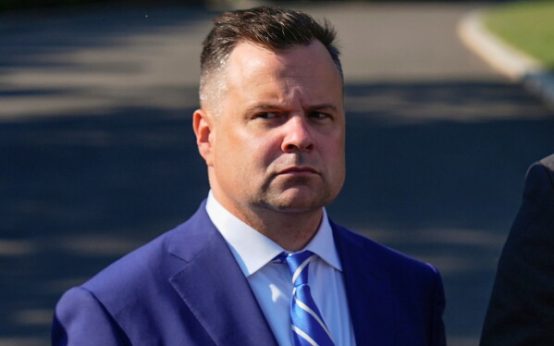 Trump Aims to Reduce National Intelligence Office Size
  California Primary Election 2026: Key Races and Emerging Results
  Xavier Becerra Advances in California Governor Race
  Protests Erupt in Albania Over Resort Development