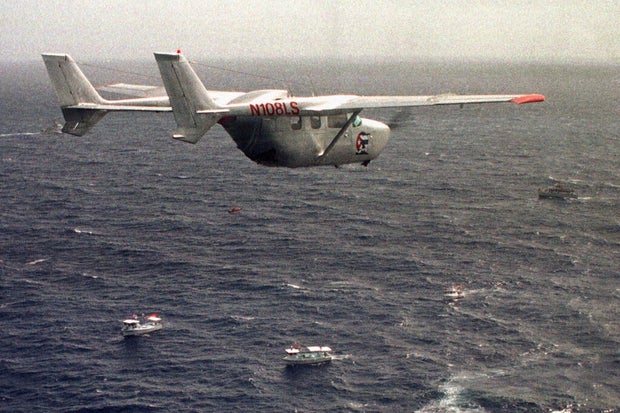
In February 1996, three civilian planes operated by the Cuban exile group Brothers to the Rescue took off from a Miami-area airport. The group aimed to locate people escaping Cuba in rafts. Two planes were shot down by a Cuban fighter jet, resulting in four deaths.
Now, three decades later, the U.S. has charged Raúl Castro, at 94 years old, for his alleged role in the incident. The charges include murder and conspiracy to kill U.S. nationals. This action reflects heightened pressure from the Trump administration on Cuba, escalating a tense history with the Castro family.
Founded in the early 1990s by José Basulto, a Cuban American involved in the failed CIO-assisted Bay of Pigs invasion, Brothers to the Rescue provided rescue flights between Florida and Cuba. Thousands of Cubans fled the island on makeshift crafts. By the mid-1990s, however, as the U.S. ceased automatic admittance, the number of sea escapes decreased.
Cuban authorities accused the organization of violating airspace and circulating anti-Castro materials, acts seen as illegal and provocative by the Cuban government.
In the lead-up to the shootdown, unauthorized flights raised concern among federal officials. Declassified records revealed warnings to Basulto about possible consequences, as recorded by George Washington University’s National Security Archive.
On February 24, 1996, three Brothers to the Rescue planes left Opa Locka Airport, heading toward Cuba. Basulto contacted Havana air traffic controllers, noting his plane was within Cuba’s air defense zone and accepting the risk involved. Shortly after, a Cuban MiG-29 fighter jet destroyed two planes, killing two American citizens and two others.
One Cuban pilot grossly remarked in Spanish, “This one won’t mess with us anymore,” after the first attack, followed by “Fatherland or death” after the second. Basulto’s plane, carrying four individuals, safely returned to Florida.
The International Civil Aviation Organization (ICAO) investigated and concluded that the planes were in international waters at the shootdown. Cuba insisted the planes entered its airspace, while international law forbids targeting civilian aircraft. The ICAO found no Cuban attempts at less drastic measures.
Fidel Castro admitted to issuing broad orders to prevent airspace violations, acknowledging but not explicitly authorizing the attack on February 24, 1996.
In retaliation, the U.S. enacted stricter sanctions against Cuba and halted charter flights. President Bill Clinton stated that the planes were no credible threat to Cuban security and the attack had no legal basis under international law.
A murder conspiracy charge was later brought against an individual accused of espionage for Cuba in relation to the incident, resulting in a prison sentence followed by a 2014 swap. Several others faced charges but were never tried.
Families of those killed were awarded substantial damages in civil court. Recent efforts, mainly from Florida lawmakers and the Miami Cuban American community, have reignited interest in filing charges against Raúl Castro.
The recent indictment occurs amid strained U.S.-Cuba relations, with the Trump administration imposing severe economic measures on the island, calling for political reforms, and offering limited aid. Basulto expressed hope for Castro’s indictment, saying, “It’s time for them to pay.”