SpaceX’s Launch for a Historic IPO
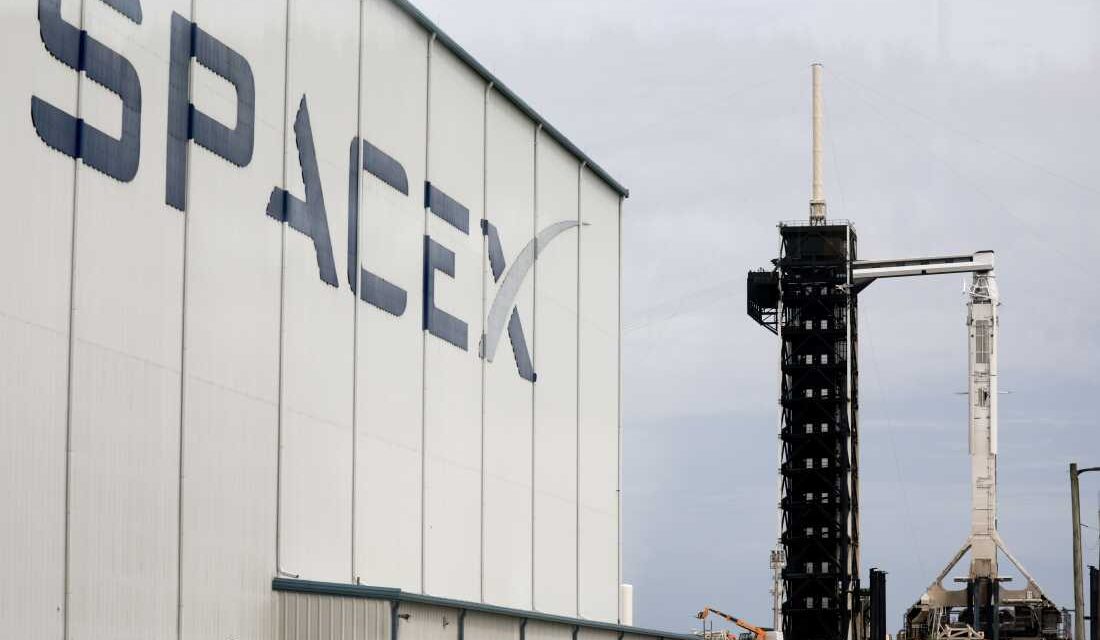
SpaceX is gearing up for another launch at NASA’s Kennedy Space Center in Florida on September 9, 2024. The company, controlled by Elon Musk, is also preparing to go public with an expected listing of unprecedented scale. Financial data filed with regulators positions SpaceX for potentially the largest initial public offering (IPO) ever, with reports suggesting a target of around $80 billion. If achieved, it would dwarf Saudi Aramco’s $29 billion IPO in 2019.
The IPO could value SpaceX at more than $1 trillion, making it one of the world’s most valuable companies, surpassing even Tesla. As the holder of 85% of the company’s voting power, Musk may become the world’s first trillionaire.
SpaceX’s public offering is set to set major benchmarks, not only for space exploration but also for the stock market.
Impacts of the SpaceX IPO
SpaceX’s IPO has been anticipated for months. Earlier this year, the company filed confidential paperwork with the U.S. Securities and Exchange Commission to initiate the process. The IPO could reshape Wall Street in a year with other huge tech company listings like OpenAI and Anthropic. These offerings will enable regular investors to buy into powerful tech companies fueling the AI boom. SpaceX is among these influential players, having dominated the space launch market with reusable rockets and its Starlink satellite internet service.
In 2023, SpaceX merged with Musk’s xAI, expanding its scope. Musk aims to develop orbital data centers, moon bases, and ultimately land humans on Mars. However, these ambitions come with significant expenditures. Last year, xAI increased capital costs to $12.7 billion, spurred by data center projects. An additional $3 billion was spent on developing its new rocket, Starship.
This year, two of SpaceX’s three primary divisions reported losses. The rocket-launching segment incurred an operating loss of $662 million, while its AI business lost approximately $2.5 billion. Only the Starlink satellite communications business achieved a profit, generating $1.2 billion. Overall, the company reported a net loss of nearly $4.3 billion for the first quarter against $4.7 billion in total revenue.
Advantages and Challenges of IPOs
IPOs offer individual investors a chance to invest in prominent companies while providing large capital influxes for businesses and private investors. Analysts hope SpaceX’s IPO will revitalize the IPO market after a lull in recent years. Yet, there are risks. New public companies often see stock price underperformance compared to the market. Franco Granda, a research analyst, notes that high-profile companies like SpaceX face extensive scrutiny post-IPO, complicating valuation justifications in the public eye.
Elon Musk and SpaceX’s Future
No company is as closely linked to Elon Musk as SpaceX. Founded in 2002 with the vision of establishing a Mars colony, Musk revolutionized the rocket industry with reusable first-stage rockets. SpaceX has secured numerous contracts, even surpassing national agencies like China and Russia, conducting 85% of all launches last year, according to Brycetech’s analysis.
Space revenue contributes less to SpaceX’s overall income. The majority comes from Starlink, with $11.4 billion in revenue compared to $4.1 billion from space launches and $3.2 billion from AI, as per recent filings. Tim Farrar, president of TMF associates, suggests that SpaceX’s valuation hinges more on belief in Musk’s vision than on current business metrics.