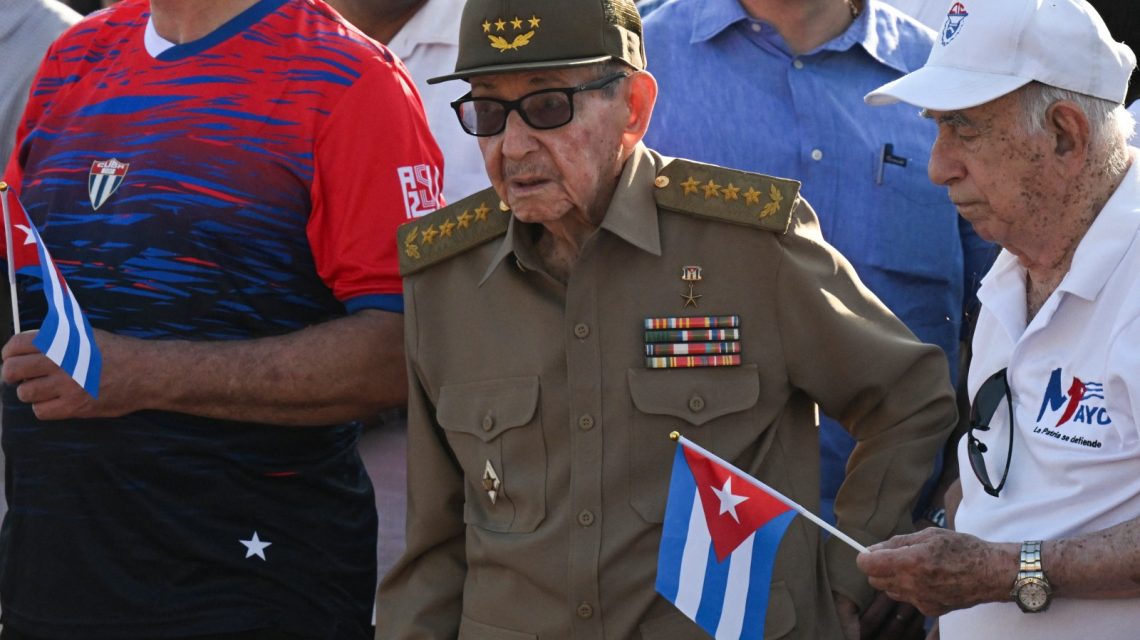
The United States has issued criminal charges against Raúl Castro, Cuba’s former president, related to a 1996 incident. The move follows months of pressure on Havana from the Trump administration. Castro, 94, led Cuba from 2008 to 2018 and remains influential on the island.
Despite the formal charges, the U.S. lacks the jurisdiction to arrest Castro in Cuba. Justice Department officials allege that, as defense minister, Castro ordered an attack on Brothers to the Rescue, a Miami-based exile group conducting rescue missions.
An indictment from the 1990s, following this incident, intensified U.S.-Cuba tensions and led Congress to tighten the embargo. The current charges arise amid heightened pressure from the Trump administration, with economic and military measures in play. Secretary of State Marco Rubio has offered $100 million in aid directly to the Cuban people.
Details of the 1996 Shootdown
On February 24, 1996, Cuban MiG fighter jets shot down two Cessna aircraft from Brothers to the Rescue. The planes were on a humanitarian mission searching for Cuban rafters. Four people died in the attack, including three Americans and one Cuban American.
Cuba claims the shootdown was a legitimate response to airspace violations. According to Cuban officials, the planes had violated Cuban airspace over 25 times between 1994 and 1996. The U.S. contends that the planes were operating in international waters on a rescue mission.
Cuba’s Position on the Indictment
Cuba’s embassy has disputed the U.S. charges. The embassy argues that the 1996 shootdown responded to repeated airspace violations. All incidents were formally reported to U.S. associations, including the State Department. The embassy emphasized the exhaustion of diplomatic channels before the airspace confrontation.
Possible U.S. Military Action
President Donald Trump has declared a strong stance against Cuba harboring hostile activities close to the U.S. Rubio supports systemic government change in Cuba. The U.S. has considered seizing Cuba amid the weakening Venezuelan oil supply to the island, leading to widespread crises.
Cuba has prepared for the possibility of a U.S. invasion. President Miguel Diaz-Canel has vowed to resist any attack, warning of potential bloodshed. U.S. intelligence reports the acquisition of drones by Cuba from Russia and China, affecting the strategic balance.
Economic and Humanitarian Strains in Cuba
The Cuban economy is under significant pressure. Electricity shortages result in power cuts lasting up to 22 hours in some areas. Food scarcity compounds the crisis, worsened by U.S. economic measures. Trump administration policies have further isolated the island, causing humanitarian distress.
Residents cope with daily power outages while enduring intense heat. Protests in the form of cacerolazos reflect the frustrations of the populace. The UN criticizes the U.S. blockade for its humanitarian consequences, while Trump maintains a hard stance for regime change.
Marco Rubio’s Message
On Cuban Independence Day, Marco Rubio, Secretary of State, addressed the Cuban people, promoting a new relationship with the U.S. Rubio criticized long-term mismanagement by the Cuban government, not attributing the crisis to the U.S. blockade.
Rubio’s message was aimed at catalyzing change and supporting the Cuban people, offering substantial aid as part of this effort.
 Potential Ebola Outbreak in Central Africa Raises Concerns of Rapid Spread
  U.S. and Allies Condemn Efforts to Overthrow Bolivian Government
  Pamela Hicks: Cousin, Bridesmaid, and Witness to History
  Latin American Deportees in Congo: Return to Home Countries Amid Challenges
  Controversy Surrounds Stabbing Incident of British Student
  Royal Cottages and Controversies: Financial and Legal Revelations