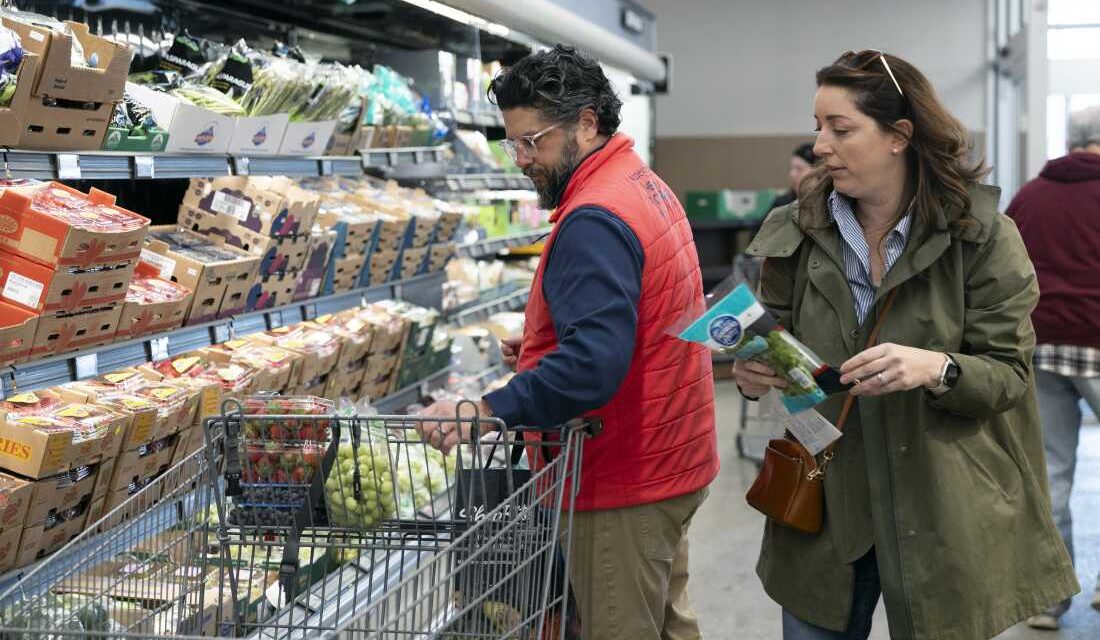
Rich Henderson and his wife, Rachel Negro-Henderson, often shop for groceries at Aldi in Bellmawr, N.J. This habit started during the pandemic after Rich lost his income as a crew coach. However, their frequent visits to Aldi sometimes led to awkward encounters with known faces who did not wish to admit their reasons for shopping there at first.
With time, these encounters changed. Negro-Henderson, who resides in Audubon, N.J., with her family, noted a shift in attitude. Now, people openly acknowledge shopping there to save money. Many acknowledge the financial benefits of buying the same products at lower prices.
“Consumers are just to a point where [they’re saying], ‘Give us a break.'” — Phil Lempert, grocery industry analyst
The pandemic exacerbated food insecurity, and soaring grocery prices compounded the issue. Inflation, potential tariffs, and cost-cutting measures such as shrinkflation and electronic shelf labels add pressure. People gravitate toward budget stores and warehouse clubs in response.
Budget stores like Aldi and Lidl are more efficient. Smaller store sizes, less product variety, and reduced staffing help keep prices low. For example, Aldi saves time by placing items directly in shipping boxes on shelves. The minimalist approach contrasts with larger supermarkets, focusing less on aesthetics and more on savings.
Recent data from Consumer Reports using Walmart as a baseline showed Aldi and Lidl have prices over 8% lower than Walmart, with BJ’s Wholesale Club and Costco offering even greater savings.
However, budget grocery stores sometimes lack variety. Rachel Negro-Henderson, an avid Aldi fan, supplements her shopping at other stores for specific items like deli meat. Yet, she accepts this as a small inconvenience for the larger savings.
Another benefit pointed out by consumers like Rich Henderson is the availability of GMO-free store-brand items at Aldi, with 90% of products there being store brands. He emphasized that quality rivals that of name brands while offering better prices.
Social media reflects this shift. Creators share low-cost meal ideas, inspired by specific economic conditions. One such creator, Kiki Rough, showcases Depression-era recipes to stretch grocery budgets. Experts predict thrifty shopping habits will persist.
Phil Lempert notes the continued appeal of cost-savvy grocery options. Many now rely on shopping lists, online comparisons, and avoiding impulsive purchases, highlighting a lasting change in consumer behavior.