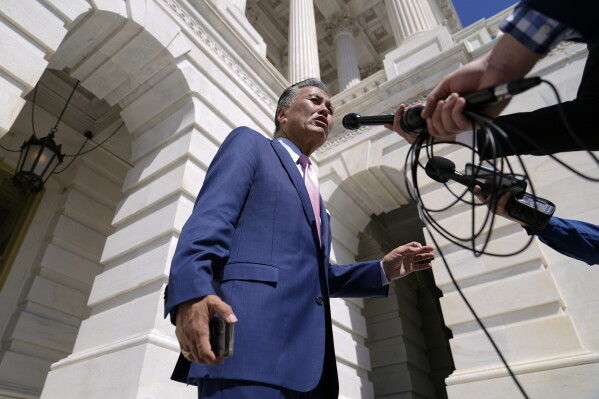
Last Fourth of July, Congressman Mark Takano heard alarming accounts of immigration patrols in Southern California. Residents began carrying passports as proof of their right to remain in the country. Takano, whose parents were detained as children during World War II’s forced relocation of Japanese Americans, saw similarities between these events.
“I see parallels between my parents being labeled dangerous and today’s claims that immigrants pose grave threats,” Takano told The Associated Press. His family endured incarceration under similar arguments used by current administration policies, he said.
President Donald Trump advocated for extensive deportations, aiming to deport one million people annually. The deaths of U.S. citizens Renee Good and Alex Pretti during protests in Minneapolis highlighted the human cost of these actions. Changes in leadership at the Department of Homeland Security aim to reshape the approach, with new Secretary Markwayne Mullin vowing discretion. Yet, Trump’s allies push for continued high deportation rates, backed by significant funding.
“We look back on that era of history as a shameful period,” Takano stated, referring to World War II incarcerations. He draws from personal and national history to oppose current policies.
Takano, once a high school history teacher, learned his family’s history early. His grandfather, Isao Takano, migrated from Hiroshima and settled in Washington State. The family was part of the 120,000 Japanese Americans forcibly relocated after Pearl Harbor. Takano’s father was just two, and his mother one, when taken to internment camps.
A historical photo provided by Takano’s office shows his grandparents and young family members in Washington.
“People face anti-immigrant detentions now as they did then,” Takano said in a House floor speech, questioning future judgments of current policies like the Florida detention facility known as Alligator Alcatraz.
The Civil Liberties Act of 1988, signed by President Ronald Reagan, recognized past injustices with apologies and $20,000 compensation for each survivor. Takano’s father participated in redress campaigns, seeing his family partially vindicated.
Current discussions in Congress aim for similar reparations for victims of immigration enforcement actions today, Takano said. He hopes the country will eventually recognize these actions as mistakes, emerging stronger and more united.
 California’s Primary Election: Highlights and Insights
  President Trump’s Attendance at NBA Finals Game Sparks Reactions
 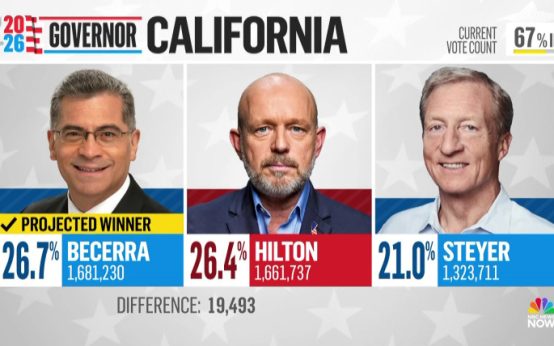 Investigations Launched Amid California Election Fraud Claims
  Khanna Urges Apology from Maine Senate Candidate Over Misconduct Allegations
  Judge Overturns Trump-Era Immigration Policies
  Trump Aims to Reduce National Intelligence Office Size