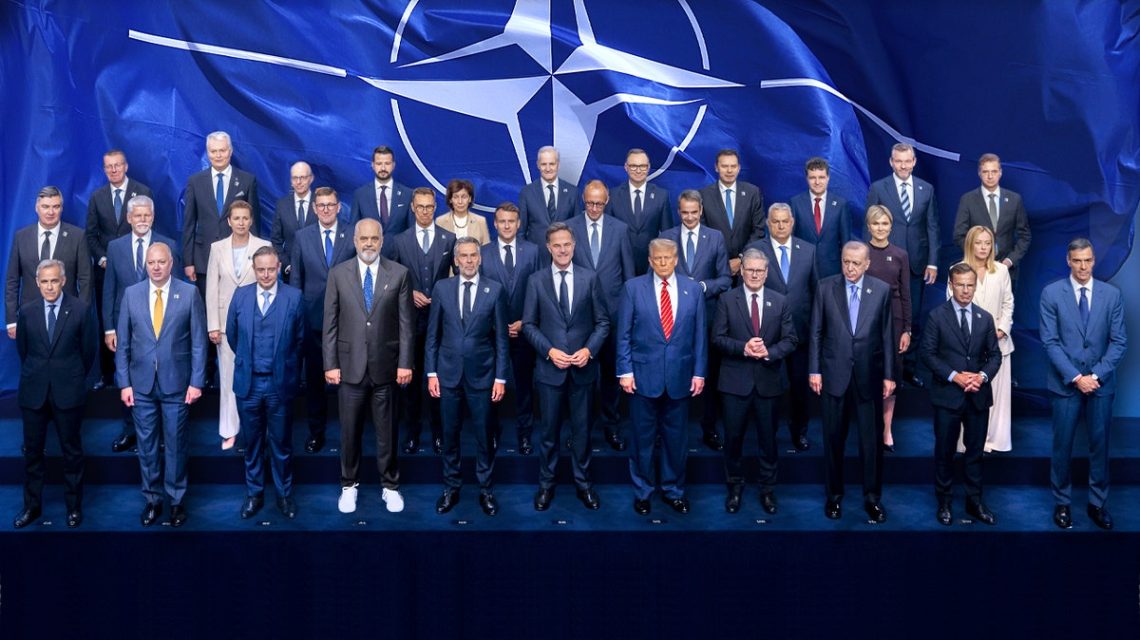
NATO has undergone significant changes in recent years, driven by increased defense spending. This shift follows pressure from former President Donald Trump and concerns about Russia’s actions in Ukraine. NATO countries are now spending more on defense than at any period since the Cold War. A new framework aims to reach almost 5% of GDP for defense by 2035.
Trump’s Influence and NATO Commitments
For years, Trump pushed NATO allies to invest more in their defense rather than relying heavily on U.S. military protection. His insistence on meeting spending targets turned a little-known alliance metric into a significant political factor. Jim Townsend, a former deputy assistant secretary of defense for Europe and NATO policy, noted the two factors that spurred NATO members into action: Putin’s invasion in 2022 and Trump’s demands for more defense spending.
During a summit in The Hague in June 2025, NATO leaders vowed to increase defense spending to 5% of GDP by 2035, as urged by Trump. Countries near Russia, like Poland, have reacted swiftly. Poland has ramped up defense spending, and countries like Estonia, Latvia, and Lithuania have significantly increased their military budgets since 2022.
European Commitment to Defense
Germany, once emblematic of Europe’s military decline post-Cold War, has initiated a rearmament strategy. Germany is investing in a 100 billion euro fund to strengthen the Bundeswehr. On paper, these numbers represent a striking shift. European allies and Canada raised defense expenditure by 20% in 2025 compared to the previous year. NATO’s reports show that European members and Canada have contributed hundreds of billions of dollars to defense since 2014.
Challenges of Increasing Defense Spending
Europe has been busy acquiring tanks, air defenses, fighter jets, and artillery systems while replenishing their stockpiles, reduced after the Ukraine conflict. However, increasing spending highlights certain limitations. Townsend emphasizes that higher spending doesn’t immediately result in increased military capability. A significant conflict, like the one in Ukraine, can quickly exhaust ammunition, strain production, and overwhelm industries designed for peacetime.
While a defense budget indicates political will, it doesn’t reveal troop readiness or stockpile levels. The 2% benchmark served as a simple measure of burden-sharing but didn’t give a full picture of each nation’s military capability. Ukraine’s situation demonstrates that high budgets are a foundational step but don’t guarantee immediate effectiveness.
The Industrial Production Dilemma
Rising defense budgets require enhanced production capacity, as NATO strives to resupply and prepare for future challenges with Russia. Countries often face long delivery timelines and supply chain bottlenecks despite major procurement plans. A recent McKinsey report highlighted issues with procurement systems and production timetables.
Europe leans heavily on American military tech, with Townsend noting dependencies on U.S. capabilities. Air defense systems, long-range strike weapons, logistics networks, and intelligence remain challenging areas for rapid rebuilding. The growing demand post-Ukraine conflict lengthens production timelines. As a consequence, some NATO countries find alternatives elsewhere, such as Poland looking to South Korea for weapons.
Efforts to expand domestic production to decrease reliance on American suppliers continue. Germany increased ammunition production, and some civilian firms have adjusted their operations toward defense manufacturing. Townsend states that restoring Europe’s military capacity will take time.
The question remains whether NATO can close the capability gap swiftly enough to deter potential Russian advances.
 U.S. Military Awaits Pentagon’s Clarification on Troop Levels in Europe
  Potential Ebola Outbreak in Central Africa Raises Concerns of Rapid Spread
  U.S. and Allies Condemn Efforts to Overthrow Bolivian Government
  Pamela Hicks: Cousin, Bridesmaid, and Witness to History
  Latin American Deportees in Congo: Return to Home Countries Amid Challenges
  Controversy Surrounds Stabbing Incident of British Student