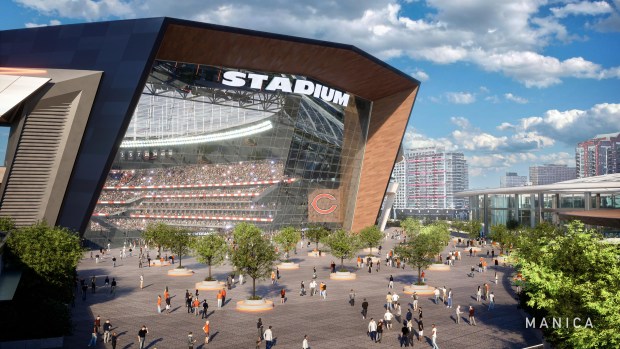
Negotiated payments by the Chicago Bears to local governments have been the focal point of public debate. These discussions determine what state lawmakers should do to help the team build a suburban stadium. However, a new analysis from the Cook County treasurer’s office reveals that talks have overshadowed broader impacts of a megaprojects proposal under consideration in Springfield.
Megaprojects Proposal and Tax Changes
The proposal defines a framework for “tax certainty” for development projects costing at least $100 million. Last month, a measure approved in the Illinois House includes tax changes with statewide implications. It features provisions eliminating sales taxes on construction materials, expanding existing bond programs, and creating new incentives for revamping railroad facilities. These changes might extend to undeclared and unconsidered developments.
“People don’t realize the effects of the payments in lieu of taxes go far beyond just the Bears,” stated Hal Dardick, Pappas’ research director. He noted that the tax arrangement, known as “PILOT,” is more than just creating a sales tax and hotel tax increment, allowing developers breaks at multiple levels.
Pappas’ report might present new considerations as Gov. JB Pritzker and the Democratic-controlled General Assembly seek a compromise before the session’s scheduled adjournment. The proposal aims to prevent the Bears from relocating to Indiana but has met resistance from Pritzker and key members of the state Senate.
Tax Incentives and Impacts
Tax incentive programs under negotiation fundamentally undermine the benefits of major developments. Expanding the property tax base alleviates burdens on other taxpayers. While the proposal offers big project tax certainty, other taxpayers endure varying assessments and levies from local governments. Those not benefitting continue to pay full sales taxes.
Sales tax or incentive packages that use sales or hotel taxes to repay bonds starve local governments of essential revenue. Supporters argue projects would be unfeasible without these perks. They promise benefits such as jobs, economic growth, tourism, and sales tax receipts.
Indeed, Bears executives claim their $5 billion plan to redevelop the former Arlington International Racecourse into a stadium and mixed-use development needs incentives to materialize. However, robust evidence from economists indicates stadiums do not spark economic or social progress as anticipated, according to the treasurer’s report. Current incentives include assessment reductions and tax increment financing, or TIF.
Evaluating the True Value of Developments
The report questions taxpayer benefits if there’s no property tax base expansion and limited sales tax advantages. Construction materials would be exempt from the state’s 6.25% sales tax. The proposal allows developers increased access to Sales Tax and Revenue, or STAR, bonds backed by state and local sales taxes.
New Opportunities for Vacation and Adventure, or NOVA, districts for STAR bond-financed projects are introduced. Like TIF, this setup freezes sales and hotel taxes paid to local governments, using any taxes collected above that frozen amount to pay back bonds.
Sponsored by State Rep. Kam Buckner, a Chicago Democrat, the House plan also introduces a railroad megaproject program, freezing property taxes on redeveloped rail yard land for 40 years. Special payments to local taxing districts would benefit projects like the Bears’ proposed stadium.
Assessing Real Stadium Costs
The report highlights concerns surrounding the estimated $2 billion the Bears would spend to build a domed stadium in Arlington Heights. This figure likely doesn’t represent the final actual value of the development—only one-third of this amount is assessed, per stadium expert Geoffrey Propheter.
Labor, financing costs, and fixtures in the stadium factor into the $2 billion figure, which Illinois doesn’t tax. The actual value might be closer to $675 million, a conservative estimation.
The ultimate value defines the potential team benefits and taxing body losses, such as the village of Arlington Heights and area school districts. Stadiums are notoriously hard to assess due to few comparable sales or similar local stadiums. Soldier Field is publicly owned and exempt from property taxes.
The treasurer’s report shows a $675 million estimate, excluding special incentives. The tax bill would be approximately $53.2 million. However, the megaprojects proposal freezes preconstruction assessments, yielding a roughly $4 million bill plus an estimated $10 million annual special payment. The Bears pay around $7 million in rent at Soldier Field. They would negotiate local taxing bodies’ actual payment, potentially leading to a $39 million annual tax break, about $1.5 billion over 40 years.
Evaluating Broader Tax Effects
The treasurer and Cook County Board President Toni Preckwinkle’s office examined impacts of incentives, exemptions, and TIF districts. These elements could shift property tax burdens onto homeowners and businesses or pressure districts to increase collections.
Expanding the local tax base offers significant benefits in Illinois, given its high residential, commercial, and industrial property taxes, the report notes. It questions whether special payments suffice for school and government services needed by new developments.
The report emphasizes murky benefits for Illinois residents compared to clear advantages for the Bears and other megaproject developers.