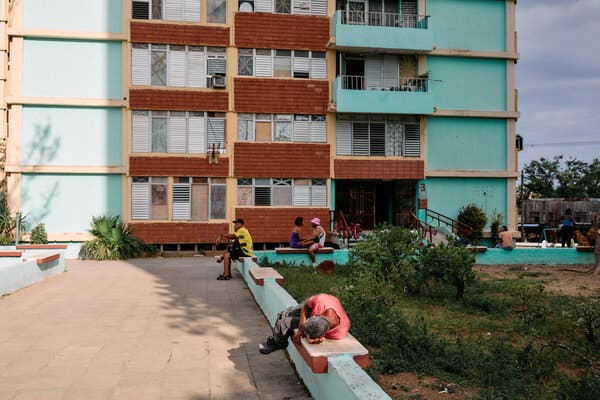
The U.S. oil blockade has severely affected Cuba, leaving millions without access to cooking gas. In Santiago de Cuba, a city deeply tied to the Cuban revolution, residents of apartment towers now rely on charcoal and firewood to cook meals.
In Santiago de Cuba, five apartment towers each rise 18 stories high, housing numerous residents. This month, amid an ongoing energy shortage, residents find themselves outside these towers, gathering materials to cook by traditional means.
Early this year, Ed Augustin and Lisette Poole traveled to Santiago de Cuba to explore the impact of the energy crisis. Their findings highlight the struggle and resilience of the Cuban people as they adapt to dwindling resources.
Adapting to a Difficult Reality
On a typical night, Yusimi Castellano, a resident of one of these towers, engages in an arduous cooking routine. She arranges charcoal on a small iron stove in her apartment. To ignite it, she uses a cigarette lighter and materials like Styrofoam for kindling.
The resulting smoke wafts through her 18th-floor apartment, eventually dispersing into the surroundings. Santiago de Cuba holds historical significance, as the Cuban Revolution traces its roots here. The city is surrounded by lush mountains, adding to its picturesque yet challenging environment.
Once the charcoal glows red, Yusimi places a makeshift grill crafted from old coat hangers over the heat. This enables her to cook spaghetti for her family’s meal. The method she uses highlights the stark choices facing many residents.
Yusimi, 58, is asthmatic, often experiencing breathing difficulties and coughing spells. Despite her health challenges, she stays committed to cooking for her family. “I shouldn’t be cooking with charcoal,” Yusimi admits. “But if I don’t cook, I die.”
A Shifting Norm
The circumstances Yusimi faces reflect a broader issue affecting her residential complex. Initially built to demonstrate the revolution’s success 40 years ago, the buildings now showcase a grimmer reality.
For some residents, even charcoal is beyond their means. They turn to gathering firewood as a last resort. This practice echoes throughout the complex, where makeshift cooking methods have become routine.
As Cuba navigates the pressing energy crisis, residents of Santiago de Cuba continue to adapt in the face of scarcity. Their reliance on age-old methods underscores the difficulty of securing basic necessities amid rapidly changing conditions.
 Pamela Hicks: Cousin, Bridesmaid, and Witness to History
  Latin American Deportees in Congo: Return to Home Countries Amid Challenges
  Controversy Surrounds Stabbing Incident of British Student
  Royal Cottages and Controversies: Financial and Legal Revelations
 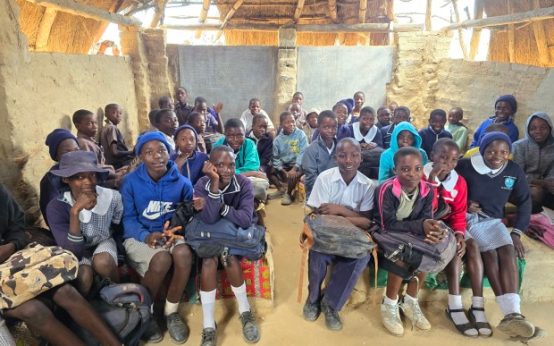 Oak Lawn Librarian Supports Library Projects in Zimbabwe
  World Cup Anticipation: US Men’s National Team and Norway’s Viking-Themed Campaign