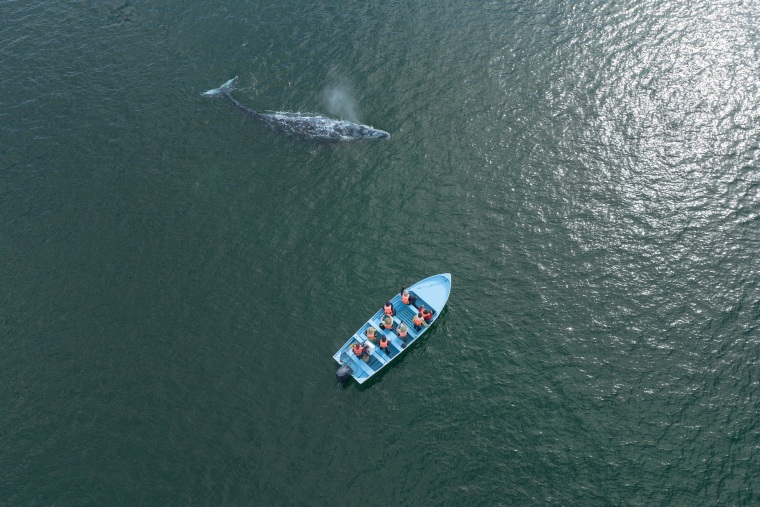
Since March 2026, Washington state shores have seen 21 dead, emaciated gray whales. These events raise alarm among research biologists, including John Calambokidis, founder of the Cascadia Research Collective. The gray whale was once a symbol of successful conservation but now faces significant challenges. Over the past seven years, there has been a marked decline in their population. Many deceased whales have been found thin and weak, exhibiting behaviors that indicate navigational problems due to their poor condition.
Calambokidis highlights the link between the whales’ struggles and climate change. He notes that the Arctic’s dramatic environmental changes are affecting the whales’ food supply. Changes in sea ice have disrupted the availability of amphipods, their preferred prey. Josh Stewart from Oregon State University’s Marine Mammal Institute adds that the conditions required to support a population of 25,000 gray whales may not return anytime soon.
Gray whale deaths have concerned scientists since 2019 when the National Oceanic and Atmospheric Administration declared these occurrences an “unusual mortality event.” Although there was a brief rebound in 2023, the population is now in continuous decline. This pattern is more accurately described as a repetitive cycle of bust periods, putting the whales’ survival at risk.
Gray whales migrate to the Arctic during spring and summer to feed. Their feeding ground is crucial as they fast for six to eight months while traveling south to Mexico for winter. Scientists understand that earlier sea ice melting alters nutrient distribution. Algae usually fertilize the seafloor, supporting amphipods. However, this cycle has changed, reducing the whales’ prey availability.
Currently, as whales migrate north, they are the skinniest and most vulnerable due to prolonged fasting. Some whales seek sustenance in odd locations, struggling to complete their migration. NOAA reports a decrease in their population from 27,430 a decade ago to 12,950 last summer, although precise modeling is difficult.
Not all gray whales rely heavily on Arctic regions. The Sounders, a smaller group, stop to consume ghost shrimp in the northern Puget Sound area. Another subgroup, the Pacific Feeding Group, spends summers in coastal waters off Northern California and other regions. These groups show resilience amid broader declines and suggest alternative foraging strategies.
Historically, commercial whaling drastically reduced gray whale numbers. With protective measures and conservation, they quickly rebounded and were removed from the endangered list in 1994. Although researchers like Stewart do not foresee extinction, recent progress in their population recovery appears vulnerable. He emphasizes they are in unknown territory from a recovery standpoint.
 Limited Interest in Arctic National Wildlife Refuge Oil Auction
  Confronting the Truth Behind Sustainability Buzzwords in the Food Industry
  The Aftermath of Santa Rosa Island’s Fire
  Largest Seizure of Illegal Cockroaches in Australia
  Flesh-Eating Fly Returns to the United States Causing Concern
 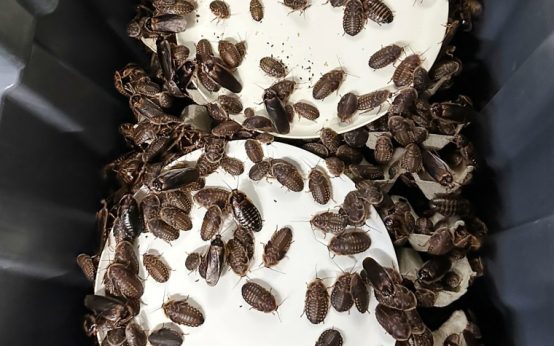 Australia’s Largest Seizure of Exotic Invertebrates: Over 100,000 Cockroaches Confiscated