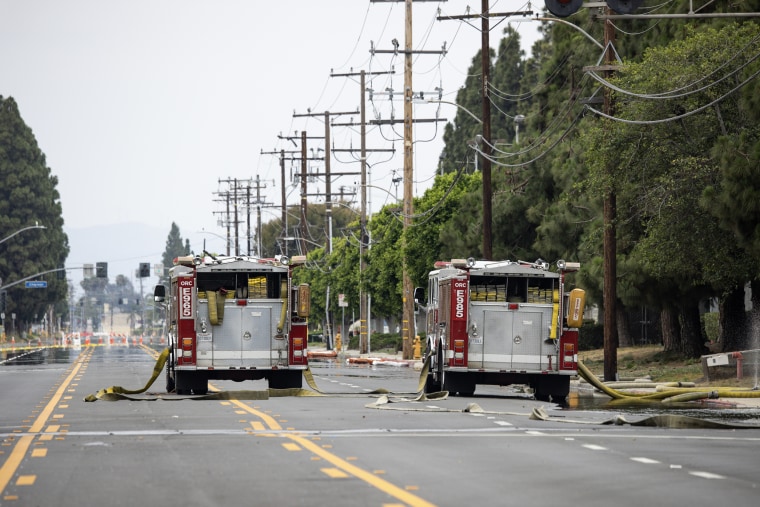
McGovern spoke with NBC News about ongoing efforts to assess a possible crack in a tank at GKN Aerospace. Crews are working to determine if the crack is relieving pressure. Successful pressure relief would eliminate the threat of a BLEVE, a boiling liquid expanding vapor explosion. McGovern emphasized that avoiding a BLEVE is crucial as it poses a more severe risk than an explosion. If pressure release confirms safety, evacuation zones could shrink, allowing crews to cool the tank efficiently.
A critical concern is the potential rupture of the tank, which holds toxic material that could harm waterways and air quality. The Orange County Fire Authority reported early Monday about neutralizing one of three tanks. However, the two remaining tanks, including the affected one, have not been neutralized. An official post clarified there is no active chemical leak, and live atmospheric monitoring supports this.
GKN Aerospace is monitoring the situation closely, with crews operating around the clock to minimize leak risks. If the tank were to explode, it could trigger explosions in nearby tanks containing methyl methacrylate. Division Chief Craig Covey stated that such an event might be one of California’s worst chemical incidents.
The blast radius for a potential explosion could extend up to half a mile, causing structural damage and dispersing toxic vapors. Evacuations have led 50,000 residents to leave their homes, seeking shelter as nearby shelters reach capacity. Lydia Green, an evacuee from Anaheim, expressed distress at the shelter due to the situation impacting her basic needs. Her partner, Eugene Smith, described living conditions in their car, fearing potential devastation.
The tense atmosphere was echoed by Jaden Gebeleinis, who lives at the edge of the evacuation zone. He expressed concerns about having such facilities near residential areas and hoped for effective management to prevent disaster. The American Red Cross manages six shelters for evacuees, presently near capacity.
Concerns began Thursday with a vapor release from the 7,000-gallon tank, prompting deeper investigation after temperatures started climbing. Firefighters use sprinklers and hoses to cool the tank. On Saturday night, crews noticed the tank’s temperature gauge reading at its limit of 100 degrees Fahrenheit, suggesting higher real temperatures. Garden Grove, the location of this critical event, lies 35 miles southeast of Los Angeles.
Governor Gavin Newsom declared a state of emergency in Orange County and sought federal assistance for response efforts. McGovern confirmed that officials are employing innovative strategies to resolve the situation and allow residents to return home safely.
 Largest Seizure of Illegal Cockroaches in Australia
  New Threat to U.S. Cattle Industry: The Screwworm Infestation
  Military Training Exercises Cause Stir in California Cities
  Manhunt Underway After Reported Shooting in Lansing, Illinois
  New World Screwworm Fly Returns to Texas, Poses Threat to Cattle Industry
 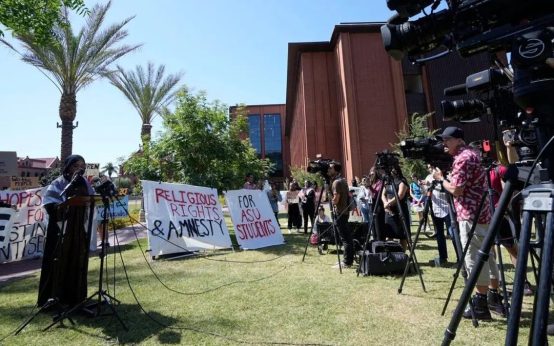 DOJ Investigates Arizona State University’s DEI Practices