
A federal judge has allowed President Donald Trump’s executive order to move forward. This order involves creating a federal voter list and limiting mail voting. The decision opens the door for potential changes in the election process before the upcoming midterm elections.
U.S. District Judge Carl Nichols, appointed by Trump, denied the request from Democrats and civil rights groups to block the order. These groups argued that the order could be unconstitutional since states and Congress typically set election rules, not the president. Nichols agreed with the Trump administration’s argument that it was premature to block the order as it has not yet been enacted.
The Court recognizes that the Postal Service may ultimately issue a final rule that directly affects Plaintiffs or their members, or that the Government may develop State Citizenship Lists that omit specific individuals due to particularized flaws,Nichols stated.Plaintiffs may, of course, renew their motions if and when those future actions occur. Until then, however, Plaintiffs cannot show that preliminary injunctive relief is warranted.
Meanwhile, the battle continues in Boston, where a separate lawsuit by voting rights groups seeks to temporarily block the executive order. The Trump administration has not yet issued lists of eligible voters. Those who initially requested the halt stated they would return to court if the administration proceeds in that direction.
Juan Proaño, CEO of the League of United Latin American Citizens, one of the organizations seeking a block, said, We are ready to resume the fight if and when the administration takes those next steps.
Trump’s order came in March after a voting overhaul bill he backed stalled in Congress. It aims to have the federal government create a list of eligible voters, instructing the U.S. Postal Service to mail ballots only to those listed. Election officials raised concerns about potential misuse and confusion.
Despite his loss to Democrat Joe Biden in the 2020 presidential election, Trump has falsely claimed fraud in mail voting. He initiated a federal investigation into the 2020 vote, though audits and investigations, including those by Republicans, confirmed no widespread fraud.
This is Trump’s second executive order concerning elections. His first, issued shortly after starting his second term, has been blocked by multiple federal judges. This order demanded documentary proof of citizenship for voter registration and included other measures.
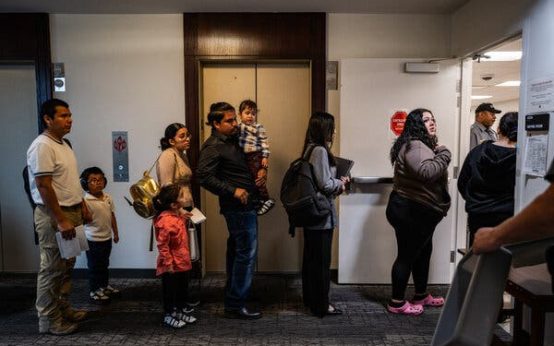 Judge Overturns Trump-Era Immigration Policies
  Trump Aims to Reduce National Intelligence Office Size
  California Primary Election 2026: Key Races and Emerging Results
  Xavier Becerra Advances in California Governor Race
  Trump Criticizes Senator Tillis Amid Nomination Discussions
  Clarity Sought on U.S. Troop Levels in Europe Amid Policy Changes