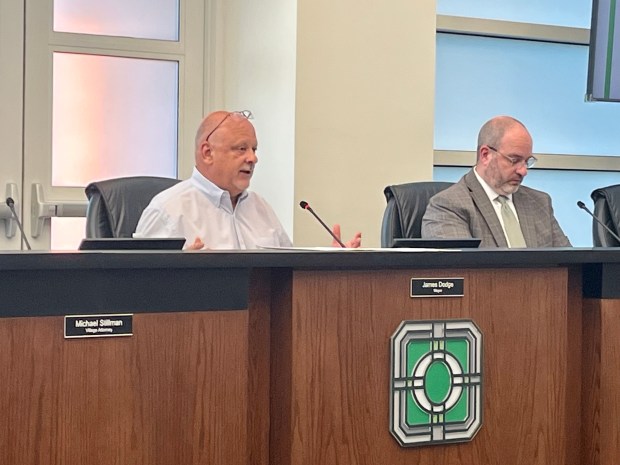
The Orland Park Village Board recently met to strategize on attracting development in four key areas. These areas include the Old Orland Historic District, Gateway to LaGrange District, Harlem Avenue Corridor, and I-80 Employment Corridor. These discussions are part of a broader review of the village’s comprehensive plan.
The board explored the challenges and opportunities of revitalizing these sectors, while also considering connections to a new downtown area. Mayor Jim Dodge emphasized the long-term vision for these developments, noting, “This is Orland’s destiny. It’ll take 20 years, but it’s Orland’s destiny.”
Urban planning firm Houseal Levigne will incorporate feedback from upcoming community meetings and an online survey to refine the plan. The village aims to finalize the plan for board approval by next summer.
Identifying Challenges and Strengths
Board members participated in an exercise to identify three main issues facing each area. They used this process to prioritize the most pressing concerns. For the Old Orland Historic District, the focus was on updating existing properties and balancing development with historic preservation.
“You’ve got to go through the process of getting ideas on a piece of paper,” Dodge remarked. “It was funny — not everybody had voted for what they originally said.”
The Old Orland Historic District is valued for its central location and unique charm. Board member Cynthia Katsenes noted the district’s distinctive feel due to the age of its structures.
Development Considerations
For the I-80 Employment and Harlem Avenue corridors, board members discussed future development types. Board member Michael Milani pointed out past difficulties in attracting corporate offices to the I-80 corridor. He suggested that a new identity is necessary, especially with the increase in remote work post-COVID-19.
Katsenes and Milani expressed differing views on establishing a data center in the area. Katsenes highlighted concerns over the impact on nearby residential zones, while Milani saw data centers as a viable alternative to warehouses due to higher tax revenue.
“We have a lot of key areas where we could have one where no one would ever hear it,” Milani stated.
Despite potential opposition, Milani championed data centers for their economic benefits compared to warehouses.
Looking Ahead
Although changes to these areas will take time, Mayor Dodge looked forward to diverse opinions on development. A detailed plan for the downtown area is anticipated in next month’s board meetings. Dodge expressed enthusiasm for the collaborative process, highlighting the board’s engagement and anticipation of resident feedback.
 Graham Platner’s Campaign Faces Allegations and Support from Voters
  Trump Bolsters Support Among Wisconsin Farmers Amid Tariff Concerns
  Graham Platner Returns to Campaign Trail Amid Allegations
  FBI Analysts Dismissed Over Controversial Memo
  California Elections: The Ongoing Vote Count and Controversies
  California’s Primary Election: Highlights and Insights