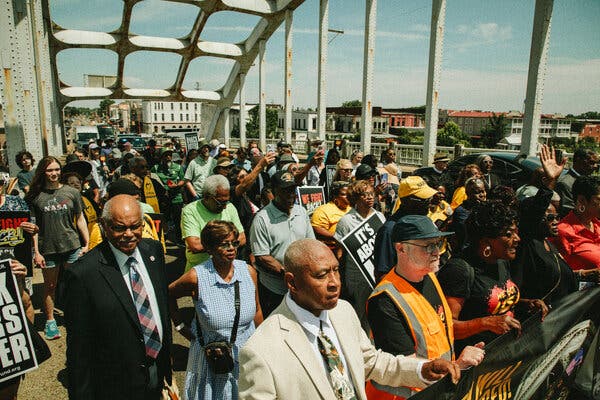
Earlier this month, individuals from across the United States gathered in Selma, Ala., to advocate for voters’ rights. The march began at Tabernacle Baptist Church and concluded on the opposite side of the Edmund Pettus Bridge. The event highlights broad concerns arising from recent changes to voting laws.
Republican leaders express enthusiasm, yet many voters feel uncertain and worried. Civil rights activists are preparing for what they view as a generational challenge. The regional political climate has shifted significantly since the Supreme Court revised the Voting Rights Act. This shift has caused the swift alteration of congressional maps by Republicans, leading to postponed primaries and the departure of veteran House members. New contenders are entering races as the November midterms approach.
The region’s political landscape could undergo the most extensive change in at least a generation. The modifications are likely to strengthen the Republican presence in an already conservative area, risking the careers of several Black Democrats in these areas. As redistricting progresses, debates rage over the nature of representation in the South, along with pragmatic concerns about changing district boundaries that leave voters unsure of their representation.
“They literally have created chaos,” remarked Chaz Molder, Mayor of Columbia, Tenn., a Democrat affected by new boundaries. His home was removed from the Tennessee district where he campaigned for months due to a new map adopted by Republican lawmakers. “It’s the voter that loses in this kind of partisan gamesmanship.”
This recent surge in redistricting is not confined to the South, nor is it exclusively orchestrated by Republicans. Yet, former President Trump encouraged this strategy preemptively, given the challenges Republicans faced in maintaining a narrow House majority during the midterms.
Texas initiated the current redistricting battles last summer under Mr. Trump’s influence, drawing new maps to potentially turn five House seats Republican. In retaliation, Democrats in California and several other states redrew maps last fall. However, the Supreme Court’s recent decision has particularly ignited changes in the South. In this area, the Voting Rights Act historically safeguarded districts with Black majorities that often elected Black Democrats.
The situation continues to develop as stakeholders on all sides await the implications of these changes. Many continue to express concerns over potential erosion of voter representation and the ongoing political shifts in southern states.
 California’s Primary Election: Highlights and Insights
  President Trump’s Attendance at NBA Finals Game Sparks Reactions
 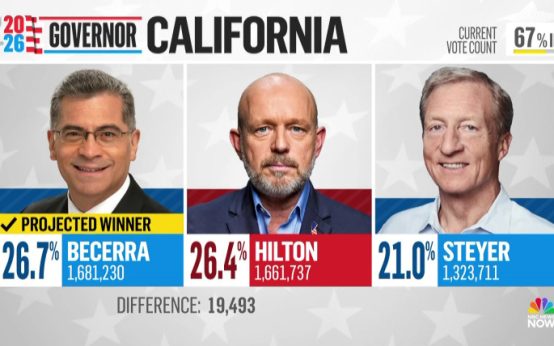 Investigations Launched Amid California Election Fraud Claims
 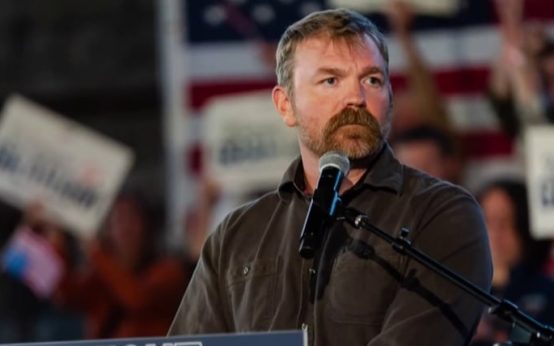 Khanna Urges Apology from Maine Senate Candidate Over Misconduct Allegations
 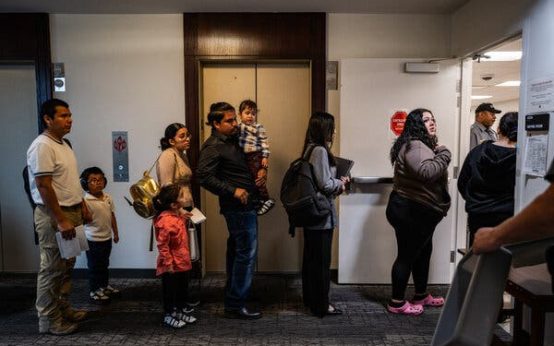 Judge Overturns Trump-Era Immigration Policies
  Trump Aims to Reduce National Intelligence Office Size