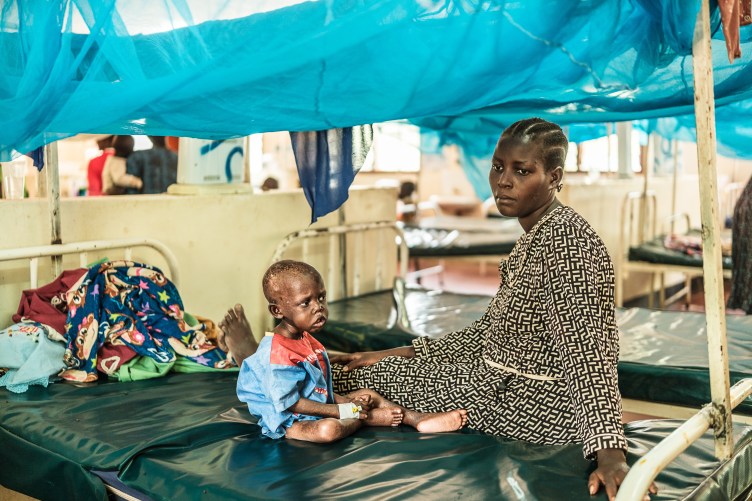
At dawn, Rose Natabo kisses her eldest son goodbye. She wraps her youngest, Santo, onto her back and takes James, her middle child, by the hand. Together, they hurry toward help, leaving a son behind. In a couple of hours, they find themselves in the back of an ambulance, speeding past soccer fields, slums, and footpaths. Their destination is the only hospital in Kakuma, a vast refugee camp in northern Kenya. After fleeing conflict and disasters, this camp is their only home.
Rose joins many other mothers at the pediatric malnutrition ward. It is July 8. Less than three weeks ago, Rose ran out of food after the World Food Program cut rations across the camp. At the hospital, she learns the cuts happened because the United States, WFP’s main donor, withdrew funding. Aides from the Trump administration believed the cuts were necessary to reform the foreign aid system, even as officials warned that families like Rose’s depended on the food for survival.
For the refugees in Kakuma, this disruption means uncertainty. Out of the 300,000 residing there, more than half might receive some basic rations next month. Others will get nothing. Rose waits in agony, unsure if her sons will last through the delay. Santo, only 2 years old, waits with her. Under the fluorescent lights, nurses struggle to find a vein in his swollen body, trying to feed him slowly, as his starved body cannot handle sudden nourishment.
At night, Rose and Santo lie under a mosquito net on their hospital bed. Days pass, and James, her 5-year-old, recovers from malaria. With no other choice, Rose sends him home to Lino, her 7-year-old, who lives with neighbors, though they have little spare food. Rose stays with Santo, hoping for his recovery.
As weeks roll by, Rose becomes a part of the hospital’s daily life. She watches other mothers come and go, some leaving alone after the deaths of their children. She occupies herself with chores and worries about her sons left behind. She holds onto hope, even as other mothers sneak out to check on their children.
On August 4, a nurse named Mark Kipsang checks on Santo. He worries Santo might relapse if sent home. Rose insists he can walk, but Santo’s condition tells a different story. The truth is obvious—Santo isn’t ready to leave. But then, the nurse notices Rose’s secret. She’s pregnant and in poor health.
Kipsang sends Rose to prenatal care, revealing she suffers from anemia. The hospital stresses a good diet, but Rose lies about her meals, knowing it’s futile to hope for more food. Later, overwhelmed, she demands discharge, fearing for her other sons. The doctor reluctantly agrees, worried about Santo’s risk of tuberculosis.
With papered plans and 11 therapeutic food bars prescribed, Rose leaves. As she reaches home, her boys rush to greet Santo. Desperation shows in Lino’s hunger—he licks the wrappers of nutritional bars. They look rough but are alive. Rose agonizes, feeling guilt for her inability to provide.
Passing stripped houses, Rose considers returning to South Sudan. She had hoped for business plans and asylum, but now considers a return to danger. Her sister notes how broken the situation has made her. Despite the grim outlook, they try to carry on.
On August 11, under a pavilion, Rose listens to names called out. This malnutrition center is proof of worsening conditions. The weighing scale reveals both Santo and James are underweight and need help. A nutritionist hands out remaining supplements, hindered by funding disruptions.
Rose eventually gives birth to a daughter, Sunday, named after the day she was born. But their troubles continue as WFP resumes some rations. Back at their dwelling, her children gradually worsen. Santo, wearing the necklace Rose made, struggles more each day.
A return to the hospital on November 11 offers no salvation. Two weeks later, the malnutrition ward fails to save Santo. He dies, leaving Rose amidst her remaining children and the continued uncertainty of their existence in Kakuma.
 Netanyahu and Trump Discuss Iran and Regional Issues
 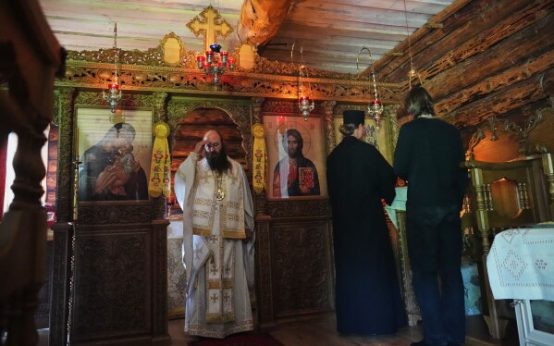 Vandalism at Medjugorje Shrine Sparks Investigation
  Strong Earthquake Shakes Kumamoto
 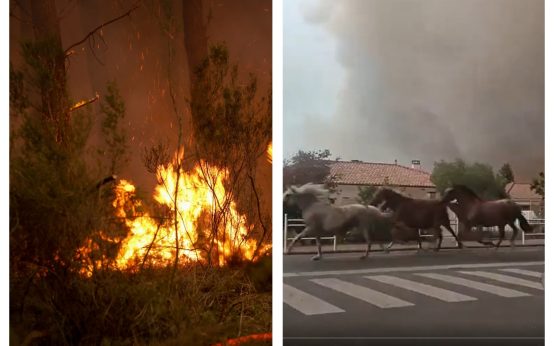 Wildfires Force Evacuation and Destruction in France and Spain
 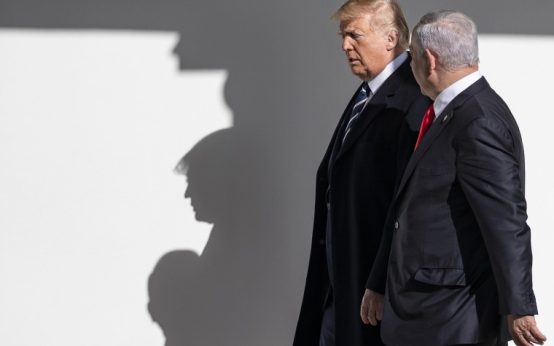 Trump and Netanyahu Meet Amid Iran War Tensions; Japan Earthquake Rocks Southern Region
 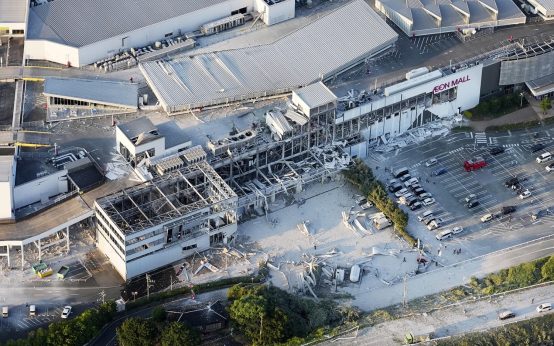 Japan Grapples with Major Earthquake