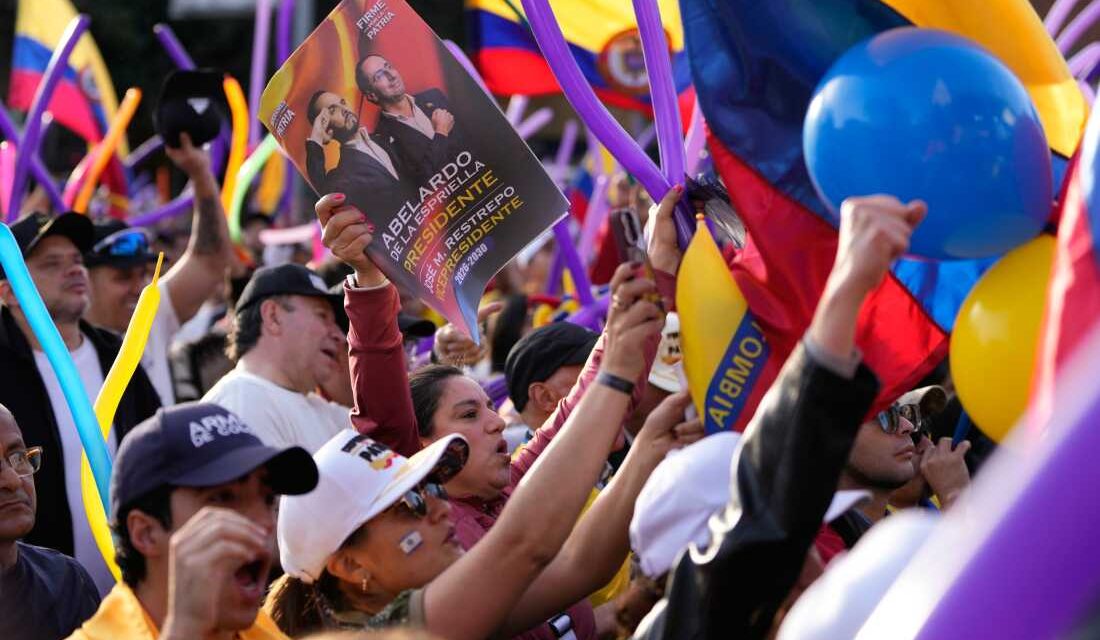
In a recent campaign event in Bogota, Colombia, supporters of Abelardo De La Espriella, a criminal lawyer running for president, showed strong enthusiasm. De La Espriella, leading the Defenders of the Motherland movement, has gained attention for his wealth, bold persona, and campaign promises to clamp down on crime. He presents himself as a populist outsider, without political affiliations or prior elective experience.
“I’m not a politician,” he proclaims, contrasting himself with traditional politicians at a rally in Piedecuesta. De La Espriella aims to shift Colombia to the right, following a four-year left-wing presidency. He plans to terminate peace negotiations with rebel groups, initiate military actions, and construct 10 “mega-prisons” to address rising guerrilla violence, kidnappings, and extortion.
Businesswoman Belkis Serrano compares him to El Salvador’s President Nayib Bukele, known for an authoritarian style and mass incarcerations. De La Espriella shares a physical resemblance with Bukele. “We need a Bukele so that things change here in Colombia,” Serrano remarks.
A victory for De La Espriella could symbolize a broader rightward shift in Latin America, a trend already visible in several countries like Argentina and Bolivia. Upcoming elections in Peru and Brazil could enhance this pattern with right-wing victories.
De La Espriella’s career began with legal counsel to controversial clients, gaining wealth through high-profile cases. Noteworthy clients included those tied to fraudulent financial schemes and figures like Alex Saab, who had connections with Venezuela’s former leader Nicolás Maduro.
Though his ostentatious lifestyle and self-promotion are polarizing, De La Espriella’s style appeals to some Colombians. Political analyst Sandra Borda notes that his wealth and flamboyant personality resonate with aspirations for upward mobility.
However, his behavior raises concerns. Known for being thin-skinned, he often insults journalists. During interviews, his machismo emerges, potentially alienating some voters. Sergio Guzmán from the Colombia Risk Analysis consultancy warns these traits might negatively impact his candidacy.
In contrast, Iván Cepeda, a senator and leading candidate, portrays a different image. A left-wing advocate for peace and human rights, Cepeda seeks to continue policies that support marginalized groups and improve working-class conditions. Despite his work on peace initiatives, the current administration’s peace policies have faced criticism for unintentionally strengthening criminal factions.
The election’s first-round results could lead to a runoff in June if no candidate secures over 50% of the vote. Polls suggest a potential runoff between Cepeda and De La Espriella, though right-wing Senator Paloma Valencia is a notable contender. Valencia, seeking to become Colombia’s first female president, challenges De La Espriella’s aggressive rhetoric.
As the campaign in Piedecuesta concluded, De La Espriella emphasized his tough persona, signaling confidence in his appeal despite criticisms.
 Justice Department Withdraws Plan for $1.8 Billion Fund
  Democratic Concerns Grow Ahead of Maine Senate Primary
  Latin American Deportees in Congo: Return to Home Countries Amid Challenges
  Federal Judge Invalidates Trump-Era Immigration Policy
  Debate Over White House Ballroom Construction
  Scrutiny Surrounds Graham Platner Amid Maine Senate Primary