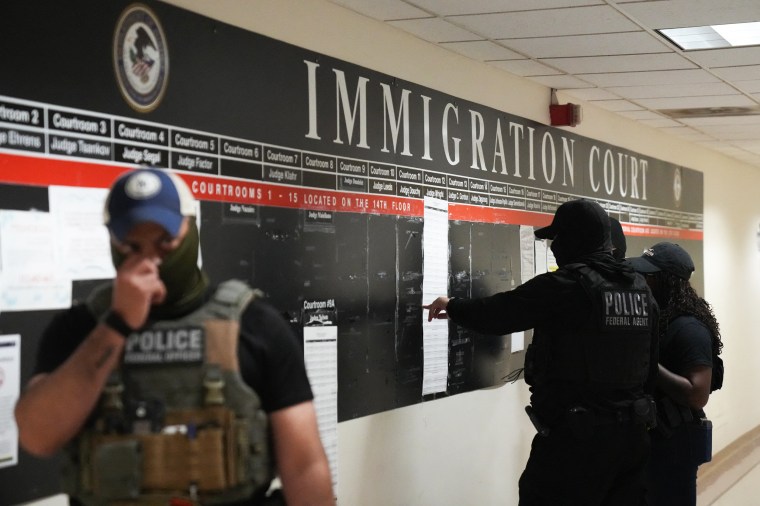
Challenges in Detention Facilities
For years, concerns have been raised about the conditions within immigrant detention facilities in the U.S. Facilities are often described as cold, overcrowded, and in some instances, unsanitary. Detainees frequently remain unaware of their release date. Currently, ICE holds nearly 60,000 people, an increase from around 34,000 during the Biden administration. The average stay has also increased to 50 days from 36.
Simon Sandoval-Moshenberg, an attorney specializing in immigration in Maryland, shared a case where a client was released after 11 months—a timeframe he found previously unimaginable. He highlighted that the uncertainty about release adds to the distress, saying, “The issue is not just the terrible god-awful conditions in the detention centers, it’s the feeling of not knowing when or even if people will get out of those conditions.”
Detainee Demographics and Legal Context
Most detainees are men, with over 20,000 held by ICE having no criminal record besides immigration violations such as overstaying visas or illegal border crossing. ICE data reveals that during Trump’s second term, there were nine suicides among detainees, each involving hanging. Of these, three men had violent criminal histories, four had nonviolent histories, and two had no criminal record.
Failings in Suicide Prevention
In early March, a suicide at Georgia’s Stewart Detention Center highlighted significant gaps in suicide prevention measures. The facility failed to complete required suicide prevention training for staff and did not consistently monitor at-risk detainees every 15 minutes, as mandated. Instead, intervals as long as 125 minutes between checks were reported.
This facility is not alone. There have been 19 cases of facilities failing to meet suicide prevention standards under the Trump administration. Following the most recent suicide, ICE reiterated its commitment to detainee safety and adherence to strict prevention protocols.
Oversight and Inspections
As the number of detainees has doubled, inspections by the Department of Homeland Security (DHS) have decreased. Among the various inspection offices within DHS, two have seen staffing reductions. Although members of Congress make unannounced facility visits, access has recently been restricted.
Rep. Mike Levin faced such restrictions and reported that he could not speak to detainees without providing their names two days in advance and securing written consent. He expressed concerns that these limitations hinder the monitoring of facility conditions.
The DHS Office of Inspector General typically conducts four to six unscheduled inspections annually. A recent infusion of $20 million in federal funding aims to increase the number of these inspections significantly.
Mental Health Challenges
Records obtained by NBC News illustrate significant mental health challenges among detainees, with at least 39 emergency calls detailing acute psychological issues. In Michigan, one man refused psychiatric medication and food, collapsing after eight days. In another case, Gabriel Leiva’s severe distress led him to be placed in solitary confinement, where he attempted suicide.
Victor Manuel Diaz’s death shortly after his detention in Texas raises suspicions. Officially recorded as a suicide, the circumstances prompt the Diaz family to seek a second autopsy. They expressed doubts about the initial reporting and await further investigation results.
If you or someone you know faces a crisis, contact the 988 Suicide & Crisis Lifeline by calling or texting 988, or visit 988lifeline.org. More resources are available at SpeakingOfSuicide.com/resources.
 Justice Department Withdraws Plan for $1.8 Billion Fund
  Democratic Concerns Grow Ahead of Maine Senate Primary
  Latin American Deportees in Congo: Return to Home Countries Amid Challenges
  Federal Judge Invalidates Trump-Era Immigration Policy
  Debate Over White House Ballroom Construction
  Scrutiny Surrounds Graham Platner Amid Maine Senate Primary