
The deployment of the National Guard to Washington, D.C., by the Trump administration has incurred a taxpayer expense exceeding $330 million, despite yielding minimal tangible outcomes, according to a recent report from Democratic members of the Senate Homeland Security Committee. This analysis was brought forth by Senators Gary Peters from Michigan and Andy Kim from New Jersey, amidst the likelihood of the National Guard continuing to operate in the capital until the end of 2026. Projections suggest that this deployment could surpass $600 million by August, marking a year since its inception.
Senator Peters highlighted on a media call that although a significant amount has been spent on this mission over six months, the National Guard has yet to specify any direct improvements in public safety attributable to their presence. The report, spanning 14 pages, critiques the deployment for its vague crime-fighting objectives that appear unrealistic, potentially necessitating an indefinite stay in D.C.
The mission was intended to curb violent crime rates and drug overdoses to a point where they are completely eliminated,a senior National Guard commander mentioned to staff. However, the feasibility of this outcome remains in question.
In August, President Donald Trump declared a state of crime emergency in D.C. through an executive order, paving the way for the National Guard’s deployment. By the subsequent month, over 2,300 troops from the district and eight states, such as West Virginia, Georgia, and Ohio, were conducting patrols in the city. This action followed Trump’s description of D.C. as one of the world’s most dangerous cities, despite data from the Justice Department showing crime rates had plummeted to a 30-year low by 2024.
The financial implications of this deployment are significant. The $602 million projected cost over 12 months surpasses the entirety of D.C.’s police budget. Currently, nearly 2,500 National Guard members are stationed, whereas the Metropolitan Police Department operates with 4,900 officers and an annual budget under $600 million.
Senator Peters articulated that the expenditure has not effectively enhanced safety in the district, stating, “The deployment has blurred the lines between military and civilian law enforcement, diluting the National Guard’s readiness, and diverting local and federal law enforcement from their primary duties.” Senator Kim echoed this sentiment, questioning the deployment’s value and efficacy, given the personnel involved often lack familiarity with the local community.
Though Washington’s overall crime has decreased over the past year, no concrete data links this reduction to the National Guard’s presence. Incidents have occurred, including a shooting in November near the White House, resulting in the death of a National Guard member. The suspect, involved in the shooting, entered a not guilty plea in federal court.
The report underscores the senators’ inquiries into the Defense Department’s non-responsiveness regarding the deployment. After the Defense Department overlooked their information requests, committee staff undertook oversight visits to the D.C. National Guard headquarters in September. The report indicates that, while the Guard contributed to beautification projects (such as packing food and maintaining public spaces), the Democrats found it challenging to ascertain the costs associated with these activities. According to the report, the D.C. Department of Parks and Recreation has a total budget of $83.6 million.
In November, a federal judge ordered the cessation of the deployment, ruling it unconstitutional for Trump’s efforts to bypass local authorities in law enforcement matters. However, this decision was overturned by an appeals court the following month, citing the president’s exclusive authority to mobilize the Guard in a federal district.
Senator Peters deemed the entire operation as extravagantly priced and perilous. “This deployment is a lavish publicity maneuver that endangers the normalization of military presence in civilian areas,” he concluded.
Reporters Frank Thorp V from Washington and Kyla Guilfoil from New York, along with Mosheh Gains, contributed to the comprehensive coverage of these events.
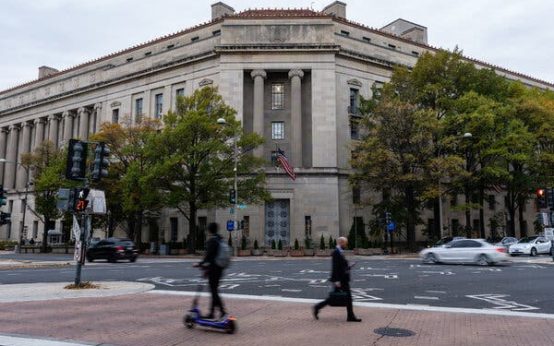 Justice Department Withdraws Plan for $1.8 Billion Fund
 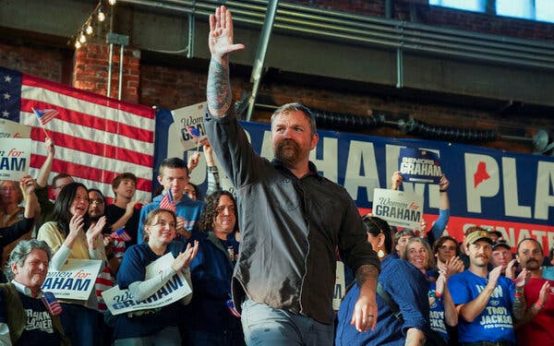 Democratic Concerns Grow Ahead of Maine Senate Primary
  Latin American Deportees in Congo: Return to Home Countries Amid Challenges
 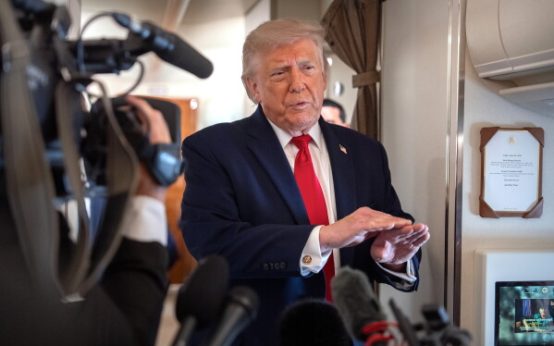 Federal Judge Invalidates Trump-Era Immigration Policy
  Debate Over White House Ballroom Construction
  Scrutiny Surrounds Graham Platner Amid Maine Senate Primary