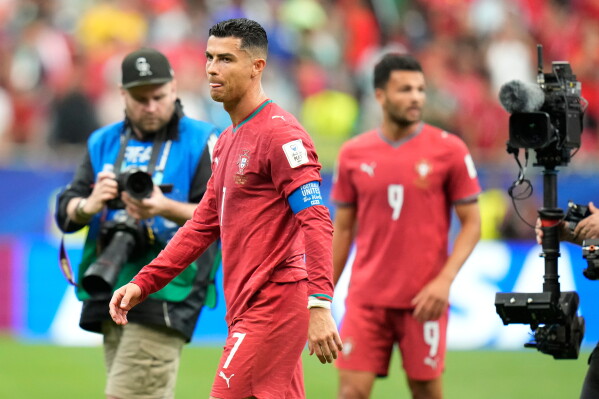
In Guadalajara, Mexico, the World Cup is witnessing an unprecedented surge in goals. This tournament has seen nearly 25% more scoring than the same period in the last World Cup.
One factor contributing to this boost in goals is the ball that FIFA is using. Designed with deep seams to ensure optimal in-flight stability, the ball is reaching goalkeepers at high velocities. Its enhanced grip supports striking and dribbling under wet or humid conditions.
Austrian coach Ralf Rangnick commented on the ball’s performance. He noted its speed compares to a cannonball and its challenge to save when kicked correctly.
Stoppage times have increased due to hydration breaks, a new feature of this tournament, allowing further scoring opportunities. Moreover, this year’s expanded field of 48 teams has widened the talent gap.
Néstor Lorenzo, Colombia’s coach, pointed out the present talent levels at the World Cup. Players receive more protection from officials than in past tournaments, promoting more attacking football.
Fans have enjoyed 121 goals in the first 40 games, with many scored by internationally recognized players.
Premier League players have scored significantly, with over half the goals from players in England, Germany, and Spain’s top professional leagues. The English Premier League prominently leads in goals scored.
Brazil’s Gabriel Martinelli, from Arsenal, believes the Premier League’s intensity surpasses that of the World Cup but acknowledges the tournament’s high-quality games.
Clubs like Real Madrid, Inter Miami of Major League Soccer, and Liverpool have players contributing a notable number of goals. Lionel Messi from Miami accounts for five goals in two games.
English clubs provided nearly 30 goals. Players from the German league contributed 16 goals, Spanish league provided 11, French league 7, and Italian league 5. MLS players scored 8 times, with Messi having a significant impact.
Upon announcing official squads, 200 players were club-based in England, almost double Germany’s 109 players.
Real Madrid and Liverpool: Top Goal Contributors
Real Madrid players scored seven goals: four by France’s Kylian Mbappé, two by Brazil’s Vinícius Júnior, and one by England’s Jude Bellingham.
Madrid did not field any players for Spain’s national team. However, Marc Cucurella joined from Chelsea, marking a Madrid presence for La Roja.
Liverpool saw three goals by Dutch players: Cody Gapko scored twice and Virgil van Dijk once. Sweden’s Alexander Isak and Egypt’s Mohamed Salah, then listed as Liverpool players, each contributed a goal.
Bayern Munich players scored four goals: England’s Harry Kane contributed two, Germany’s Jamal Musiala and Colombia’s Luis Díaz each scored one.
Manchester City, having 19 players, leads the count of players called up, followed by Bayern Munich with 18. City scored four goals through Norway’s Erling Haaland.
Statistics and Trends
In 40 games, with 121 goals scored by 88 players, the average is three goals per game. Only three encounters ended 0-0, and eight of the goals were own-goals.
The tournament is on track to break the 172-goal record set in Qatar in 2022, with a projection of nearly 194 goals for 64 matches, surpassing the previous record.
Beyond the World Cup, the Champions League has also noted high scoring in recent seasons with averages of 3.27 goals per game in 2024-2025 and 3.47 goals per game in 2025-2026.
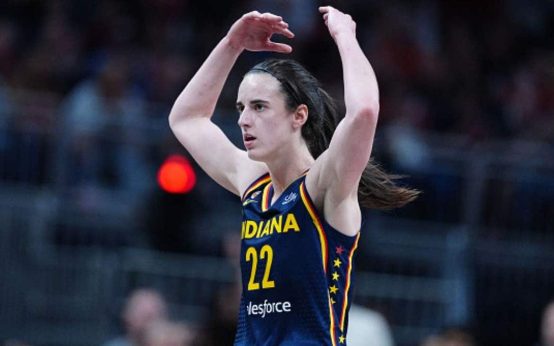 Indiana Fever Triumphs Over Phoenix Mercury Amid Tensions
  Vice President JD Vance Navigates Tricky Negotiations with Iran
 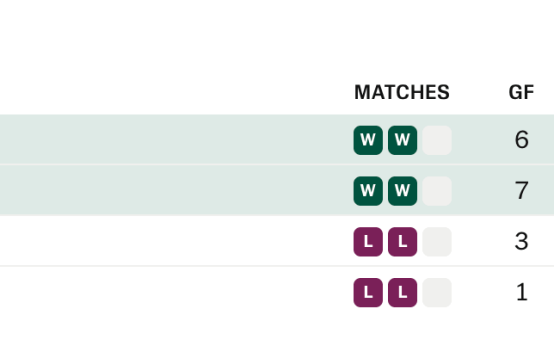 Norway’s World Cup Journey
 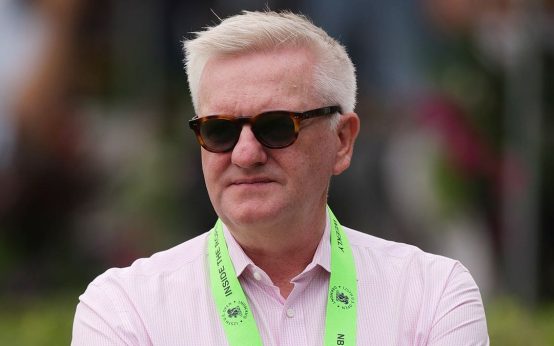 Golf Analyst Criticizes Long Island Fans Post-U.S. Open
  Trevor Bauer Continues Career in Mexico Amid MLB Exclusion
  U.S. Lifts Iran Oil Sanctions Amid Nuclear Talks