
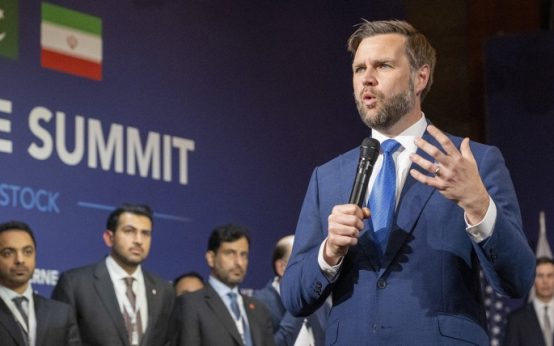
U.S. Vice President JD Vance engaged in high-level discussions with Pakistan’s Prime Minister Shehbaz Sharif. They convened at the Bürgenstock Resort near Lucerne, Switzerland, on June 21, 2026. These talks aim to advance a deal to resolve ongoing conflicts in the Middle East.
Amid these efforts, President Trump has issued threats of further attacks on Iran. He emphasized the need for Iran to halt its “highly paid proxies” in Lebanon. Failure to comply would result in stronger measures from the U.S. as stated in his social media post: “If they don’t, we’ll hit Iran very hard again.”
Following this, Iran’s military declared the closure of the Strait of Hormuz in response to Israeli strikes in Lebanon. Iran accused the U.S. of failing to control Israel, thus violating a recent agreement to end fighting in Lebanon.
On the same day, Vice President Vance met with Pakistani brokers, including Prime Minister Sharif and Staff Field Marshal Asim Munir, in Switzerland. The talks include mediators from Qatar, an Iranian team, and Rafael Grossi, head of the International Atomic Energy Agency.
The focus is on a Memorandum of Understanding (MoU) signed between the U.S. and Iran, though it faces significant challenges. Iran claimed the Strait closure, but the U.S. Central Command reported normal shipping activity.
The Iranian nuclear program remains a contentious issue. Iranian President Masoud Pezeshkian insisted they would not back down from enriching uranium, a point Iran claims is peaceful.
Despite announcing a ceasefire on Friday, Israeli and Hezbollah forces continued heavy exchanges on Saturday. Vance remains optimistic about the talks, claiming substantial progress.
When questioned about Israeli Prime Minister Benjamin Netanyahu, Vance acknowledged potential disagreements but expressed confidence in progress, particularly concerning Lebanon. He highlighted the U.S.’s significant efforts to curb the conflict.
Israeli strikes on Saturday resulted in 16 casualties, including civilians, according to the Lebanese National News Agency. Israel cited Hezbollah’s overnight projectile firing as the reason for its response. Hezbollah fired back, claiming Israeli advances towards Lebanese territory.
For the first time since the conflict started on March 2, the U.N. Interim Force in Lebanon reported no attacks from either side on Sunday. Peacekeeping efforts continue, though Israel and Lebanon have not signed the MoU. The agreement calls for Lebanese sovereignty and halting military operations in Lebanon, a condition Iran insists the U.S. must enforce.
NPR’s Jane Arraf provided additional reporting.
 Stars Embrace Summer with Stunning Bikini Photos
 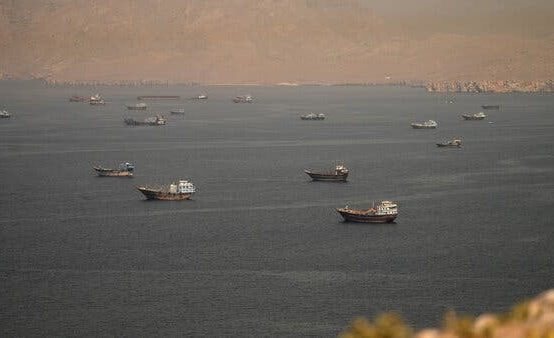 Strait of Hormuz: Conflicting Reports from U.S. and Iran
 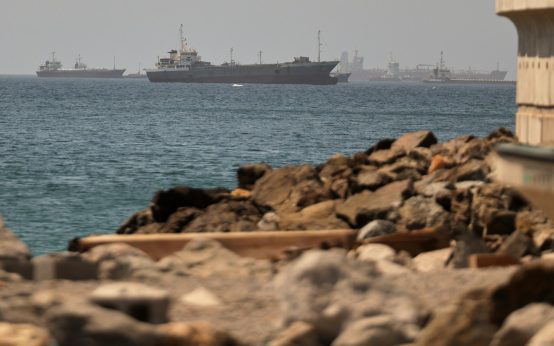 Ceasefire and Uncertainty Over the Strait of Hormuz
 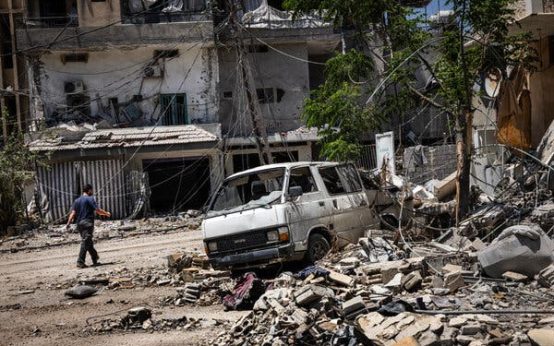 Reduced Tensions Following Israeli Directives
  Spain vs Saudi Arabia: World Cup Match Preview
  US-Iran Negotiations and Developments