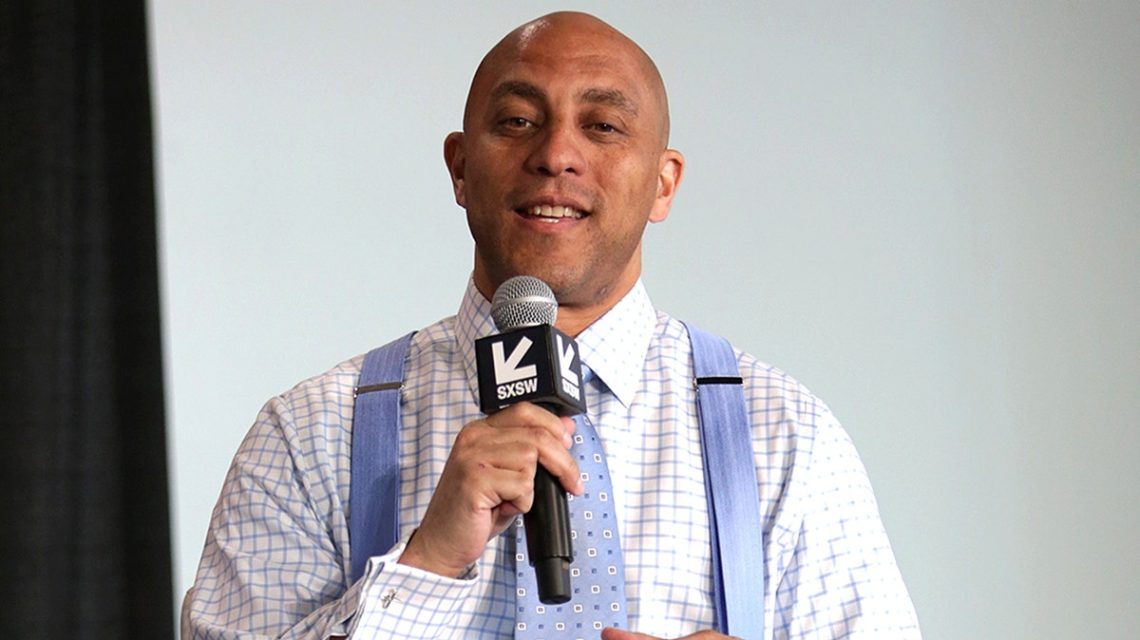
Hasan Kwame Jeffries, a history professor at Ohio State University and brother of House Minority Leader Hakeem Jeffries, is calling for citizens to combat societal systems ‘by any means necessary.’ Notably, Jeffries invoked John Brown, who is known for his violent actions against pro-slavery settlers, as a model for political action today.
In a flagged social media post, Jeffries stated, ‘John Brown understood that the only way to free Americans from White supremacy was to eliminate White supremacists by any means necessary. He was right then. He is right now.’ This statement has been interpreted as advocating for political violence.
John Brown is historically significant for his role in ‘Bleeding Kansas’ and the 1856 Pottawatomie massacre, where he and his followers executed settlers sympathetic to slavery. His raid on Harpers Ferry later led to his capture and execution. Brown’s legacy is contentious; he utilized violence as a means to end slavery, which led some to see him as a catalyst for the Civil War.
Stacey Patton, a journalism professor at Howard University, also highlighted Brown as a paradigm for racial justice activism. Patton’s writings challenge White liberals to adopt more radical approaches in supporting minorities, using Brown’s violent tactics as a touchstone.
Figures such as Frederick Douglass had mixed feelings about Brown. While Douglass admired Brown’s dedication, he opposed violent solutions to political problems, advocating instead for peaceful change.
Abraham Lincoln described Brown as a fanatic who attempted to incite a slave uprising, which ultimately failed as slaves did not participate. Lincoln compared Brown’s actions to the historical assassinations of royalty, noting that such attempts often end in disaster for the instigators.
John Brown’s influence extends to modern political rhetoric, with figures like Jeffries and others seemingly endorsing violence as a path to social change. This rhetoric aligns with recent political atmospheres where extreme voices find support among voters and promote divisive actions that echo Brown’s legacy.
Jonathan Turley discusses these dynamics in his book, ‘Rage and the Republic,’ where he explores how radicalism shapes political landscapes. Similar to the French Jacobins’ embrace of terror, today’s political radicals sometimes justify violence as a virtue, a cycle well-noted by historical figures like Jacques Mallet du Pan.
 Pentagon Reduces Recognized Religious Affiliations
  U.S. Military Awaits Pentagon’s Clarification on Troop Levels in Europe
  Xavier Becerra Advances in California Governor Race
  Graham Platner’s Campaign Amid Controversy
  South Carolina GOP Primary Heats Up as Trump Endorses Evette
  Federal Judge Overturns Trump-Era Immigration Policy