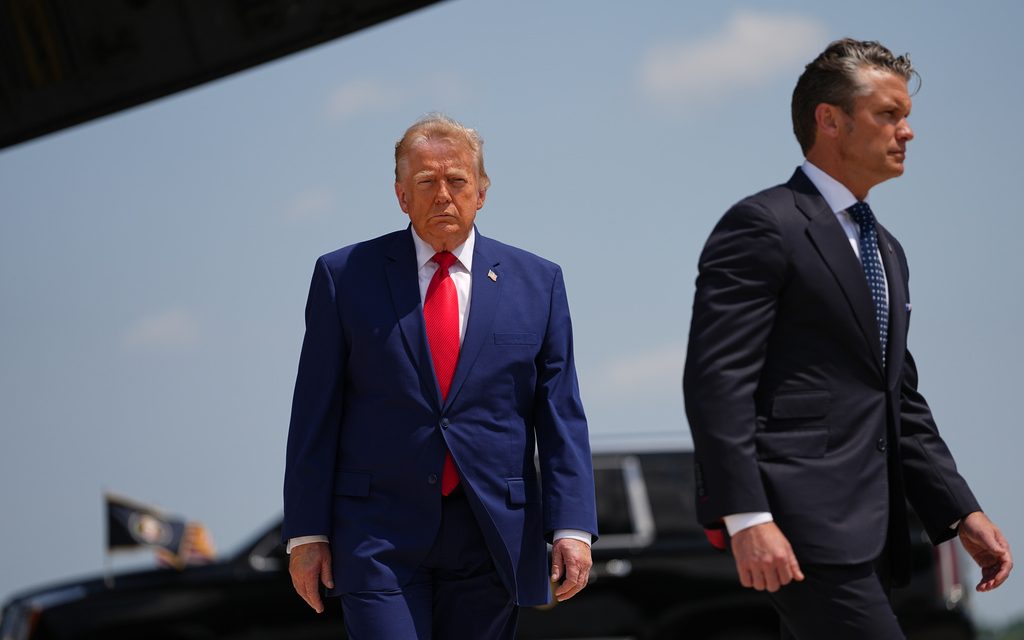
President Donald Trump and Secretary of Defense Pete Hegseth attended the dignified transfer of four U.S. service members killed in the Middle East, at Dover Air Force Base, Delaware. This event stirs significant discussions around military casualties and political narratives.
Reflecting on history, a 1969 Life magazine feature starkly highlighted the human cost of Vietnam by showcasing pictures of 242 young men killed in a week. These images served as powerful counterpoints to the Pentagon’s focus on enemy body counts as a measure of victory. Seeing personal faces of fallen soldiers shifted American perspectives from abstract numbers to real human loss. This historical lesson underscores the importance of acknowledging the personal sacrifices of war.
A similar impact was seen during World War II, as newspapers printed lists of names and death locations. This led the American public to pressure Presidents Franklin Roosevelt and Harry Truman to end the war quickly, demonstrating the power of confronting the human impact of conflict.
Trump’s administration recently chose to revise military casualty numbers. The Pentagon reduced the number of killed in action from 18 to 14, excluding four deaths during a cease-fire as not related to the ongoing conflict with Iran. This decision ignores personal sacrifices and reflects political narratives rather than reality.
Trump himself faced criticism for asserting that this war is acceptable because American troop losses are lower than in previous conflicts. His comparison overlooks the value of individual lives lost, regardless of numbers. Political manipulation of casualty counts raises questions about the integrity of acknowledging the consequences of military actions.
Politicians often use military personnel for their agendas, and Trump’s history with the military, including derogatory comments about late Sen. John McCain and others, confirms this pattern. Past conflicts, like the Afghan withdrawal under President Joe Biden, also illustrate how political leaders can shift focus to suit narratives. Accountability is crucial, and politicians must address all casualties without bias.
A personal reflection on returning from Iraq reveals how veterans grapple with their experiences. Joslin Joseph recalls advice from Vietnam veterans: the importance lies in returning home safe. For the four Americans recently lost, honoring their sacrifice transcends political disputes.
As citizens, it is vital to ensure that the lives and sacrifices of military personnel are recognized and valued. Holding politicians accountable for their narratives is essential in maintaining respect for those who serve.
Joslin Joseph is an award-winning commentator, Marine veteran, and Harvard and Ohio State graduate, residing in California.
 Netanyahu and Trump Discuss Iran and Regional Issues
  Political Updates: Graham’s Funeral, Trump Meets World Leaders, and Fauci’s Testimony
  Challenges Facing the Democratic Party Amid Shifts in Political Trust
  Fauci’s Diary Reveals Strained Relations with Trump During Pandemic
  Conflict Between Democratic Socialists and the U.S. Constitution
  Challenges Facing DNC Chairman Ken Martin