The Trump administration called on visitors of U.S. national parks to report displays perceived as “negative” towards Americans, past or present. Yet, many respondents criticized the administration’s initiative. An analysis by the Associated Press of 35,000 public comments, gathered in late 2025 and shared due to a lawsuit, reveals significant opposition.
Visitor Reactions
Comments from visitors across the country included strong disapproval of the administration’s approach. In North Carolina, one park visitor labeled the effort “un-American.” Another individual criticized the idea of encouraging people to inform on each other. A visitor at North Dakota’s Theodore Roosevelt National Park remarked, “Trying to erase history doesn’t mean it didn’t still happen!” The Associated Press noted that over half of the feedback was a backlash against the initiative itself.
The National Park Service recorded about 323 million visits to more than 400 sites last year. Despite this vast number of park visits, only 35,000 comments were collected from June to January, indicating a limited response to the administration’s solicitation.
Focus on Exhibition Changes
Interior Secretary Doug Burgum issued an order to remove or alter anything considered “inappropriate content,” targeting displays critical of both past and present Americans. Burgum aimed to focus on the achievements of America and its landscapes. This followed President Donald Trump’s directive for “Restoring Truth and Sanity to American History,” highlighting American heritage and progress.
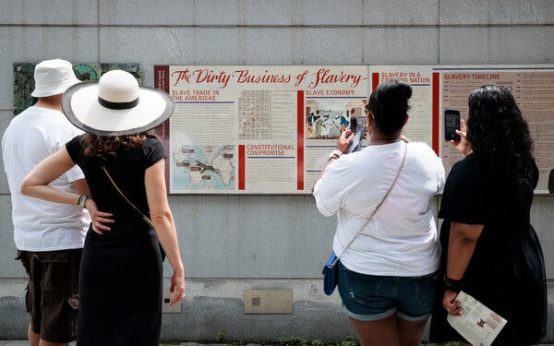
The group Save Our Signs, including librarians and historians, documented at least 59 signs that were altered or removed. These signs referenced topics like slavery, climate change, and women’s rights. Jenny McBurney from the group noted changes mostly occurred at Philadelphia’s Independence National Historical Park, which had removed displays related to enslaved individuals under George Washington’s presidency. These exhibits were temporarily restored by a judicial order before another appeal stalled further actions.
Feedback from Park Visitors
While many comments were coordinated in opposition to the changes, others were personal. Some commended the informative displays and staff at the parks, like a visitor at Gateway Arch National Park who appreciated learning about American history’s complex facets.
Some comments contained humor and criticism. For example, a visitor to North Cascades National Park humorously noted the absence of “Bigfeets.” Other visitors specifically criticized the program, likening it to fascist tactics. At various parks, some signage provoked additional criticism due to references to historical figures, such as Harry S. Truman and Booker T. Washington, in ways that were viewed as promoting modern political agendas.
Response from the Administration
The Trump administration offered limited details about changes made through the program. A spokesperson from the Interior mentioned that flagged materials largely remained unchanged. Sites known to have altered or removed signs included Acadia National Park, Grand Teton National Park, Jamaica Bay Wildlife Refuge, and Virgin Islands National Park.
Jenny McBurney asserted the public’s commitment to preserving history, emphasizing the importance of national parks in holding this legacy.
___
Gruver contributed reporting from Fort Collins, Colorado, with additional reporting by Christopher L. Keller from Albuquerque, New Mexico.
 Patagonia vs Pattie Gonia: The Trademark Dispute Explained
  Federal Judge Blocks Removal of National Park Exhibits
  Bruce Springsteen Center Celebrates American Music Legacy
  Tornado Destruction in Illinois and Indiana: Efforts and Responses
  International Museum of Children’s Art Faces Funding Crisis
  Intense Weather Patterns Sweep Across the U.S.