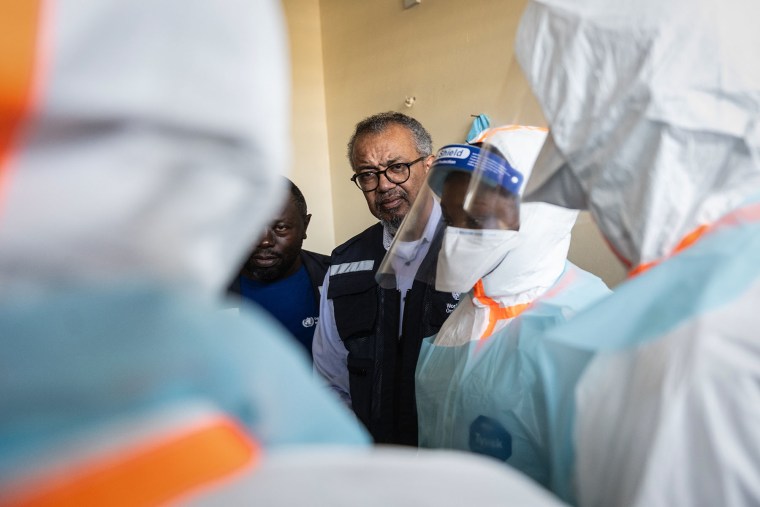
The World Health Organization (WHO) is taking decisive action to address the escalating Ebola crisis as suspected cases of the severe virus surpass 1,100. Authorities in Brazil are also investigating two suspected cases.
WHO Director-General Tedros Adhanom Ghebreyesus traveled to Ituri, in the Democratic Republic of Congo (DRC), the epicenter of the outbreak. He emphasized that survival is possible even without specific vaccines or therapeutics if patients receive timely healthcare. During his visit to a newly opened Ebola treatment facility in Bunia, he reiterated the importance of early treatment.
On Sunday, WHO shared a positive update: four nurses recovered and were discharged from a hospital in Bunia. Additionally, a laboratory worker had recovered earlier, increasing the total recoveries to five in the DRC.
According to an op-ed by Dr. Jean Kaseya, Director-General of The Africa Centres for Disease Control and Prevention, over 1,100 suspected cases are being investigated in both the DRC and Uganda. As of May 30, these countries reported 263 confirmed cases and 43 deaths. The WHO tracker showed 291 confirmed cases and the same number of 43 deaths on Sunday.
Health officials face several challenges in controlling the outbreak. A joint statement from the DRC government and the WHO highlighted issues like early detection, isolation of cases, contact tracing, and dignified burials.
Last month, the outbreak caused by the rare Bundibugyo virus was declared a public health emergency of international concern. Though not classified as a pandemic, it is the third-largest outbreak since Ebola was discovered. Doctors Without Borders (MSF) expressed concern, noting the rapid spread of the epidemic outpaces global response. They called for increased medical staffing and testing.
In Brazil, authorities are assessing possible cases, with one patient in Sao Paulo testing positive for meningitis, and another in Rio de Janeiro testing positive for malaria. Both cases still leave the possibility of Ebola open.
Additionally, Italy took precautions for a suspected Ebola case in Cagliari, Sardinia. However, the health ministry confirmed that the patient tested negative.
 Mount Sinai Health System Faces Subpoena on Gender-related Care
  Potential Ebola Outbreak in Central Africa Raises Concerns of Rapid Spread
  Researchers Escorted Out of Diabetes Conference for Criticizing Trump Administration
 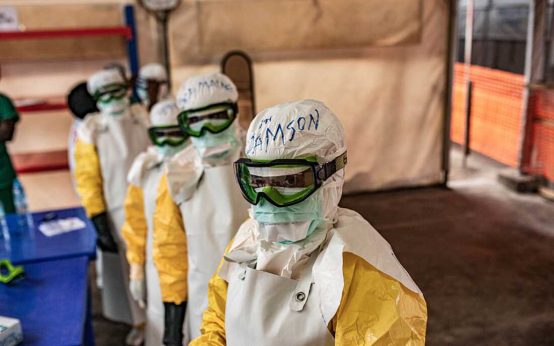 Ebola Outbreak in Africa: A Serious Concern
 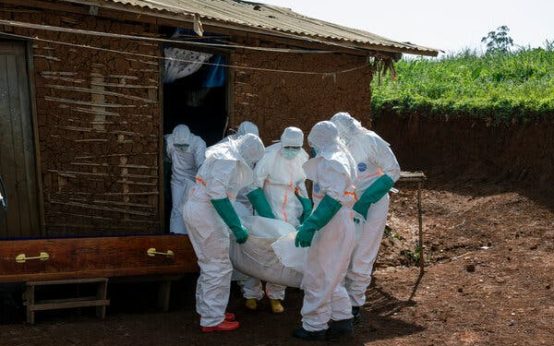 Gold and the Ebola Outbreak in Congo’s Mining Towns
  House Passes Bill for Veterans’ Benefit Increase