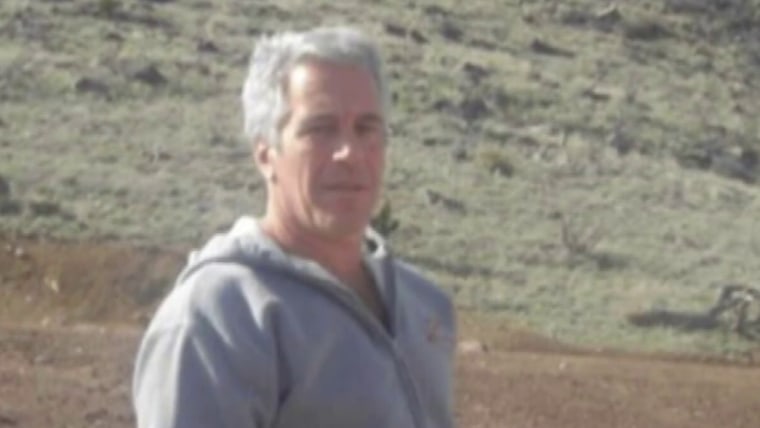
Lawmakers in New Mexico are demanding documents from various government and private institutions. This is the first significant move in their effort to uncover the full extent of Jeffrey Epstein’s activities in the state and to determine if others should face prosecution for related crimes.
A committee known as the New Mexico Truth Commission plans to issue subpoenas to 14 entities. Among them are federal agencies that previously investigated Epstein, such as the U.S. Justice Department and FBI. The subpoenas will also target state and local law enforcement agencies that looked into Epstein’s case.
In addition to governmental bodies, Epstein’s former banks, Deutsche Bank and JPMorgan Chase, are on the list. The Santa Fe Institute, a nonprofit supported by Epstein, will also receive demands for information.
The commission’s goal is to establish a comprehensive public record. Republican state Rep. Andrea Reeb stated that their task is to identify what happened, who was responsible, and to uphold the evidentiary standards survivors deserve.
The bipartisan commission works closely with the New Mexico Department of Justice, which has reopened investigations into Epstein after they were halted in 2019 at the federal prosecutors’ request in New York. The agency is actively seeking Epstein-related records from federal authorities.
Epstein owned a ranch outside Santa Fe since 1993 and frequently visited. Despite numerous allegations of sex crimes dating back decades, he was never charged with crimes in New Mexico. An NBC News review revealed that at least 10 women claimed Epstein abused them at the ranch starting in the mid-1990s. Half of these women were teenagers at the time.
The situation in New Mexico mirrors a pattern in Epstein’s criminal history. His alleged misconduct began with a Florida investigation where he faced accusations of paying underage girls for sex. In 2008, he reached a plea deal with prosecutors, avoiding serious jail time and halting investigations in other states. Although he registered as a sex offender in Florida and New York, he avoided registering in New Mexico.
In 2019, federal investigators in New York reignited the case following a Miami Herald expose on Epstein’s plea deal. While the prosecution captured national attention, Epstein’s activities at the New Mexico ranch were largely overlooked. After Epstein’s jail death, prosecutors focused on his associate Ghislaine Maxwell, whose trial briefly mentioned New Mexico allegations. Maxwell now serves time in federal prison.
In January, the Justice Department released a trove of Epstein-related documents. These included efforts to cancel the state investigation in 2019 and new claims about crimes at the ranch, including an unverified assertion that two bodies were buried there. This spurred renewed determination in New Mexico to uncover the truth.
The commission’s work emphasizes the experiences of survivors, delving into allegations of sex trafficking, financial crimes, and potential medical and scientific violations. State Rep. Marianna Anaya mentioned these possible violations but did not elaborate further. Funded by a settlement with Epstein’s banks, the commission aims to propose legal reforms to address gaps that might have hindered Epstein’s prosecution or that of others.
During a meeting, the commission heard from survivor Rachel Benavidez, who alleges abuse by Epstein at the ranch while she was a licensed massage therapist. They also listened to the family of Virginia Giuffre, an outspoken victim who passed away last year.
“We know Jeffrey Epstein could not have acted alone,” Benavidez said. “The tentacles of this evil network extend across academia, science, medicine, politics, finance, and government.”