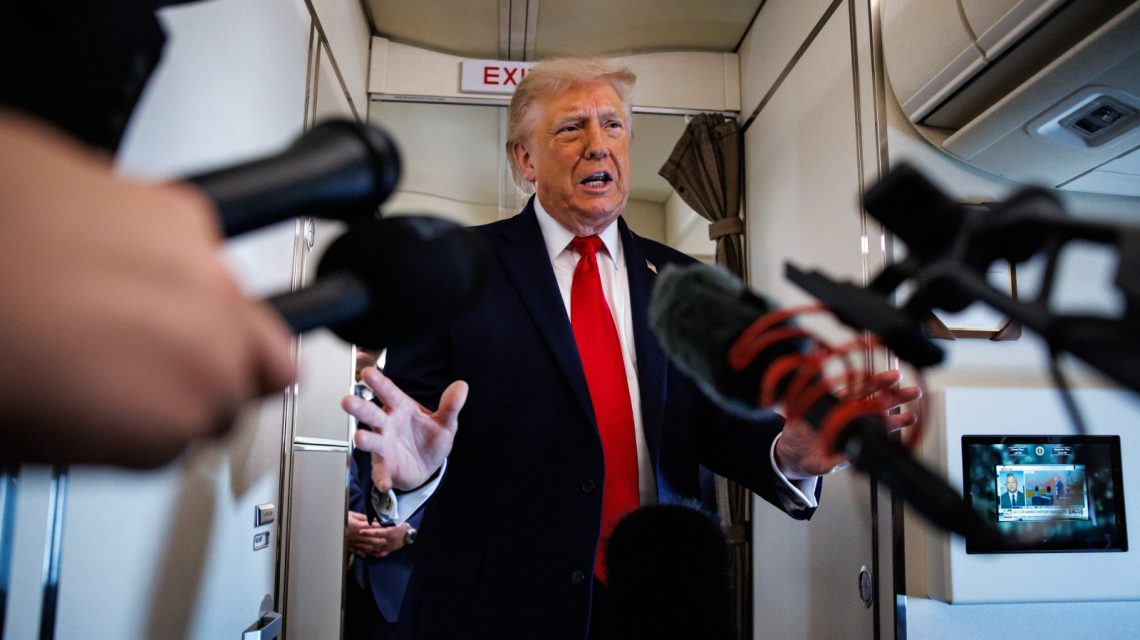
President Donald Trump recently cut short an interview with NBC’s Kristen Welker after being challenged on several claims. This incident adds to the list of confrontations he has had with female journalists during his presidency. Trump’s interactions with the media have often been contentious, and his behavior towards female reporters has particularly drawn attention.
Frequent Confrontations
Throughout his political career, Trump’s exchanges with reporters have been strained, irrespective of gender. However, interactions with female journalists have often turned personal. At the end of 2025, over a few weeks, Trump made derogatory remarks towards several female journalists. He questioned a reporter’s intelligence, used derogatory language towards another, and labeled one as “terrible.” These remarks have raised concerns about his treatment of women in journalism.
Challenges Faced by Female Journalists
A UNESCO report from 2021 highlighted the challenges female journalists face. It reported that nearly three-quarters of those surveyed had experienced online violence. Additionally, one-fifth reported offline attacks linked to online harassment. Trump’s comments occur amid increasing aggression towards female journalists both online and offline.
Interview with Kristen Welker
During a “Meet The Press” interview, Welker pressed Trump about issues like the conflict with Iran and the now-abandoned $1.8 billion ‘anti-weaponization’ fund. Welker also requested evidence for Trump’s unverified claims about election rigging. Trump’s responses included derogatory comments, and he abruptly ended the interview. Despite Welker’s insistence on evidence, Trump maintained his stance, accusing the media of being “crooked.”
Broader Pattern of Behavior
Trump’s confrontations with female journalists are not new. He previously accused CNN’s Kaitlan Collins of having “hatred in her eyes.” He criticized her demeanor and repeated his frequent critique of CNN as “corrupt.” In a separate incident, he labeled an unnamed ABC journalist as “obnoxious.”
In another instance, Trump called a Bloomberg reporter “quiet, quiet piggy” for asking a follow-up question. His derogatory comments extended to other media professionals, including New York Times reporter Katie Rogers, whom he described negatively online.
Reactions and Commentary
Dr. Amy Tatum from The Bournemouth Media School commented on Trump’s remarks, suggesting a lack of significant backlash allows him, and others in power, to continue such behavior publicly. The International Women’s Media Foundation pointed out that Trump’s comments can incite further online abuse, adding stress to the affected journalists.
White House’s Stance
The President expresses himself candidly and holds the press accountable, according to Taylor Rodgers, White House spokesperson. The administration claims to be the most accessible and transparent in history.
Repeatedly, the White House has defended Trump’s interactions, stating he engages openly with media inquiries while addressing perceived inaccuracies in news reporting. Rodgers remarked that Trump’s administration offers candid answers and maintains high engagement with the press.
 Vice President JD Vance’s Experience on The View
  Gavin Newsom’s Strategic Statement Amid DOJ Investigation
  World Leaders Navigate Tensions and Diplomacy at G7 Summit
  Trump Invokes Defense Production Act to Boost Weapon Production Amid War Concerns
  Primary Runoffs Reveal Winners and Losers in Key Races
  Key Outcomes from the Latest U.S. Primary Elections and Trump’s Influence