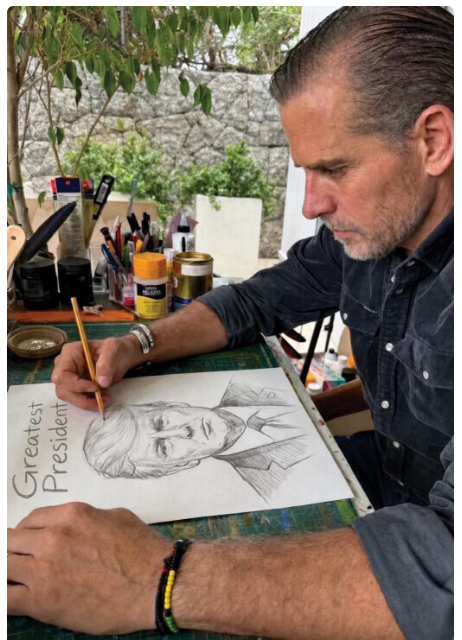
Hunter Biden, once a political challenge for Democrats, has become a notable online figure. His transformation from a low-profile presence to a dynamic and direct voice in political discourse is clear. His new approach is gaining attention and sparking discussions.
Hunter Biden’s Online Reappearance
Biden returned to the public eye on social media in May and June 2026. He posted messages directly addressing critics and President Donald Trump. He also participated in a lengthy podcast interview with conservative commentator Candace Owens, released on May 21, 2026. During the podcast, Biden discussed his addiction and controversies candidly, finding unexpected agreement with Owens on matters such as media distrust and personal accountability.
The impact of Biden’s posts has been significant. They are reshaping media narratives in real time. For example, during a press meeting on June 4, Biden asked Trump directly about a potential 2028 presidential run.
The Importance of This Shift
Previously, Hunter Biden was largely absent from public discourse, often seen only through legal matters or secondhand reports. This absence made him politically significant but personally distant. Biden is now speaking for himself, using a style that is immediate, confrontational, and widely shared.
From Silence to Online Presence
Biden’s return to social media marks a notable departure from his past public behavior. On May 19, he posted on an account under his name, stating, “I’m Hunter Biden. You’ve never actually heard from me.” This post has received over 10 million views, indicating significant interest.
Since then, the account has regularly mixed personal reflections with political critiques and humor. Biden addresses his past openly, sometimes with blunt humor, such as acknowledging his seven years of sobriety on June 1. Even when challenged about past incidents, Biden responds candidly, often generating millions of views and engagement.
Viral Influence and a New Approach
Biden’s posts are notable not only for their frequency but for their wide reach. For example, a post criticizing CNN anchor Jake Tapper gained over 4 million views in a short time. His approach is characterized by direct interaction with users, combining political messages with humor in a way uncommon for figures of his stature.
Engagement with Trump
Biden’s online activity has led to direct exchanges with Trump. On June 4, Trump addressed rumors of Biden entering politics, joking about Biden’s “checkered past.” Biden responded online, comparing past controversies with Trump’s own issues. Their exchanges, often humorous and meme-driven, show a shift in dynamic; Biden is now actively shaping conversations.
Biden’s personal approach extends beyond politics. He openly discusses his addiction history, sometimes humorously, as seen in a response to critics regarding cocaine use. This approach has been both praised as sincere and criticized as trivializing serious issues.
A Changing Role in Politics
Previously viewed as a liability, Biden is now stepping into public scrutiny willingly. His posts often generate headlines and influence media narratives, though it’s unclear if this translates to political impact. Current data shows no indication of his online presence affecting polling or party strategies significantly.
Future Implications
Biden has transitioned from being a reactive figure to a proactive participant in political discussions. His online presence is generating viral moments and responses from significant figures, altering how his narrative is presented. The long-term effects of this presence, such as political influence or a lasting public role, remain to be seen. Nonetheless, Biden’s shift from silence to saturation is already influencing the political conversation.
 Latin American Deportees in Congo: Return to Home Countries Amid Challenges
  Federal Judge Invalidates Trump-Era Immigration Policy
  Debate Over White House Ballroom Construction
  Scrutiny Surrounds Graham Platner Amid Maine Senate Primary
  Trump’s Attendance at NBA Finals Sparks Mixed Reactions
  Graham Platner’s Controversial Senate Campaign in Maine