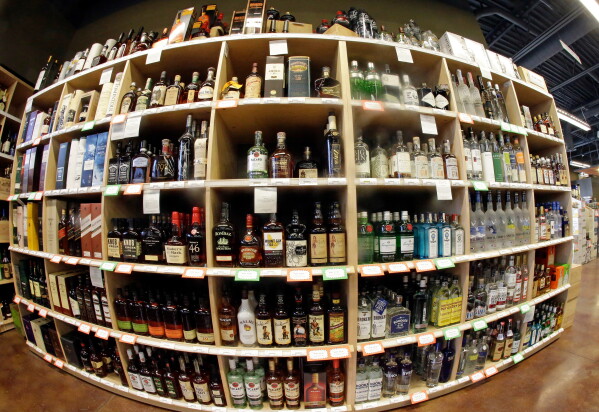
A newly released study, previously overlooked during President Donald Trump’s term, highlights the health risks associated with alcohol consumption. Commissioned by President Joe Biden’s administration, the research was published in the Journal of Studies on Alcohol and Drugs. The study aligns with existing research indicating that even minimal alcohol intake, such as one drink daily, increases health risks. It maintains that alcohol has no protective effect on mortality and that moderate drinking raises the risk of premature death and over 200 diseases, including heart disease and cancer.
This study, part of two government reviews meant to guide new dietary guidelines, was initially bypassed in the Trump administration. Released earlier, the guidelines suggest consuming less alcohol for better health. However, authors of the study argue these guidelines lack practical advice about drinking risks.
“The challenges confronting alcohol policy today are not rooted in scientific uncertainty,” wrote Robert Vincent, a former official involved in the study. “What remains contested is whether evidence will meaningfully inform policy when it conflicts with commercial interests.”
The release of the study independently underlines the tension between the scientific community and the Trump administration, which faced criticism for sidelining scientific findings and reducing support for scientific research. Critics of the study included congressional Republicans and the alcohol industry, who accused the study of bias and challenged its findings.
The U.S. Department of Health and Human Services (HHS), alongside the Department of Agriculture, reviewed the study as part of developing the 2025–2030 Dietary Guidelines. HHS spokesperson Emily Hilliard stated that the guidelines derive from a broad base of scientific evidence, not a single study.
Researchers call for more specific advice, suggesting adults should limit alcohol to one drink or fewer per day. Dr. Timothy Naimi, a study author, emphasizes clear guidance: “Less is best.” Another study author, Priscilla Martinez-Matyszczyk, clarified the study’s focus on alcohol-attributed mortality, aiming to avoid confounding factors unlike previous studies which suggested moderate drinking decreased overall mortality risk.
Dr. Mehmet Oz has previously noted alcohol’s social benefits, though Martinez-Matyszczyk argues research has yet to separate social effects from health impacts.
The findings support recent studies, such as a 2019 Lancet publication which linked moderate drinking with increased risks of stroke and high blood pressure without health benefits. Earlier studies suggesting heart benefits from moderate drinking have since been reconsidered due to improved research methodologies.
About half of Americans aged 12 or older reported drinking in the past month, making alcohol the most used addictive substance in the U.S. One standard drink equates to a 12-ounce beer, a 5-ounce glass of wine, or a shot of liquor.
The Associated Press Health and Science Department receives support from the Howard Hughes Medical Institute’s Department of Science Education and the Robert Wood Johnson Foundation. The AP is solely responsible for the content.
 Ebola Outbreak in East Africa: Concerns of Prolonged Crisis
  Decline in Infant Mortality in the U.S.: 2025 Marks New Record
  Study Links Tyrosine to Shorter Lifespan in Men
  From Marathon Runner to Mother: A Recovery Journey
  U.S. Leadership Falters in Face of New Ebola Outbreak
  Controversy and Challenges at Albany Care Psychiatric Facility