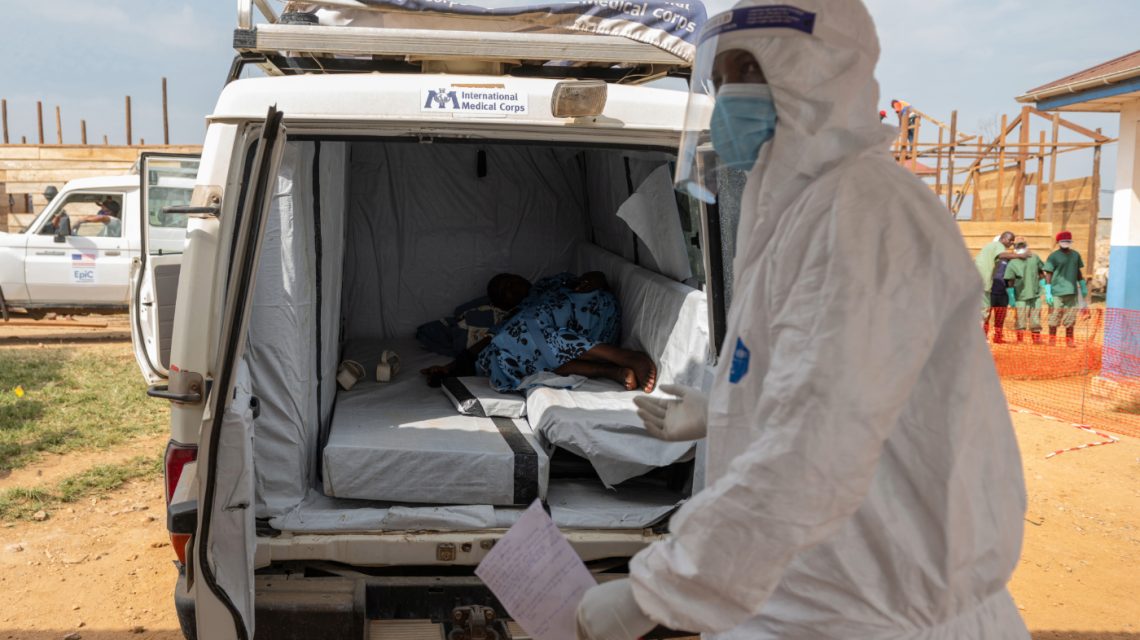
A paramedic stands by a suspected Ebola patient in an ambulance at a treatment center in Bunia, Congo, highlighting the severity of the situation. Ebola, one of the deadliest infectious diseases, is rapidly spreading across the Democratic Republic of the Congo and Uganda, now posing a threat to South Sudan.
This crisis reveals a pressing reality: the international community can no longer rely on the U.S. to lead responses to such global public health emergencies. In the previous Ebola epidemic, which claimed over 11,000 lives in Africa a decade ago, the U.S. played a crucial role. However, current commitments indicate a lack of similar involvement.
The Trump administration’s reduction of experienced personnel and essential resources has weakened U.S. public health agencies’ ability to effectively tackle these crises. Furthermore, the decision to withdraw from the World Health Organization has hindered data collection and information sharing with global partners, once pivotal to U.S. health policy.
Previously a leader in fighting infectious diseases, the U.S. is struggling to address a new Ebola outbreak potentially as destructive as the 2014 crisis. The American public faces confusion and uncertainty about the nation’s response to this health threat, partly due to a lack of transparency and accountability within the government.
Questions arise about who manages the response. What department oversees aid distribution, given the dismantling of the U.S. Agency for International Development? What preparations is the government making for an outbreak that might spread beyond Africa? Who communicates the plan to the public with reliable scientific information?
These challenges persist despite having capable congressional-approved officials. The Centers for Disease Control and Prevention (CDC) has seen numerous acting heads following the firing of its first leader for not aligning with the current administration. This instability adds to the public’s mistrust in leadership.
Viruses do not recognize borders, and reducing health agency budgets, sidelining experts, and halting data exchange can fuel their spread. The situation worsens as overcrowding and poor sanitation in Sudan’s refugee camps escalate the risk of transmission.
The Trump administration’s stance on disease prevention appears contradictory. While some officials mocked COVID-19 measures, they now champion strong quarantine practices for Ebola and hantavirus outbreaks. Such measures, once perceived as overreach, are now endorsed by officials for disease control.
Secretary of State Marco Rubio’s assurances of protection ring hollow as Americans exposed to the virus are denied reentry for treatment in advanced U.S. facilities. Instead, they face care in a makeshift hospital in Kenya, despite the U.S.’s capability for handling such cases.
In the past, the U.S. invested in disease readiness, collaborating with allies, supporting international health, and valuing expert opinions. These efforts aimed to prevent and manage outbreaks globally. This commitment is missing today. Without Congressional action to hold the administration accountable for undermining response capabilities, American safety could be at risk.
Lyndon Haviland, DrPH, MPH, is a distinguished scholar at the CUNY School of Public Health and Health Policy.
 From Marathon Runner to Mother: A Recovery Journey
  Controversy and Challenges at Albany Care Psychiatric Facility
  Oklahoma Teen Critically Ill Following ‘Benadryl Challenge’
  Trump Administration Seeks Appeal in Vaccine Panel Ruling
  Reflecting Pool’s Algal Bloom Returns After Renovation
  The Complex Decisions Surrounding Early Retirement