The Bureau of Street Lighting in Los Angeles has traditionally managed lampposts. Recently, it faces scrutiny over its association with Flock Safety, known for its surveillance technology. This Atlanta-based company provides automated license plate readers, widely used across Los Angeles. These devices, often affixed to streetlight poles, help track vehicles tied to crimes or fugitives, but have stirred controversy.
The reason for the backlash lies in Flock’s alleged data sharing with federal bodies, including Immigration and Customs Enforcement, which contributed to immigration crackdowns. Despite concerns, Flock remains active in Los Angeles, collaborating with local entities, such as the Los Angeles Police Department (LAPD).
Community Response and Pressure
Emails, uncovered through public records, reveal a concerted effort by LAPD advocates and local groups to expedite the installation of Flock’s devices. Despite widespread criticism and contract terminations with Flock in various U.S. cities, L.A. stakeholders persist in supporting the technology.
Flock asserts compliance with California’s strict data-sharing laws, emphasizing transparency and accountability. A company spokesperson highlighted the deletion of customer-owned data after 30 days and claims the technology aids in fighting crime and finding missing persons.
Bureau’s Budget and Roles
The Bureau, with its 177 employees and a $49.4 million budget, focuses on maintaining over 210,000 streetlamps and electric vehicle charging stations. Yet, pressures for enhanced surveillance persist.
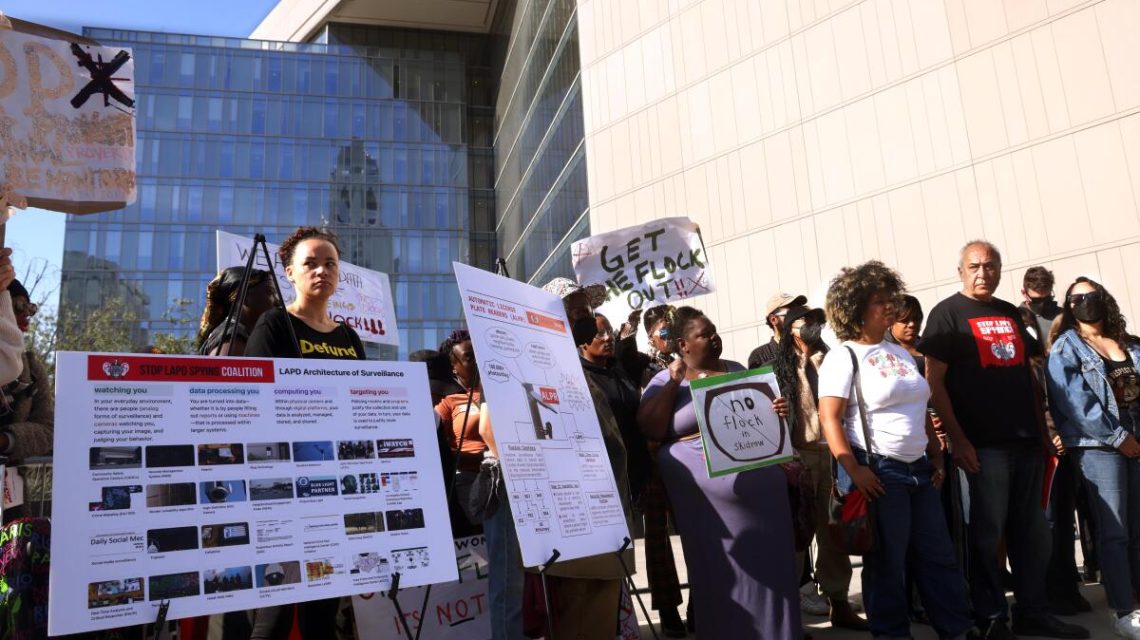
Concerns over transparency prompted the Police Commission to request a comprehensive report on Flock’s data practices. In March, members of the Stop LAPD Spying Coalition demonstrated against Flock, urging a suspension of the expansion of license plate readers.
Political and Community Dynamics
Councilmember Ysabel Jurado called for the cessation of new agreements with Flock. Despite political interventions, mounting pressures from council members and community associations, such as urging faster approval processes, continue.
The Los Angeles Police Foundation, supporting the LAPD through funding, criticized installation delays. They have facilitated the donation of numerous Flock cameras, primarily in affluent neighborhoods.
In May 2025, Dana Katz, the Foundation’s executive director, petitioned the mayor’s office to waive fees for deploying new cameras, citing prohibitive costs. Katz proposed using Flock’s dedicated poles, approved by the county, in locations lacking city infrastructure.
Efforts to Expedite Installations
Due to complexities and structural limitations, Bureau officials, like Clinton Tsurui, caution against rushed installations. Concerns about pole stability and safety remain prevalent. Yet, Katz’s mode has grown more urgent, emphasizing challenges posed by installation delays to public safety.
Behind ongoing lobbying efforts, Flock remains engaged. In spring 2024, they donated plate readers to curb copper theft, aiming to secure broader city integration. Lobbyists have engaged with city officials, exploring potential public-private partnerships.
Post-wildfire trauma in areas like Pacific Palisades saw Flock offering aid, donating numerous devices temporarily to protect vulnerable communities.
Tensions between city bodies and security entities continue, with the LAPD Chief Jim McDonnell supporting streamlined collaborations to enhance technological safety measures.
 Government’s Export Ban on Anthropic’s Models Misses the Mark
  Beware of Text Job Scams: Protect Yourself from Financial Fraud
  FBI Constructs Mock Town for Cyberattack Training in Alabama
  Floating Data Centers at Sea: A Startup’s Vision
  SpaceX’s Historic IPO and Market Surge
  Roblox’s Commitment to Safety Amidst Controversial Changes