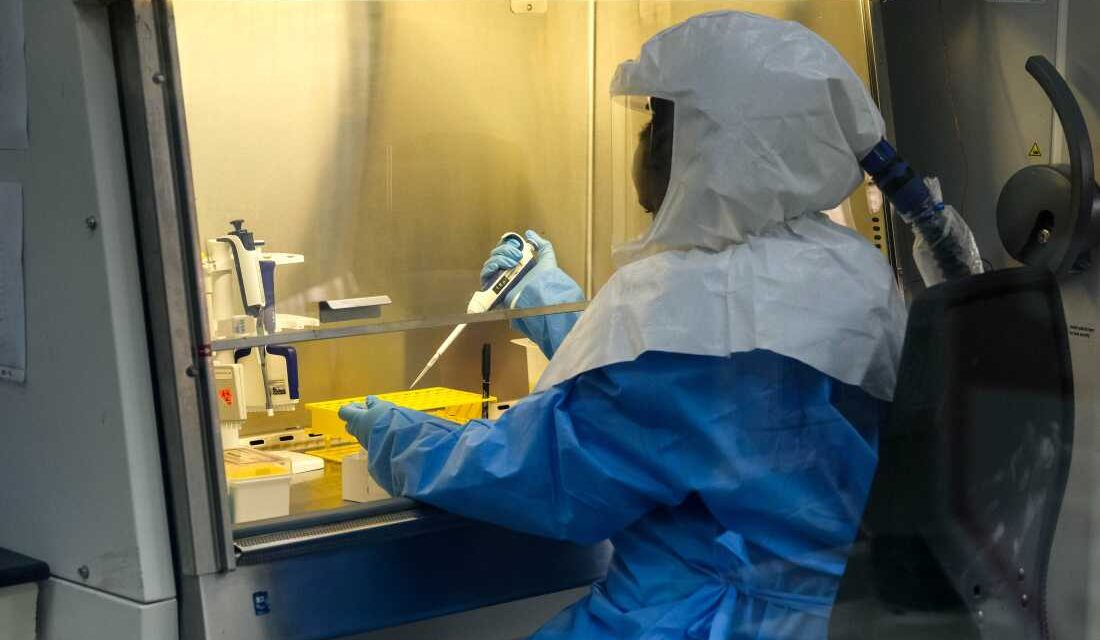
Sophia Mulei, a laboratory technologist, examines a control sample at the Viral Hemorrhagic Fever Laboratory within the Uganda Virus Research Institute in Entebbe. This lab is a central hub for testing Ebola samples. Health officials in the Democratic Republic of Congo raised concerns about potential Ebola cases in mid-April. Deaths in the northeast seemed linked to the virus, prompting sampling. The initial tests, conducted on April 30 using GeneXpert, returned negative results. More samples later also tested negative.
Officials then sent samples to Kinshasa for advanced testing, which confirmed Ebola’s presence. GeneXpert, the primary tool for Ebola detection in DRC, failed to identify the rare circulating species, delaying the outbreak declaration until mid-May. Consequently, the outbreak became one of the largest, with suspected cases rising to over 1,100, overwhelming labs. Caia Dominicus from the International Pandemic Preparedness Secretariat noted that the lack of proper diagnostics hindered initial response efforts. Without timely tests, isolation to prevent viral spread was compromised.
Improved diagnostic capacity somewhat caught up since then, according to Abdirahman Mahamud from WHO. Yet, the testing capacity still lags behind, as the CDC projects the outbreak might reach 20,000 cases by August. This requires further scaling up in testing capacity.
A Shift in Testing Capabilities
The introduction of the RADI-One machine has been essential in detecting Bundibugyo in patient samples. This machine requires less equipment and training, allowing deployment in smaller, closer clinics like those in Mongbwalu. Seven labs, along with one mobile lab, now conduct tests across northeastern DRC. Larger labs in the region can process over 100 samples per day. A laboratory technician, who preferred anonymity, reported that samples currently have a one to twelve-hour turnaround.
Africa CDC, collaborating with WHO and DRC health officials, aims to equip the region with 50 RADI-One machines by the end of June. However, Dominicus notes that more machines will be necessary. Talks are ongoing with KH Medical, a South Korean manufacturer, to increase machine supply. Other potential testing methods exist but would need validation, requiring staff training, as these aren’t standard systems.
Transporting samples remains a bottleneck, often taking days due to accessibility issues, ongoing conflict, displacement, and community mistrust, complicating diagnostics.
Potential Role of Rapid Tests
Rapid tests, similar to those used during COVID, could enhance the situation. They allow quick results from a pinprick blood sample, in minutes rather than hours. Faster detection enables prompt isolation to curb spread, says Abraar Karan, an infectious disease expert. While less sensitive than lab-based tests, they are useful in assessing the outbreak’s extent.
Jean-Jaques Muyembe emphasizes the need for community-level rapid tests, suggesting they could also screen the deceased, guiding necessary burial precautions. Although no rapid tests for Bundibugyo are approved, those for common Ebola species might work, as lab-based studies indicate potential. Developing a Bundibugyo-specific test might take a few months, according to microbiologist Robert Garry. However, it could be scaled quickly as the technology isn’t complex.
Ranu Dhillon, who advised during the 2014 Ebola outbreak in Guinea, asserts the value of testing development over vaccines or therapeutics, which take longer. Existing tests could be co-evaluated with patient samples to assess performance.
Investing in both traditional and rapid testing is crucial. Dominicus stresses that diagnostics often get overlooked compared to vaccines and treatments. Without diagnostics, decision-making is hampered. Had diagnostics been in place initially, Dominicus argues, the outbreak might not have worsened so significantly.
 Cancer Incidence Rises in Iowa
  Impact of GOP Cuts on Healthcare Facilities
  Ebola Outbreak in East Africa: Concerns of Prolonged Crisis
  Decline in Infant Mortality in the U.S.: 2025 Marks New Record
  Study Links Tyrosine to Shorter Lifespan in Men
  From Marathon Runner to Mother: A Recovery Journey