
Countries and cities compete aggressively for the opportunity to host the FIFA World Cup. The event is expected to deliver economic benefits, increased tourism, and global recognition. However, recent data and a report from insurance company Atradius suggest that the reality may be more complex.
Economic Impacts and Challenges
FIFA and World Trade Organization data indicate that World Cup tournaments provide substantial contributions to the global economy. The 2026 World Cup is projected to add up to $40.9 billion in global GDP and create over 800,000 jobs. Despite this, research shows that host cities often experience more costs than benefits. Major expenses, such as security, transportation, crowd management, and fan events, fall on local governments. FIFA collects the bulk of the revenue, while host cities manage significant risks.
A FIFA representative told Newsweek about the strong partnerships with governments and municipalities. The organization works with local needs in mind to offer sustainable models for all parties. However, historical data shows host cities often face challenges.
Historical Precedents
The 2026 World Cup involves 48 teams playing 104 matches across the U.S., Canada, and Mexico. However, concerns exist about economic losses amid fluctuating hotel prices and high airfares. The University of Toronto research found that 12 of the last 14 World Cups resulted in net losses for host cities. The costs often exceeded projected tourism benefits. For example, the 1994 World Cup in the U.S., though seen as a commercial success, resulted in estimated losses of up to $9.3 billion for host cities.
FIFA emphasizes it covers costs related to venue rentals, temporary infrastructure, and broadcast operations. The organization claims collaborative efforts with cities to reduce costs and offer flexibility. Yet, financial projections often fall short.
Why Projections Miss the Mark
Recent reports estimate FIFA’s earnings at $9 billion in the tournament year, whereas other events like the Paris Olympics generated $5.2 billion in 2024. Victor Matheson, a sports economics professor, calls revenue predictions exaggerated. Host cities suffer from the ‘crowding out’ effect, where typical tourists avoid congested events. Additionally, job opportunities from the World Cup are typically short-term.
A study by Oxford Economics describes the impact on GDP and job growth as limited. Infrastructure costs contribute to missed projections. Delays lead to accelerated construction, often resulting in budget overruns. However, American cities face fewer infrastructure issues due to existing sports facilities. Minimal new investments are needed in the U.S., according to FIFA.
Stadiums built for the World Cup, often referred to by Matheson as ‘white elephants,’ serve little purpose post-tournament, as seen in countries like South Korea and Brazil.
Current and Future Outlook
Despite challenges, host cities remain hopeful. Toronto, for instance, plans to deliver a successful World Cup by adhering to a $380 million budget, supported by Canadian government bodies. Revenue estimates and expenditures will be reviewed post-tournament.
Concerns Over Interest and Attendance
Emerson College conducted a poll where 45 percent of 1,200 respondents showed no interest in the World Cup. High ticket prices and hotel bookings lag behind expectations. However, FIFA insists ticket sales remain strong, offering competitive prices for fans. Despite this, there are reports of available tickets and lagging hotel bookings just before the tournament’s opening. Partial stadium attendance is not unique to 2026, as similar issues occurred in previous World Cups, including Qatar 2022.
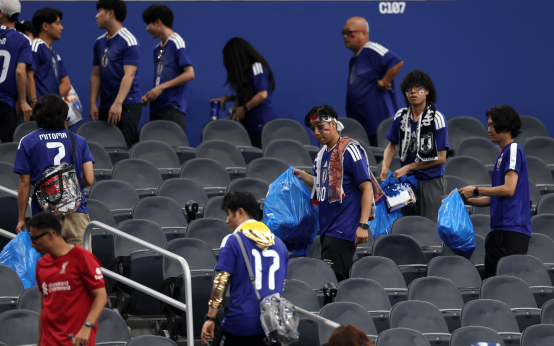 Japanese Fans Clean Up After World Cup Match in Dallas
  Day 4 Highlights and Team Rankings at the 2026 World Cup
  A Look at Tom Brady’s Remarkable NFL Journey
  San Antonio Spurs Aim to Overcome Deficit in NBA Finals Against New York Knicks
  World Cup Excitement: USMNT Victory and Upcoming Matches
  Kenneth Walker Shines in Super Bowl for Seahawks