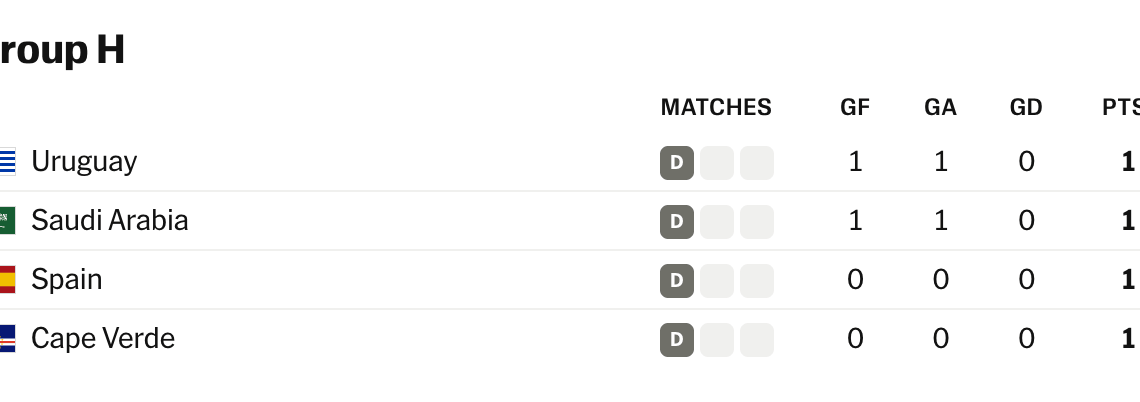
Hours after Cape Verde shocked Spain, another World Cup upset seemed possible in Group H as Uruguay faced Saudi Arabia in Miami. Saudi Arabia, ranked 49th globally, took an early lead with a first-half goal by Abdulelah Al Amri. The goal, scored after Uruguay’s Fernando Muslera mishandled the ball, temporarily placed Saudi Arabia at the top of Group H.
However, Uruguay managed to equalize with 10 minutes remaining. Maximiliano Araujo scored following a mistake by Saudi goalkeeper Mohammed Al Owais, leveling the game. Al Owais later redeemed himself with impressive saves to preserve a point. Throughout the match, Uruguay attempted 21 shots.
With two draws in Group H, all teams secured one point after the first round of fixtures.
Michael Cox and Jacob Whitehead discuss key aspects from the Miami encounter.
Asian Teams Start Strong at This World Cup
Historically, Asian nations have struggled in men’s FIFA World Cups. Only South Korea reached the semi-finals in 2002. With the tournament expanded to 48 teams, concerns arose about diluted quality, especially with more Asian countries qualifying.
Contrary to these concerns, Asian teams remain unbeaten in five games, achieving two wins and three draws. South Korea and Australia notched victories, while Qatar and Japan showed strong comebacks.
Saudi Arabia is set to host the World Cup in eight years. The success of their national team is crucial to their ambitions. A robust Asian Football Confederation will aid their growth.
- June 11, Group A: South Korea 2-1 Czech Republic
- June 13, Group B: Qatar 1-1 Switzerland
- June 13, Group D: Australia 2-0 Turkey
- June 14, Group E: Japan 2-2 Netherlands
- June 15, Group H: Saudi Arabia 1-1 Uruguay
Jacob Whitehead
The Rollercoaster Ride of Fernando Muslera
Fernando Muslera was Uruguay’s first-choice goalkeeper for three World Cups, performing strongly in 2010, 2014, and 2018. However, at the Qatar World Cup, he was overlooked for Sergio Rochet, and Uruguay exited at the group stage. His career faced further setbacks when he received a four-game ban for assaulting match officials.
Muslera announced his international retirement in April 2024. Surprisingly, following an impressive season with Estudiantes in Argentina, he returned for Uruguay’s game against Saudi Arabia. This marked his fifth World Cup squad appearance.
Initially, Muslera demonstrated his value with a crucial save from Al Amri. Yet, shortly after, he failed to catch a header, allowing Al Amri to score.
(REUTERS/Amanda Perobelli)
Jacob Whitehead
Marcelo Bielsa’s Strategy for Uruguay
Group H outcomes have defied expectations. Uruguay, considered favorites, drew with underdog Saudi Arabia. Marcelo Bielsa’s team struggled in the first half, improving significantly after halftime.
Uruguay commanded possession early but lacked creativity. The midfield trio of Manuel Ugarte, Rodrigo Bentancur, and Federico Valverde focused on defense rather than facilitating forward play. Ugarte dropped back, allowing full-backs to advance, while Valverde attempted wing plays. Uruguay’s attacks lacked dynamism.
Bielsa made critical changes at halftime, including a double substitution. He replaced Darwin Nunez with Agustin Canobbio, who boosted right-flank play. Federico Vinas shifted centrally and immediately threatened the goal.
Nunez’s exit benefited Uruguay. Vinas produced two headed shots, one from a Canobbio cross, exploiting Saudi weaknesses on the right. Valverde, tasked with Real Madrid crossing duties, delivered threatening passes.
Uruguay equalized from a left-wing cross. Vinas had a final good header, leading to Maxi Araujo’s rebound goal before being substituted.
Nunez’s starting position is under threat for the next match against Cape Verde, with Vinas proving a more effective forward.
Michael Cox
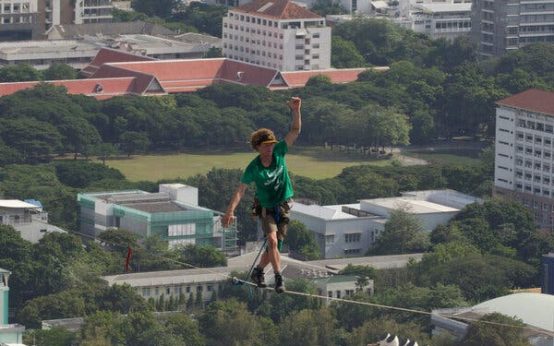 Extreme Athlete Andrew Lewis Killed in BASE Jumping Accident
  Fashion Show at the Freedom 250 Flag Day Event
  Israeli Political Spectrum Reacts to US-Iran Agreement
  New Details Emerge in Arson Attacks Linked to UK Prime Minister
  MLB Warns Players for Written Messages on Caps Amid Pride Night Controversy
  Group G Showdown: Iran vs New Zealand at the 2026 World Cup