
Progress in U.S.-Iran Negotiations
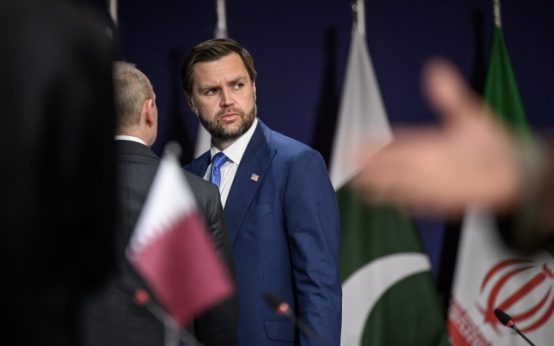
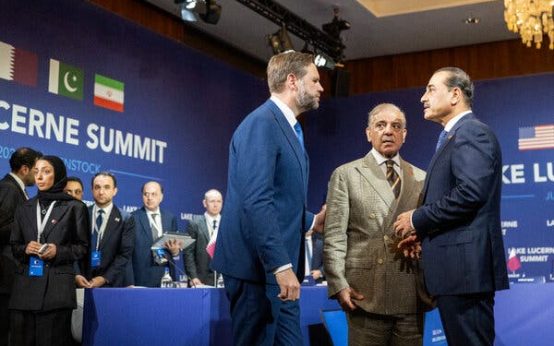
The initial round of discussions between the U.S. and Iran in Switzerland concluded with notable progress early Monday, according to mediators Qatar and Pakistan. Despite ongoing tensions concerning the conflict in Lebanon, the atmosphere remained positive, leading to the establishment of a mechanism for further technical discussions.
While no consensus was reached on divisive matters, notably Iran’s nuclear program, both parties agreed to a roadmap aiming to finalize a deal within 60 days. This includes a temporary communication line to ensure the safe passage of ships through the Strait of Hormuz. Additionally, a ‘de-confliction cell’ was agreed upon to address military operations in Lebanon, where Israel has been engaged with Hezbollah.
Challenges and Continued Dialogue
Iran’s negotiators emphasized the need to halt the war in Lebanon for continued talks. Iran’s foreign minister, Abbas Araghchi, acknowledged progress on Lebanon but highlighted the ‘de-confliction cell’ as a crucial test. As negotiations proceed, uncertainty remains over which officials will lead further discussions.
Despite the challenges, technical discussions continue this week, with Iran’s delegation, headed by Mohammad Ghalibaf, returning to Tehran. Tensions persist with President Trump, who recently threatened Iran over the ongoing issues. Iran’s officials remain firm on maintaining their uranium enrichment rights.
Mid-East Tensions Affecting Global Markets
Strait of Hormuz: Although previous agreements allowed the strait to stay open for 60 days, Iran’s temporary closure amid Lebanon’s conflict has created confusion, with U.S. military confirming continued marine traffic.
Nuclear Program: Discussions have postponed deliberations on Iran’s nuclear activities. Iran continues to assert its rights against developing nuclear weaponry.
Technical Talks: Led by Kazem Gharibadi, Iran continues expert-level engagements in technical groups in Switzerland. The departure timing of U.S. Vice President JD Vance remains undisclosed.
Qatar Gas Plant Explosion
54 people were injured, and 18 are missing after an explosion at Ras Laffan Industrial City in Qatar. The plant was restarting gas production after a war-related shutdown. Rescue operations continue, and no leaks have been reported. Qatar is among the leading exporters of liquefied natural gas globally.
Impact on Energy Markets
U.S.-Iran talks have influenced oil prices, showing declines as progress hints at stability. Early in the day, uncertainty around the Strait of Hormuz had driven prices higher, but later optimism reduced costs.
Brent crude, a global oil benchmark, dropped over 1% to $79 per barrel for September delivery. Similarly, West Texas Intermediate crude saw slight declines.
Gasoline Prices: National gasoline prices dropped to $3.93 a gallon despite an initial surge following hostilities. Diesel prices also fell to $5.01.
Stock Market Responses
Stock futures indicate a slight decline for the S&P 500 as trading resumes in the U.S. Asian markets showed mixed responses, with gains in Japan and Taiwan but drops in Hong Kong. European stocks also saw modest declines, reflecting broader market uncertainty.
 Progress in Iran-U.S. High-Level Talks
  U.S.-Iran Negotiations, Starmer’s Resignation, and Extreme Sports Safety
  Ebola Cases in Eastern Congo Escalate Amid Challenges
  Mediators Report Progress in US-Iran Peace Talks
  Australian Police Break Record with Largest Cocaine Seizure
  Chinese Referee Ma Ning Draws Attention at World Cup