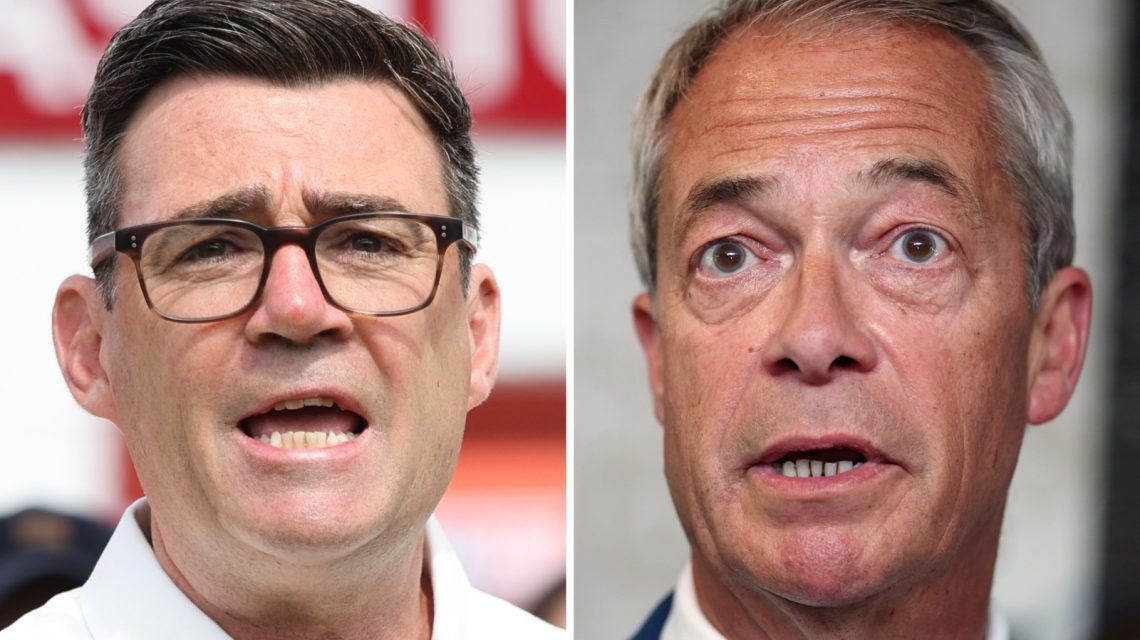
Keir Starmer’s resignation has plunged Britain into a Labour leadership contest amidst a political crisis. Starmer will step down as party leader less than two years after Labour’s sweeping victory and will remain in Downing Street only until a successor is chosen. Unlike some countries, the UK does not hold an automatic general election in such cases. The new prime minister can assume office without a fresh mandate from voters due to Labour’s substantial Commons majority.
Underlying Instability
The apparent stability masks deeper issues. The next leader will confront challenges from the rise of Reform UK, an economy with constrained fiscal options, and a foreign-policy framework influenced by Europe, Trump’s Washington, and Britain’s defense commitments. Although Labour possesses governing authority, it no longer appears to have a firm grip on the nation. Nigel Farage’s Reform party leads in many national polls and has made significant inroads in local government.
The Conservatives are competing with Reform for right-leaning voters, while the Liberal Democrats and Greens attract those opposed to the Conservatives, pro-European, and younger voters away from Labour.
Possible Successors to Starmer
The leading candidate to replace Starmer is Andy Burnham, Greater Manchester’s mayor and former Cabinet minister. He is perceived as a credible alternative, more emotionally articulate than Starmer, and better connected to northern England, where he discusses class, place, public services, and patriotism effectively.
Yet Burnham, or any successor, will face intense pressure. Farage is already influencing topics like migration, net zero, crime, and Brexit. Michel Barnier, the EU’s former Brexit negotiator, has suggested that Britain could move closer to Europe, even postulating a return under special terms. Meanwhile, the U.S. under Trump might prioritize asking whether Britain remains committed to NATO, Ukraine, and defense alliances.
Starmer’s departure raises critical questions: Can Labour maintain its hold on city-based progressives and Brexit-supporting working-class areas? Can Britain rebuild economic links with Europe without reigniting Brexit tensions? Can it remain a top U.S. ally amidst financial and military pressures?
Potential Political Scenarios
1. A Reform Government
Likelihood: Low
A Reform government within the next year is possible but would require an early general election. Reform would need to turn polling leads into parliamentary seats, achieving either a majority or sufficient support from Conservatives or independents.
The more plausible version is a minority Reform government or a coalition with Conservatives. If in power, Reform could stall or reverse the EU reset. Topics like immigration, asylum, and public-sector reforms would dominate.
Relations with the U.S. may rhetorically improve if Trump and Farage align, but expectations on defense spending and commitment to alliances would persist.
Bottom line: A full Reform government is unlikely but not entirely out of reach.
2. A Snap Election Leading to a Reform-Led Hung Parliament
Likelihood: Low to moderate
Political crises could lead to an election if Burnham seeks a mandate or if Labour disintegrates. Labour’s significant majority and lack of requirement for an election until 2029 render this improbable.
However, Reform could emerge as the largest party in an unexpected election. Poll models project Reform on 273 seats, Labour 128, Liberal Democrats 77, and Conservatives 72, without an outright majority.
First-past-the-post dynamics, which once gave Labour a large majority on a modest vote share, might favor Reform amid current political fragmentation.
Bottom line: A snap election is unlikely unless circumstances shift in Burnham’s favor. Reform leading a hung parliament is a possibility.
3. Economic Challenges for Burnham
Likelihood: Moderate
Economic difficulties pose substantial risks for Burnham’s potential government. Inflation and public debt present ongoing challenges. Recent borrowing rates exceed forecasts, with debt interest reaching record highs.
There is little leeway for populist reforms with demands for increased spending on services like the NHS, defense, and local government. Markets closely monitor fiscal discipline.
Defense commitments require substantial spending in line with NATO expectations. Amid pressure for higher defense budgets, Washington might question Britain’s capability (to meet promises made under alliances like AUKUS).
Bottom line: Economic factors might overshadow political recoveries. Fiscal pressures may make promises look ineffective.
4. Dominance of Reform’s Agenda Even if Burnham Survives
Likelihood: High
This scenario sees Burnham surviving as prime minister, but the political narrative driven by Reform continues to challenge his administration. Reform’s success in local elections, gaining numerous councilors and control of councils, signifies its growing influence.
Issues like immigration remain contentious, with mixed signals from migration figures. Reform leverages perceptions of government control on border issues.
Burnham may adopt a firmer stance on these subjects to counteract Reform’s influence, yet Farage’s party keeps setting the political tone.
Bottom line: Burnham may maintain power, but Reform dominates key political discussions.
5. Stabilization Under Burnham Without Transformation
Likelihood: Highest
In this most likely outcome, Burnham assumes leadership, avoiding immediate elections while gradually altering government’s approach, affording Labour time to regroup. His recent win in Makerfield is encouraging, marking a swing toward Labour.
Burnham’s personal popularity appears higher than Starmer’s, suggesting initial public support. However, the challenge is stabilization rather than transformation.
Economic growth projections are modest, with recovery failing to meet broader economic challenges spontaneously. Labour regains some lost voter bases, though Reform continues to pose a threat.
The relationship with the EU strengthens through practical cooperations, but full rejoining remains distant.
Britain’s alignment with the U.S. persists amid continuity with subtle shifts under Burnham’s leadership.
Bottom line: The greatest likelihood is stabilization, recuperating from losses, but economic constraints remain a reality.
Outlook for Burnham’s Leadership
For Burnham, success means halting Labour’s decline: regaining voters from other parties, winning back disenchanted demographics, and managing without alarming the markets. While an outright collapse is improbable due to Labour’s Commons majority, political setbacks could undermine Burnham if pivotal issues falter.
Economic improvement is anticipated but insufficient for total political relief. Low growth and public perception challenges persist.
Potential State of Britain in 12 Months
Looking ahead, mid-2027 likely positions Burnham in Downing Street, avoids an election, permits cautious EU realignment, maintains a transactional U.S. relationship, and keeps Reform in leading poll positions.
Though unlikely to rejoin the EU or break ties with the U.S., Britain’s traditional political framework may appear fractured: Labour holds parliamentary strength, Reform garners momentum, Conservatives struggle, and economic difficulties complicate governance.
Starmer’s resignation doesn’t translate to immediate Reform power, but paves the way for its potential future dominance.
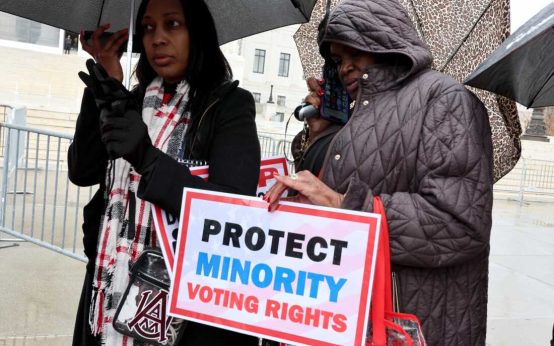 Supreme Court Declines Review, Impacting Voting Rights Act
 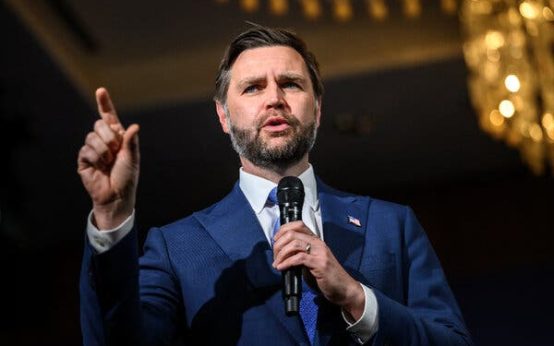 U.S.-Iran Negotiations Aim to End Conflict
 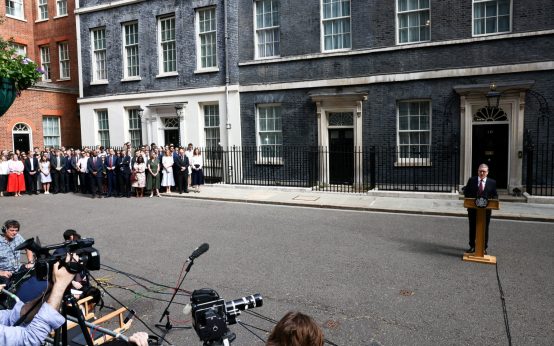 Keir Starmer’s Tumultuous Tenure as UK Prime Minister
  Keir Starmer’s Resignation as Labour Leader and UK Prime Minister
  New York’s Congressional Battles: Progressive vs. Establishment Democrats
  U.S.-Iran Negotiations, Starmer’s Resignation, and Extreme Sports Safety