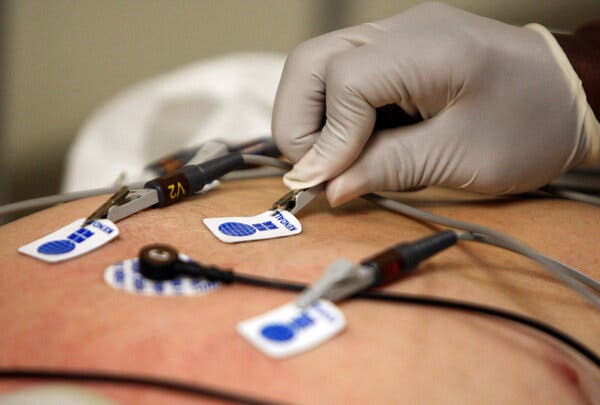
Artificial intelligence programs have progressed to the point where they can identify patterns in electrocardiograms (ECGs) that human practitioners might overlook. Among these AI programs, one is now accessible—for free—to medical professionals nationwide.
In a clinical trial, an AI program identified signs of potential severe heart damage in the ECG of a 45-year-old patient. This technology potentially saved the life of Louie Quiros, a caregiver and security guard from Queens.
Upon visiting a Queens emergency room in February 2025, Mr. Quiros reported symptoms such as coughing up blood and breathing difficulties. His heart rate was elevated and circulation to his lungs was diminished, but a chest X-ray revealed no significant issues. His ECG was abnormal but didn’t reveal a definitive diagnosis. It suggested possible coronary heart disease, uncommon for his age group, but that wasn’t the issue at hand.
The emergency room doctors discovered that Mr. Quiros had been exposed to wildfire smoke in California, leading them to prescribe asthma medication and an inhaler. Fortunately, the emergency room was part of NewYork-Presbyterian’s medical network. Researchers there use an AI program, EchoNext, to analyze all ECGs performed within the system. This program identifies heart damage patterns that humans might miss.
EchoNext, part of a clinical trial led by Dr. Pierre Elias, the medical director of AI and cardiologist at NewYork-Presbyterian and Columbia University Irving Medical Center, examines ECG results within ten minutes of completion. Nearly 500,000 ECGs are analyzed annually. Dr. Elias also founded Pathway Labs to promote EchoNext commercially.
EchoNext detected potential severe heart damage in Mr. Quiros’s ECG, leading to his return to the hospital for an echocardiogram. This scan revealed a critical condition; his heart was pumping only 10 percent of blood per contraction, and his mitral valve was leaking blood into the heart.
The advancement of AI technology in medical diagnoses such as EchoNext holds promise in potentially saving lives by identifying and addressing conditions in their early stages.
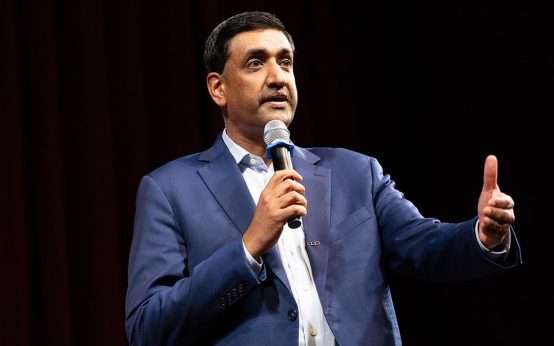 Elon Musk Contemplates Legal Action Against Rep. Ro Khanna
  Concerns Over Proposed NIH Grant Changes
 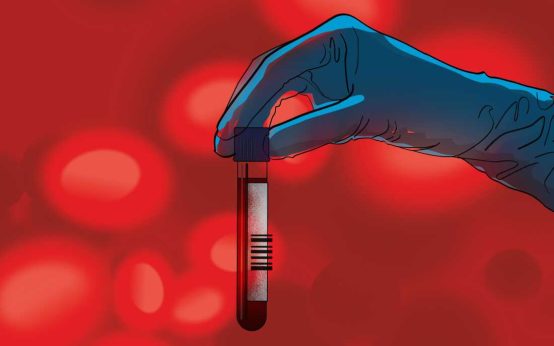 Innovative Blood Tests Aim to Change Cancer Screening
  Fire in Boyle Heights Cold Storage Continues
  Chinese AI Models Gain Traction in Silicon Valley
  Potential Rise in Smartphone Prices Due to Memory Costs